


20 Jun Media Stuck in Holes
Media stuck in holes is one of the most common and disruptive problems in mass finishing operations. When finishing media lodges inside drilled holes, threaded bores, counterbores, slots, or blind cavities, it can cause downstream assembly failures, quality rejections, and significant production delays. The problem is not random. It follows predictable engineering logic, and once the root causes are understood, it can be controlled through media geometry selection, compound management, process parameter adjustment, and machine selection.
In This Article
Why Media Lodges in Part Features
The fundamental cause of media getting stuck in holes is a geometric mismatch between the media piece and the cavity it enters. During vibratory or centrifugal finishing, parts and media tumble together continuously. Any media piece that is small enough to enter a hole but too large to exit freely under machine motion will become trapped.
This is particularly common with cylindrical and diagonal cut cylinder media shapes, which can align axially with a bore and wedge in place under load. Triangular, star, and angle-cut shapes are less prone to direct axial lodging but can still bridge across larger openings or slot features.
The problem becomes more severe under certain conditions: high machine amplitude that drives media forcefully into cavities, hard ceramic media that does not compress, and parts with deep blind holes where media cannot be dislodged by normal tumbling motion.
Root Cause Categories
Understanding why media gets stuck in holes requires separating causes into distinct categories. Most lodging problems trace back to one or more of the following areas.
Media Geometry Mismatch
The most direct cause is selecting media with a size or shape that can physically enter and wedge into part features. A common engineering rule is that media should be sized so that no single piece can enter the smallest functional hole in the part. However, this rule alone is insufficient because hole depth, hole orientation during tumbling, and the presence of chamfers or countersinks all affect whether media can enter and become trapped.
Media Size Distribution and Wear
New ceramic or plastic media is supplied at a nominal size, but media wears down during use. A media type that was correctly oversized relative to part holes at the start of its life may gradually reach a size where individual worn pieces can enter previously safe cavities. Regular media inspection and timely replacement are necessary to prevent this condition from developing unnoticed.
Machine Motion and Amplitude
Vibratory finishing machines generate a toroidal or helical flow of parts and media. Higher amplitude settings increase the energy applied to the batch, which can drive media more forcefully into cavities. In some cases, reducing amplitude or switching to a lower-energy machine setting reduces lodging frequency without significantly degrading deburring or polishing results.
Part Orientation and Loading Density
Parts that are loaded in orientations where holes face upward may accumulate media under gravity even before machine motion begins. Batch loading density also plays a role. Overfilling the machine bowl reduces the free movement of parts and can cause sustained contact between media and part features at unfavorable angles.
Compound and Water Chemistry
Finishing compounds affect media behavior in wet processes. When compound concentration drops below the recommended level, the lubrication and suspension properties of the process fluid degrade. Media becomes more likely to drag, wedge, and compact inside part cavities. Maintaining correct compound dosing is part of preventing media from sticking in holes.
Common Part Features That Create Risk
Not all holes present the same lodging risk. The following part features consistently create higher media entrapment probability and should be evaluated before media selection is finalized.
- Blind holes with depth-to-diameter ratios greater than 1.5:1
- Threaded bores where media can jam between thread flanks
- Counterbored features where media can seat in the shoulder
- Slots with widths close to media cross-section dimensions
- Undercuts or internal recesses where media enters but cannot exit
- Thin-walled tubes or hollow profiles
Parts with multiple intersecting holes or cross-drilled features are particularly challenging because media can enter from one direction and become locked at the intersection. In these cases, media geometry selection must account for the smallest passage in the part, not just the largest opening.
Media Geometry and Size Selection to Prevent Lodging
Selecting the correct media geometry is the primary engineering control for preventing media stuck in holes problems. The general sizing principle is to ensure that no media piece in the batch can fit inside the critical hole diameter, accounting for the worn minimum size of the media over its service life.
For parts with small or closely spaced holes, media that is clearly oversized in all dimensions provides the most reliable protection. Spherical or near-spherical media shapes are the most predictable because they do not have elongated axes that can align with bore geometry. For parts where the hole opening is large but the bore is blind and deep, even oversized media can partially enter if the shape allows axial alignment.
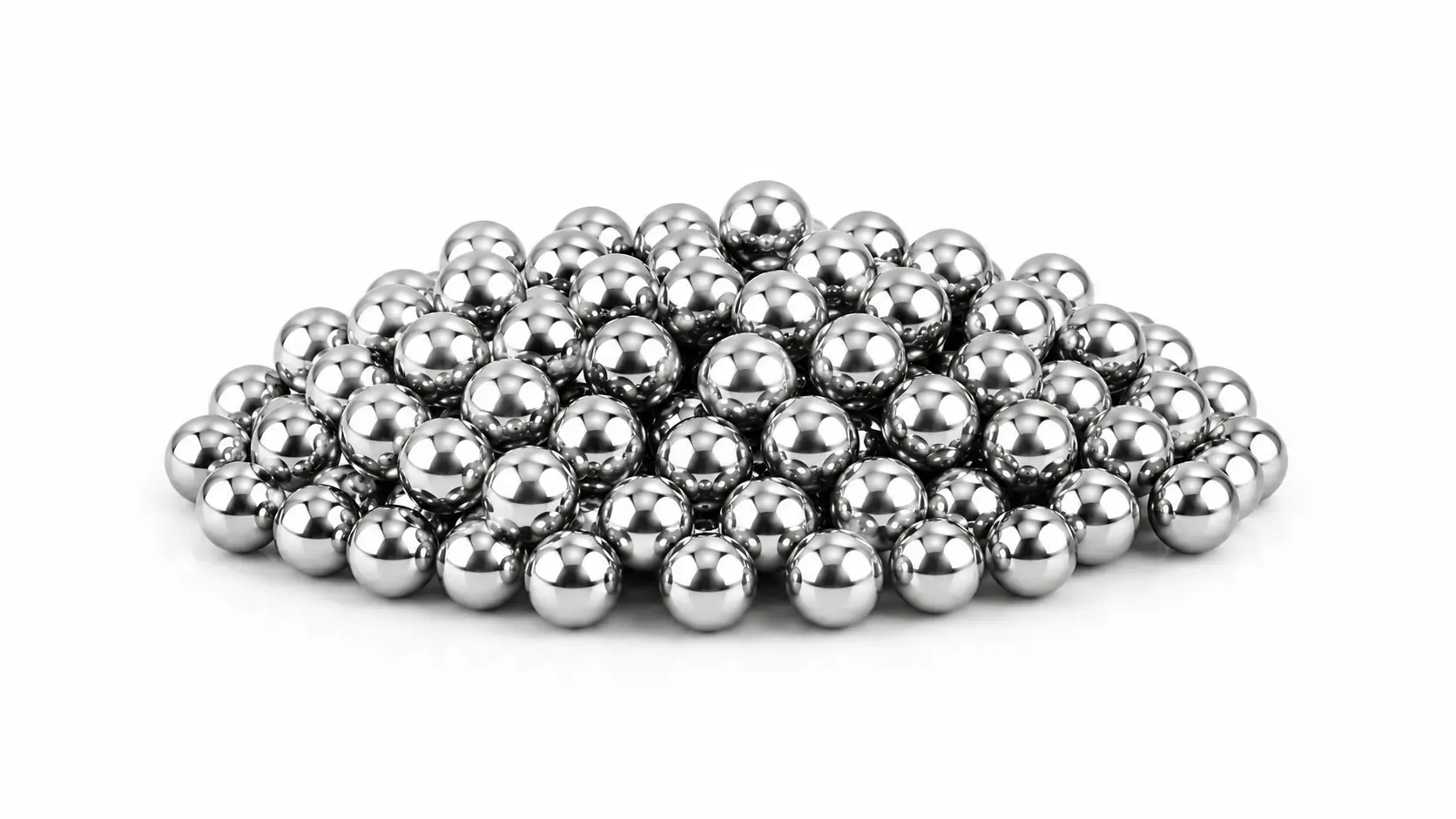
The table below summarizes common media shapes and their relative lodging risk for different part feature types.
| Media Shape | Lodging Risk in Blind Holes | Lodging Risk in Slots | Typical Application |
|---|---|---|---|
| Cylinder | High if diameter matches bore | Moderate | General deburring, flat surfaces |
| Diagonal Cut Cylinder | High due to axial alignment tendency | Moderate | Internal edge deburring |
| Triangle | Moderate | Low to moderate | External edge and radius work |
| Sphere or Ball | Low, predictable entry geometry | Low | Polishing, burnishing |
| Angle Cut Triangle | Moderate | Low | Complex geometries, recesses |
| Trough or Saddle | Low | Moderate for narrow slots | Flat part deburring |
Corrective Actions When Media Lodging Is Already Occurring
When media stuck in holes is already a confirmed problem in an active finishing process, the response should be systematic rather than reactive. Changing one variable at a time allows the engineer to identify the true cause without disrupting an otherwise acceptable process.
The first corrective action is to measure the affected holes and compare them against the current media size distribution, including worn pieces. If worn media is found to be entering holes that were previously safe, the batch should be screened or replaced. A separator machine can assist in removing undersized worn media from an active batch.
If media size is confirmed acceptable, the next step is to review machine amplitude settings. In vibratory finishing machines such as the KAYAKOCVIB KVM series, amplitude is adjustable and reducing it by one setting can meaningfully reduce the force driving media into cavities while still maintaining acceptable finishing action.
If the problem persists after media size correction and amplitude reduction, the part loading orientation and batch density should be evaluated. Adjusting loading density to approximately 50 to 60 percent of bowl volume is a commonly recommended starting point for parts with sensitive hole geometries. Actual results depend on part size, weight, and the specific machine configuration.
Process Parameter Adjustments for Hole-Intensive Parts
Parts with numerous holes, slots, or internal features require deliberate process parameter management. The following parameter adjustments are commonly used when working with hole-intensive part geometries.
- Use larger media size than standard selection logic would suggest, specifically to prevent entry into the smallest functional hole
- Reduce machine amplitude to the minimum level that still achieves required deburring or surface finish
- Maintain compound concentration at the upper end of the recommended dosing range to improve media suspension and lubrication
- Use higher water flow rates in wet processes to assist media movement and reduce compaction in cavities
- Reduce batch load to improve part-to-media movement freedom
- Run a short post-process air blow or rinse cycle to dislodge any trapped pieces before parts exit the machine
For parts with blind holes that cannot be protected by media sizing alone, some manufacturers use temporary hole plugs or masking fixtures before the finishing cycle. This approach adds a handling step but can be justified when part value is high or when the hole geometry makes complete protection through media selection impractical.
Material Considerations
Material selection also influences how media interacts with hole features. Softer materials such as aluminum and zamak can deform slightly under media pressure, which can grip a media piece more tightly than harder materials. For aluminum or zamak parts with tight-tolerance holes, plastic media is generally preferred over ceramic because plastic is less dense and applies lower contact force per piece. For steel and stainless steel parts where ceramic media is used for its cutting efficiency, the higher density and rigidity of ceramic increases the force applied to trapped pieces, making size selection even more critical.
Mixed-metal batches should be avoided not only for surface protection reasons but also because different part geometries in the same batch make it impossible to select a single media size that is safe for all hole diameters present.
Prevention Checklist for Engineers
Before releasing a new part into a mass finishing process, the following checks should be completed to assess and reduce the risk of media getting stuck in holes.
- Identify all holes, slots, counterbores, and internal recesses in the part drawing
- Determine the minimum critical dimension across all cavities
- Select media with a minimum worn size larger than the critical cavity dimension in all axes
- Confirm the selected media shape cannot axially align with any bore geometry
- Set machine amplitude at the lowest effective level for the required finishing action
- Verify compound dosing and water flow are within recommended ranges
- Run a small sample batch and inspect all holes 100 percent after finishing
- Define a media inspection and replacement schedule based on wear rate for the specific application
- Document the validated process parameters and media specification before production release
Frequently Asked Questions
What is the simplest rule for preventing media stuck in holes?
The simplest rule is to ensure that no media piece in the batch, including worn pieces at the end of their service life, can physically enter the smallest hole or slot in the part. This requires sizing media relative to the minimum cavity dimension across all three geometric axes, not just the nominal hole diameter.
Can machine settings alone solve a media lodging problem?
Machine settings such as amplitude reduction and lower batch density can reduce the frequency of media lodging, but they cannot eliminate a geometric mismatch. If the media shape and size can physically enter a hole, machine adjustments will reduce but not reliably prevent the problem. Media geometry correction is always the primary fix.
How does compound concentration affect media lodging?
Compound provides lubrication and suspension in wet finishing processes. When concentration is too low, media moves less freely, drags against surfaces, and is more likely to wedge into cavities under machine motion. Maintaining compound dosing at the recommended level reduces friction between media and part surfaces and helps media exit cavities more easily.
When should temporary hole plugging be considered?
Temporary plugging is worth considering when part value is high, when hole geometry makes reliable media exclusion through size selection impractical, or when the finishing cycle cannot be modified enough to eliminate lodging risk. It adds a preparation and removal step but provides a direct physical barrier that eliminates the problem for the masked features.
Related Process Equipment
Conclusion
Media stuck in holes is a predictable and preventable problem when the root causes are addressed systematically. The primary control is media geometry selection: choosing a shape and size that cannot enter the critical cavities in the part, including worn media over its full service life. Secondary controls include machine amplitude reduction, correct compound dosing, appropriate batch density, and part loading practices. For high-value or geometrically complex parts, validating the process through sample testing before production release is essential. A process that has been designed with hole geometry as a primary input will consistently avoid lodging problems and reduce inspection and rework costs downstream.
Sorry, the comment form is closed at this time.