


29 Jul Industrial Washing Problems and Solutions
Industrial washing problems are among the most common sources of rejected parts, quality escapes, and production delays in surface finishing lines. Whether the washing stage follows vibratory deburring, CNC machining, stamping, or die casting, failures in cleaning, rinsing, passivation, or drying directly affect downstream processes such as coating, plating, inspection, and assembly. This article systematically covers the most frequent failure modes encountered in industrial washing operations, their root causes, and practical corrective actions for production engineers and quality managers.
In This Article
Why Industrial Washing Failures Occur
Washing system failures rarely result from a single cause. Most industrial washing problems involve a combination of contamination load, incorrect chemical selection, insufficient mechanical action, inadequate rinsing, or poorly controlled drying. Understanding whether the problem originates in the wash stage, the rinse stage, or the drying stage determines which corrective action is relevant.
Parts entering a washing system carry different types of contamination. CNC-machined steel parts typically carry cutting oils, chips, and metallic fines. Vibratory-finished parts carry compound residue, water, abrasive fines, and polishing paste. Die-cast aluminum parts carry release agent residues and aluminum oxide particles. Each contamination type responds differently to temperature, chemistry, mechanical energy, and exposure time. Applying a generic wash cycle without considering the specific contamination load is one of the most common root causes of cleaning failure.
Contamination Remaining After Washing
Residual oil, chips, or compound residue after washing is the most frequently reported industrial washing problem. In pressure washing systems, this is typically caused by insufficient spray pressure, incorrect nozzle angle, inadequate water temperature, or insufficient detergent concentration. In ultrasonic cleaning systems, the same result can occur from a degraded bath, incorrect frequency selection, insufficient dwell time, or cavitation shadows caused by part stacking or incorrect basket loading.
For steel and stainless steel parts with heavy cutting oil, an alkaline degreasing compound at elevated temperature combined with strong mechanical action typically provides effective results. Aluminum parts require milder chemistry to avoid surface etching or discoloration. Mixing steel and aluminum parts in the same wash bath should be avoided, as the chemistry optimized for one material may attack the other.
Chips and metallic fines that redeposit on the part surface after washing usually indicate a filtration problem. If the wash bath or rinse water is not filtered effectively, particles removed from early parts will recontaminate parts washed later in the same cycle. Inspecting and replacing filtration elements at regular intervals is a maintenance requirement, not an optional task.
Staining, Watermarks, and Surface Discoloration
Staining after washing is one of the most visible industrial washing problems and frequently causes rejection in automotive, aerospace, and medical part inspection. Watermarks on steel or stainless steel surfaces are typically caused by hard water mineral deposits, insufficient final rinse quality, or premature drying before rinse water drains completely. Discoloration on aluminum surfaces most commonly results from alkaline chemistry that is too concentrated, water temperature that is too high, or excessive dwell time in the wash stage.
Corrective actions for watermark formation include installing a deionized water final rinse stage, improving drain time before the drying stage begins, and reducing the mineral content of rinse water through filtration or water softening. For stainless steel parts, a passivation rinse stage using dilute citric acid or nitric acid solution can improve corrosion resistance and surface cleanliness simultaneously. Passivation parameters must be validated for the specific alloy and contamination type.
For aluminum parts showing discoloration, reducing detergent concentration, lowering wash temperature, or switching to a neutral or mildly acidic compound formulation typically resolves the problem. In cases where oxidation or etching has already occurred, the affected batch requires re-inspection and in some cases re-processing through a controlled chemical brightening step before the parts can proceed.
Incomplete Rinsing and Chemical Residue
Residual cleaning chemistry on a part surface after the wash cycle is a less visible but technically serious problem. Alkaline compound residue left on steel parts can promote flash rusting during storage or transit. On aluminum, residual acid or alkali can initiate long-term surface degradation. For parts destined for painting, electroplating, or adhesive bonding, chemical residue on the surface is a direct cause of adhesion failure.
Incomplete rinsing usually results from one of three causes: insufficient rinse water volume, too short a rinse dwell time, or contaminated rinse water that has not been refreshed. In high-volume production, the rinse tank gradually accumulates carry-over from the wash stage, increasing conductivity and chemical concentration until the rinse stage is no longer effective. Monitoring rinse water conductivity provides a simple and reliable indicator of rinse quality without requiring chemical titration at every cycle.
Multi-stage rinsing with cascade overflow or counter-flow design significantly improves rinse effectiveness compared to single-stage rinsing. In automated pressure washing systems such as the KAYAKOCVIB PRS-W series, separate wash, rinse, and blow-off zones can be arranged in sequence to reduce chemical carry-over between stages and improve overall cleaning performance.
Flash Rusting on Steel and Iron Parts
Flash rusting is a specific industrial washing problem affecting steel, cast iron, and low-alloy steel parts that are washed in water-based systems without adequate corrosion protection. The rust appears within minutes to hours after washing if parts are not dried promptly or if the final rinse does not contain a corrosion inhibitor.
Flash rusting is promoted by high ambient humidity, insufficient drying temperature, residual salts from hard water, or water trapped in recesses, holes, and blind features. Corrective actions include adding a rust inhibitor to the final rinse stage, ensuring drying temperatures are sufficient to evaporate surface moisture completely, and using compressed air blow-off to remove water from recesses before thermal drying. For parts with deep blind holes or complex geometries, extended blow-off time or vacuum-assisted drying may be required to achieve acceptable dryness.
Drying Problems and Residual Moisture
Residual moisture after drying is a common downstream problem that is often attributed to the washing stage when the actual root cause is the drying stage. Thermal drying at insufficient temperature, insufficient dwell time, or overloaded drying capacity are the most common causes. Parts with high thermal mass or complex geometry require longer drying exposure than simple flat parts.
In vibratory finishing lines, parts exiting the separation stage are typically wet from the finishing compound solution. If these parts proceed directly to a washing system without adequate draining, they carry excess liquid into the wash stage, diluting the wash chemistry and increasing the load on the drying system. A brief drain or centrifugal spin step before washing reduces carry-over and improves both washing and drying effectiveness.
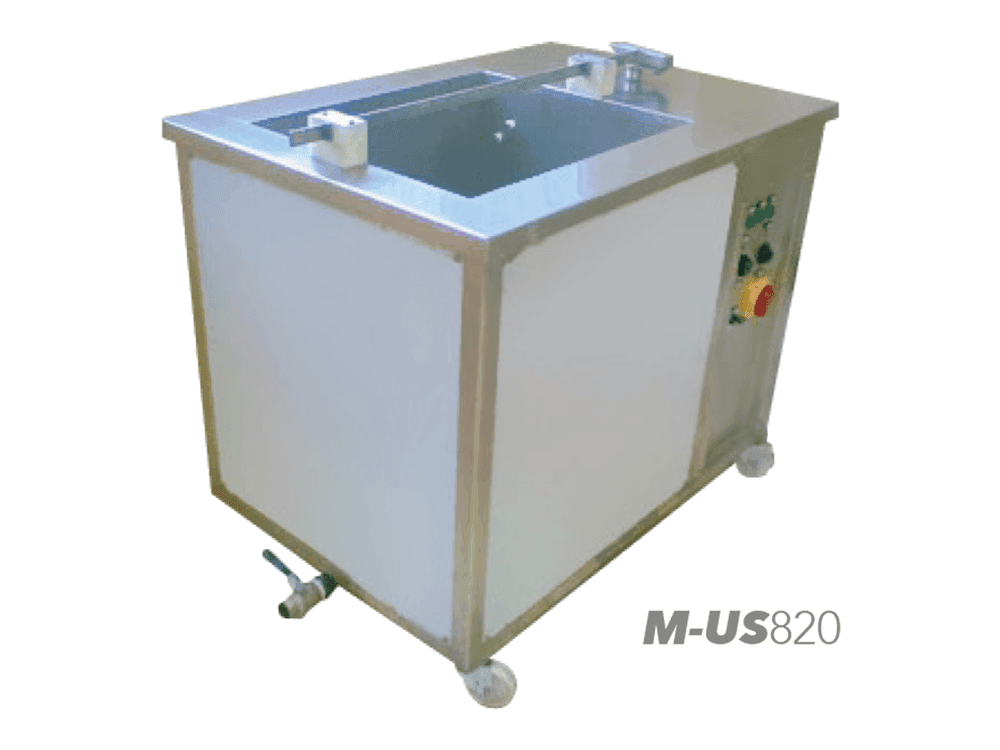
For high-volume lines, inline hot-air drying systems or corncob media drying in vibratory dryers are common solutions. KAYAKOCVIB USW ultrasonic cleaners can be configured with integrated drying stages to streamline the cleaning and drying sequence for precision parts.
Ultrasonic Cleaning-Specific Problems
Ultrasonic cleaning introduces additional failure modes that are not present in pressure washing systems. The most common ultrasonic-specific industrial washing problems include cavitation erosion on soft materials, ineffective cleaning due to bath saturation, and part damage from resonance at specific frequencies.
Bath saturation occurs when the ultrasonic cleaning solution accumulates too much contamination to sustain effective cavitation energy transfer. Degraded baths show reduced cleaning performance even at correct temperature and frequency settings. Regular bath change intervals based on contamination load, not calendar time alone, are required to maintain consistent results.
Cavitation erosion on aluminum, zinc alloy, or soft copper parts can occur if ultrasonic frequency is too low or if parts are positioned directly at maximum cavitation intensity zones. Using higher frequencies for softer materials, positioning parts in lower-intensity zones, and limiting exposure time are standard corrective actions. For delicate or high-precision parts, ultrasonic cleaning parameters must be validated before production release.
Common Industrial Washing Problems: Diagnostic Reference
| Symptom | Likely Root Cause | Corrective Action |
|---|---|---|
| Residual oil or chips after washing | Low pressure, wrong chemistry, degraded bath, filtration failure | Increase pressure or temperature, replace bath, clean filters |
| Watermarks or mineral deposits | Hard water, insufficient rinse, slow drain before drying | Add DI final rinse, improve drain time, use water softener |
| Surface discoloration on aluminum | Alkaline chemistry too strong, temperature too high | Reduce concentration, lower temperature, switch to neutral compound |
| Chemical residue on parts | Single-stage rinse, contaminated rinse water, short dwell time | Add rinse stages, monitor conductivity, extend rinse time |
| Flash rusting on steel | No corrosion inhibitor, slow drying, residual salts | Add rust inhibitor to final rinse, improve drying stage |
| Residual moisture after drying | Low drying temperature, overloaded dryer, complex geometry | Increase temperature, reduce load, add blow-off before drying |
| Inconsistent ultrasonic cleaning | Bath saturation, wrong frequency, incorrect loading | Replace bath, adjust frequency, correct basket loading |
Process Parameter Checklist for Washing Optimization
When troubleshooting industrial washing problems, systematic parameter review is more reliable than changing one variable at a time without a defined baseline. The following parameters should be checked and documented before making process adjustments.
- Wash water temperature: typically 50 to 70 degrees Celsius for oil removal from steel; lower for aluminum
- Detergent concentration: verify against supplier specification using titration or conductivity measurement
- Spray pressure in pressure washing systems: verify nozzle condition and pump output pressure
- Ultrasonic frequency and power density: confirm settings match part material and contamination type
- Bath age and contamination level: visual and conductivity check before each production shift
- Rinse water conductivity: should be below the threshold defined for the specific process
- Drying temperature and dwell time: verify against part geometry and thermal mass
- Filter condition: inspect and replace at defined service intervals
- Water quality: hardness, pH, and total dissolved solids affect both wash chemistry and rinse quality
Prevention Checklist for Consistent Washing Results
Many industrial washing problems can be prevented through systematic process control rather than reactive troubleshooting. Establishing defined maintenance intervals, monitoring points, and process limits for each washing system prevents gradual degradation from going undetected until parts fail inspection.
- Define bath change intervals based on part volume and contamination load, not calendar time alone
- Monitor rinse water conductivity at the start of each production shift
- Inspect spray nozzles and ultrasonic transducers at defined service intervals
- Verify filter condition and replace at scheduled intervals
- Log water temperature, pressure, and chemistry concentration for each production batch
- Validate drying effectiveness for new part geometries before production release
- Test corrosion inhibitor concentration in the final rinse stage weekly
- Document any process change and re-validate against a reference part before approving new settings
Frequently Asked Questions
What causes watermarks on steel parts after industrial washing?
Watermarks are typically caused by hard water mineral deposits that dry onto the part surface before the final rinse drains completely. Installing a deionized water final rinse stage and ensuring adequate drain time before drying resolves most cases.
How often should an industrial wash bath be replaced?
Bath change frequency depends on contamination load and part volume. Monitoring bath conductivity and visual contamination level provides a more accurate trigger for bath replacement than a fixed calendar interval. In high-volume production, baths may require replacement after every shift.
Can steel and aluminum parts be washed together in the same system?
Washing steel and aluminum parts in the same chemical bath is not recommended. Chemistry optimized for steel degreasing is often too alkaline for aluminum and can cause surface etching or discoloration. Separate wash cycles with chemistry selected for each material are the safer approach.
What is the role of filtration in industrial washing systems?
Filtration prevents contamination particles removed from early parts from redepositing onto parts processed later in the same cycle. Inadequate filtration is a primary cause of recontamination, especially in high-volume operations with heavy chip or fines loads.
Why do flash rust spots appear on steel parts after washing?
Flash rusting occurs when steel surfaces remain wet after washing without adequate corrosion protection. It is accelerated by hard water salts, high humidity, and insufficient drying. Adding a rust inhibitor to the final rinse stage and ensuring complete drying before storage or transit are the standard corrective measures.
Related Process Equipment
Related Video Demonstration
Conclusion
Resolving industrial washing problems requires a structured diagnostic approach that examines each stage of the washing sequence separately: wash chemistry and mechanical action, rinse quality and water condition, drying effectiveness, and filtration performance. Most failures can be traced to one or two root causes rather than a systemic system failure. Systematic parameter monitoring, defined maintenance intervals, and chemistry management practices prevent the majority of recurring problems before they reach inspection. For applications involving high-value parts in automotive, aerospace, or medical manufacturing, washing process validation using sample parts and defined acceptance criteria should be completed before production release, and revalidated whenever part geometry, contamination type, or processing volume changes significantly.
Sorry, the comment form is closed at this time.