


19 Aug Industrial Water Reuse in Surface Finishing
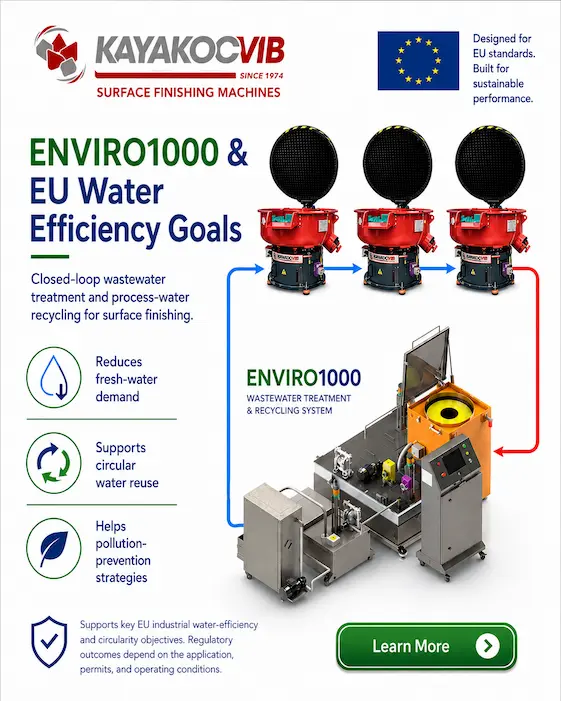
Industrial water reuse in surface finishing is the engineering practice of collecting, treating, and recirculating process water from vibratory and mass-finishing operations rather than discharging it as wastewater after each production cycle. In facilities running continuous or high-volume wet finishing, the volume of water consumed, contaminated, and discharged represents a measurable operating cost and an increasing regulatory and environmental concern. Closed-loop water recycling directly reduces freshwater demand, lowers discharge volumes, and supports compound and resource efficiency across the finishing line.
In This Article
What Is Industrial Water Reuse in Surface Finishing?
In vibratory and mass-finishing operations, water is used as a carrier for finishing compounds, as a coolant, and as a transport medium to flush abraded particles and swarf away from parts and media. After each cycle, this water is loaded with fine solids from abraded media and workpieces, metallic particles, residual finishing compound, oils, and emulsified lubricants from machining operations on incoming parts.
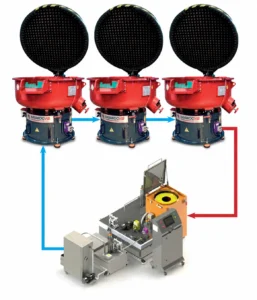
In a conventional open-drain arrangement, this contaminated water is sent directly to drain or to an external treatment facility. In a closed-loop configuration, the water is collected, conditioned, treated to remove solids, oils, and contaminants, and returned to the finishing machine for reuse. Industrial water reuse in surface finishing therefore requires a treatment system capable of separating suspended solids, managing oils, and restoring the water to a condition suitable for reuse in the next production cycle.
Why Industrial Water Reuse Has Become an EU Manufacturing Priority
Several interconnected EU policy frameworks have elevated water efficiency from an operational consideration to a strategic manufacturing requirement. Understanding these frameworks helps manufacturers assess how closed-loop water recycling fits into their environmental and regulatory planning.
The European Green Deal provides the overarching EU policy framework for transitioning toward a modern, resource-efficient, competitive, and low-pollution economy. The Zero Pollution Action Plan targets reductions in harmful discharges to water bodies and addresses industrial process water as a contamination source.
The European Water Resilience Strategy, adopted by the European Commission in June 2025, establishes water efficiency as a strategic priority for European industry. The strategy promotes a water-smart economy and sets an EU-level objective to improve water efficiency by at least 10% by 2030, while encouraging greater water reuse, circularity, and investment in water-efficient technologies. The strategy supports the principle that industrial process water should be treated and recirculated wherever technically feasible before any discharge occurs.
The revised Industrial Emissions Directive, commonly referred to as IED 2.0, strengthens the EU framework for resource-efficient industrial operation. BAT conclusions may include environmental performance levels and benchmarks covering water consumption, resource efficiency, and water reuse, while permits for installations within the scope of the Directive may include binding environmental performance limits for water. Closed-loop process-water recycling can therefore support the resource-efficiency and pollution-prevention objectives of IED 2.0 where the relevant industrial installation falls within its scope.
The EU Taxonomy for Sustainable Activities defines technical screening criteria for activities that substantially contribute to environmental objectives including water protection and sustainable use. Manufacturers seeking to align capital investments with EU Taxonomy environmental objectives may consider closed-loop process-water recycling systems as part of their evidence base, though formal taxonomy eligibility determination is a legal and financial assessment distinct from machine engineering capability.
How the ENVIRO1000 Works
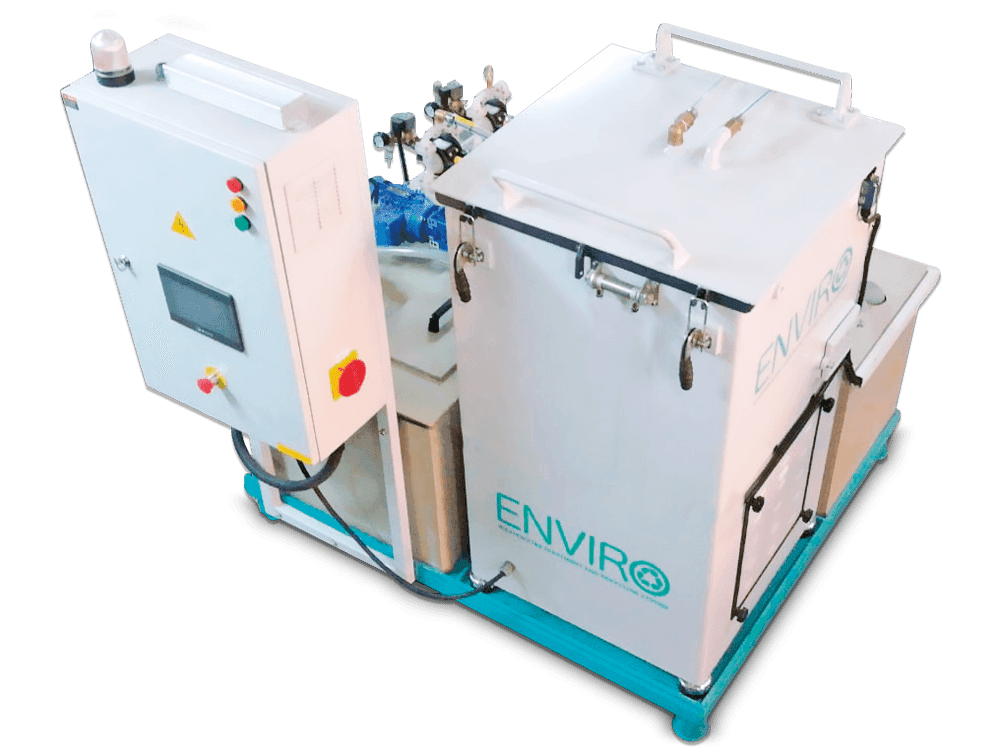
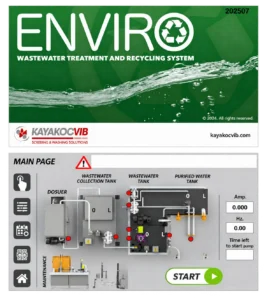
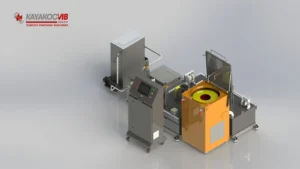
The ENVIRO1000 is a wastewater treatment and recycling system designed for industrial surface finishing installations. Its engineering architecture is built around centrifugal solids separation, oil management, chemical conditioning, and automated process control. The system is designed to receive contaminated process water from finishing machines, treat it through a staged separation and conditioning process, and return clarified water to the finishing line for reuse.
The core separation mechanism uses centrifugal force to accelerate the settling of suspended solids and sludge from the wastewater stream. This approach is significantly faster than gravity sedimentation alone and produces a more consistently clarified water output, which is important for maintaining stable finishing process conditions when recycled water is returned to the machine.
Oil management is integrated into the treatment sequence. Tramp oils and emulsified lubricants carried into the finishing machine from machined workpieces are a persistent contamination source that can affect both finishing performance and water treatability. The ENVIRO1000 addresses this by incorporating oil separation before the clarified water is returned to the process.
Automated process control through a PLC and HMI interface manages the treatment cycle, monitors key parameters including liquid levels, pH, and motor current, and triggers alarms when operating conditions fall outside defined ranges. The level of automation reduces operator intervention and supports consistent water quality throughout the production shift.
From Wastewater to Reusable Process Water: Step-by-Step
The water recycling sequence in the ENVIRO1000 follows a structured engineering process designed to progressively remove contaminants and restore water quality to a level suitable for reuse.
- Wastewater Collection: Process water discharged from the vibratory finishing machine at the end of a cycle, or continuously during wet finishing, is collected and directed to the treatment system inlet. The incoming water contains suspended solids, fine abrasive particles, metallic swarf, finishing compound residues, and oils.
- Dosing and Conditioning: A flocculant or coagulant is dosed into the wastewater stream to promote the aggregation of fine suspended particles into larger flocs. Correct flocculant selection and dosing rate are critical variables that affect separation efficiency and recycled water clarity. pH adjustment may also be applied at this stage depending on the incoming water chemistry.
- Mixing and Preparation: The dosed water is mixed to ensure uniform distribution of the flocculant and to initiate floc formation before the separation stage. Mixing intensity and residence time affect floc structure and downstream separation performance.
- Oil Management: Tramp oils are separated or skimmed before the main solids separation step. Effective oil management at this stage prevents oils from being reintroduced into the finishing process, which would impair both finishing performance and media condition.
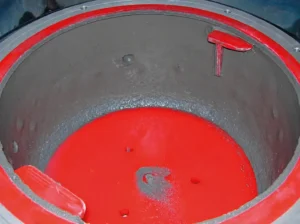
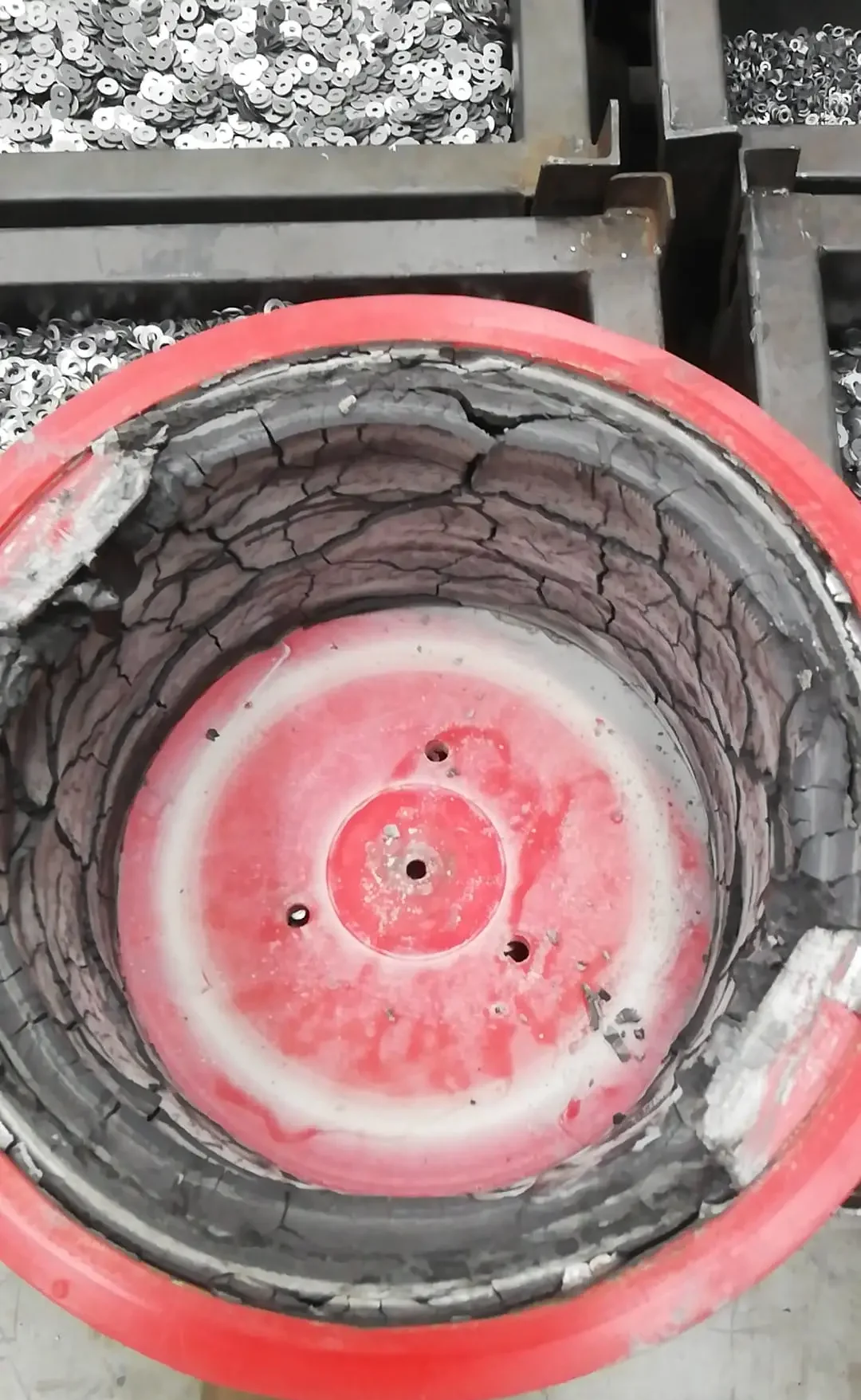
- Centrifugal Solids and Sludge Separation: The conditioned water passes through the centrifugal separation stage where centrifugal force drives the denser solid particles and sludge to the outer wall of the separation chamber. The sludge is collected and discharged for disposal. The clarified water moves toward the inner collection zone.
- Clarified Water Collection: The centrifugally separated clarified water is collected in a holding tank or reservoir within the system. Water quality at this stage depends on the effectiveness of the preceding conditioning and separation steps.
- Process Water Return: Clarified water is pumped back to the finishing machine or to a process water buffer tank for reuse in the next finishing cycle. In continuous finishing operations, this return loop operates throughout the production shift.
- Sludge Handling: The separated sludge, concentrated with metallic particles, abrasive fines, and precipitated contaminants, is collected for appropriate handling and disposal according to local waste classification requirements. Sludge volume and composition vary depending on the parts processed, media type, and incoming contamination load.
ENVIRO1000 Technical Platform
The following table summarises the key engineering specifications and functional capabilities of the ENVIRO1000 system as a closed-loop water treatment platform for surface finishing installations.
| Feature | Engineering Description |
|---|---|
| Separation Principle | Centrifugal solids and sludge separation |
| Oil Management | Integrated tramp oil separation stage |
| Chemical Conditioning | Flocculant dosing system with mixing stage |
| Process Control | PLC-based automation with HMI interface |
| Monitoring Parameters | Liquid level, pH, motor current, alarms |
| Water Cycle | Automatic closed-loop return to finishing machine |
| Sludge Output | Separated sludge collected for external disposal |
| Integration | Compatible with vibratory and mass-finishing lines |
| Primary Application | High-volume wet surface finishing with continuous water demand |
ENVIRO1000 and EU Green Transition Objectives
The table below maps ENVIRO1000 engineering functions to relevant EU policy frameworks. This mapping reflects technical alignment between machine capability and policy objectives. It does not constitute regulatory compliance certification, formal EU Taxonomy eligibility, or plant-level legal compliance confirmation. Actual regulatory compliance is determined by the applicable national implementation of each directive, the specific industrial installation, and formal legal and environmental assessment.
| EU Framework | EU Objective | ENVIRO1000 Engineering Function | Practical Contribution | Important Limitation |
|---|---|---|---|---|
| European Water Resilience Strategy | Reduce industrial freshwater demand and promote water reuse | Closed-loop water recirculation; clarified water returned to process | Reduces freshwater draw per production cycle; supports water reuse infrastructure | Actual freshwater savings depend on application, part type, and operating conditions |
| European Green Deal | Reduce industrial resource consumption and pollution | Wastewater volume reduction through recycling; lower discharge frequency | Supports reduction in both water and compound consumption per unit of output | Green Deal compliance is a facility-level obligation, not a machine certification |
| Circular Economy Action Plan | Treat industrial water as a recoverable resource | Process water collected, treated, and returned to production cycle | Converts a waste stream into a production input; supports circular water use | Residual sludge requires external disposal; full circularity is not achieved |
| Zero Pollution Action Plan | Reduce harmful discharges to water bodies | Solids, oils, and contaminants removed before water is reused or discharged | Lowers pollutant load in any residual discharge; reduces discharge volume | Discharge quality must still meet local emission limit values; system does not guarantee zero discharge |
| IED 2.0 | Require resource-efficient industrial operation aligned with BAT | Automated water treatment with monitoring; supports operational efficiency documentation | Provides a technical platform for demonstrating water-efficiency measures | IED compliance is assessed against installation-specific BAT conclusions by competent authorities |
| EU Taxonomy Environmental Objectives | Align investments with water protection and pollution prevention objectives | Closed-loop water management reduces environmental impact of water-intensive finishing | May support Taxonomy do-no-significant-harm assessment evidence for water objective | Formal Taxonomy alignment requires legal and financial screening beyond machine specification |
Water Efficiency and Closed-Loop Manufacturing
The principal water-efficiency benefit of closed-loop recycling is the reduction in freshwater consumption per unit of production. In a conventional open-drain finishing installation, fresh water must be introduced at the start of each cycle to replace the water that has been discharged. In a closed-loop configuration, a portion of the treated water is recirculated, and freshwater make-up is required only to compensate for evaporation losses, drag-out on parts, and any deliberate partial discharge needed to control dissolved salt or conductivity build-up.
Compound efficiency is a secondary benefit. When water is recirculated, residual finishing compound carried over from the previous cycle contributes to the effective compound concentration in the next cycle. This can reduce the total compound dosing required per shift, though it also requires monitoring to prevent over-concentration or compound degradation from affecting surface finish quality.
Discharge volume minimisation is directly achieved by recirculating the majority of process water. In facilities where wastewater discharge is subject to local consent conditions, reducing discharge frequency and volume is both an environmental and an operational compliance benefit. However, the water that is eventually discharged must still meet applicable quality standards, and the ENVIRO1000 does not eliminate the need for discharge quality management.
ENVIRO1000 Versus Conventional Open-Drain Operation
| Parameter | Open-Drain Operation | ENVIRO1000 Closed-Loop |
|---|---|---|
| Freshwater demand | High; full replacement each cycle | Reduced; make-up water only for losses |
| Wastewater volume | Full process volume discharged per cycle | Significantly reduced; mainly sludge and periodic blowdown |
| Compound consumption | Full dose required per cycle | Potentially reduced through carryover; requires monitoring |
| Process control | Minimal water parameter feedback | PLC-controlled with pH, level, and motor monitoring |
| Sludge handling | Diluted in wastewater stream | Concentrated and separated for external disposal |
| Automation | Manual or semi-manual water management | Automated treatment and return cycle |
| Environmental monitoring | Limited; relies on discharge point monitoring | Continuous in-system parameter monitoring |
| Operating cost implications | Higher water, compound, and discharge costs | Reduced water and compound costs; capital investment required |
Key Factors Affecting Recycled Water Quality
The quality of recycled process water in a closed-loop finishing system is not constant. It depends on a combination of incoming contamination load, treatment efficiency, and operating conditions that vary across production runs and part types.
Incoming solids concentration is directly related to the media type, material removal rate, and the condition of parts entering the finishing machine. Higher solids loading increases the burden on the centrifugal separator and may require adjustment of flocculant dosing or treatment cycle time. Media type affects both the particle size distribution and the mineralogy of the suspended solids, which in turn affects flocculant selection and settling behaviour.
Metal type influences the chemistry of the wastewater. Aluminum, steel, and stainless steel each produce different dissolved metal species, oxide particles, and surface chemistry. Mixed-metal batches present more complex water chemistry and may require more careful pH and flocculant management. Oils and lubricants from machined workpieces add an emulsified oil fraction that must be managed in the oil separation stage before it accumulates to a level that impairs finishing performance or clogs the separation system.
Conductivity and dissolved salt build-up are long-term concerns in any recirculation system. As water is repeatedly recycled, dissolved ionic species from finishing compounds, water treatment chemicals, and metallic dissolution accumulate. Elevated conductivity can affect compound performance and part surface quality. Periodic partial discharge and fresh-water dilution are used to control conductivity within acceptable limits. pH drift must also be monitored, as both acidic and alkaline extremes can affect media wear rates, part surface condition, and compound effectiveness. Water temperature and evaporation affect the effective volume and concentration of the recirculating water, particularly in high-throughput continuous operations.
Automation and Environmental Process Control
The PLC-based control architecture of the ENVIRO1000 manages the treatment sequence automatically through predefined operational logic. The HMI provides operators with visibility of system status, active alarms, and key parameter readings without requiring manual sampling at every stage. Level monitoring ensures that tank volumes remain within operational limits and triggers automatic water cycle initiation or cessation as required.
pH monitoring allows the system to flag conditions where water chemistry has drifted outside the range suitable for the current flocculant or finishing compound. Motor and current monitoring on the centrifuge or pump drives provides early indication of mechanical loading changes that may signal sludge accumulation, blockage, or wear. Alarm functions alert operators to conditions requiring intervention before process quality is compromised.
Integration with the finishing line is an important implementation consideration. In well-designed installations, the ENVIRO1000 operates as part of an automated production sequence where water discharge from the finishing machine, treatment system operation, and treated water return are coordinated automatically. This eliminates manual water handling steps and supports consistent process conditions across multiple shifts and operators.
Does ENVIRO1000 Make a Factory EU Compliant?
No single wastewater-treatment machine automatically makes an industrial facility compliant with all EU environmental legislation. Regulatory compliance is determined by the applicable legislation as transposed in each member state, the specific installation permit conditions, the nature of the industrial activity, and formal assessment by the competent regulatory authority. The ENVIRO1000 is an engineering system, not a compliance certification.
What the ENVIRO1000 can do is form an important technical component of a facility’s water-efficiency, pollution-prevention, and circular-resource strategy. It provides engineering infrastructure for closed-loop water management, reduces discharge volumes, and supports the documentation of water-efficiency measures. These functions are directly relevant to demonstrating best-available-technique alignment under IED 2.0, supporting EU Taxonomy environmental objective evidence, and operationalising the water-reuse principles of the European Water Resilience Strategy. The distinction between technical alignment and legal compliance is not a formality. It is a meaningful engineering and legal boundary that manufacturers and their environmental managers must understand when planning regulatory submissions or investment justifications.
EU Taxonomy: Functional Alignment Versus Formal Taxonomy Eligibility
The EU Taxonomy Regulation defines technical screening criteria for economic activities that substantially contribute to one or more of six environmental objectives. Water protection and sustainable use is one of these objectives. A closed-loop water treatment system that demonstrably reduces freshwater consumption and minimises wastewater discharge in a manufacturing operation may produce evidence relevant to the do-no-significant-harm assessment for water objectives.
However, formal EU Taxonomy alignment is a legal and financial determination made at the activity or investment level, not at the level of a single piece of equipment. It requires a structured assessment of the full economic activity against all applicable technical screening criteria and minimum social safeguards. The ENVIRO1000 can contribute engineering evidence to this assessment but does not itself confer Taxonomy eligibility or alignment. Manufacturers undertaking Taxonomy reporting should work with qualified financial and legal advisors, not rely on equipment specifications alone.
Advantages and Limitations
The primary engineering advantages of closed-loop process-water recycling with the ENVIRO1000 are reduced freshwater demand per production cycle, reduced wastewater discharge volume, improved compound utilisation, automated water quality management, and a structured sludge output that is easier to characterise and dispose of than dilute wastewater. These benefits are consistent across automotive, aerospace, CNC machining, fastener manufacturing, die casting, and general mass-finishing installations, though the magnitude of savings depends on the specific application, part throughput, and incoming contamination levels.
Limitations include the capital cost of the treatment system, the requirement for ongoing chemical consumables including flocculants and pH adjustment chemicals, the need for operator training in water chemistry management, and the sludge disposal requirement. The system does not achieve zero discharge. Dissolved salts, compounds, and fine colloidal particles that pass through the separation stage will accumulate over time and require periodic blowdown. Certain highly contaminated wastewater streams, such as those from parts carrying heavy cutting oils or from finishing operations on reactive metals, may require additional pre-treatment stages beyond the standard ENVIRO1000 configuration. Process validation through water sampling and quality testing is necessary when establishing the system in a new application.
Industrial Applications
Automotive component suppliers typically run high-volume wet vibratory finishing on steel and aluminium parts including engine components, transmission housings, brackets, and fasteners. The continuous water demand and large discharge volumes in these installations make closed-loop water recycling economically and environmentally significant.
Aerospace machining operations process high-value aluminium, titanium, and stainless steel components where surface quality requirements are stringent and process consistency is essential. Closed-loop water management supports stable process water chemistry, which contributes to consistent surface finish results across batches.
CNC machining job shops frequently run vibratory deburring on mixed metal batches. The variation in incoming oil and metal contamination requires robust treatment systems that can handle variable incoming water chemistry, which the ENVIRO1000 is designed to manage through its conditioning and monitoring architecture.
Fastener manufacturing involves very high part throughput with relatively small individual parts. Water consumption per shift is high and the economics of water and compound reuse are particularly favourable in fastener operations. Die casting facilities process parts carrying release agents and residual oils from the casting process, which increases the oil management demand on any water treatment system. Metal stamping and general mass-finishing installations benefit from the same freshwater reduction, discharge minimisation, and compound efficiency principles that apply across all wet finishing operations.
Key Takeaways
- Industrial water reuse in surface finishing is the engineering practice of collecting, treating, and recirculating process water rather than discharging it after each finishing cycle.
- The ENVIRO1000 uses centrifugal separation, oil management, flocculant conditioning, and PLC-based automation to treat and return process water in a closed loop.
- Closed-loop water recycling reduces freshwater demand, lowers discharge volumes, and can improve compound efficiency compared to conventional open-drain operation.
- The European Water Resilience Strategy, IED 2.0, Circular Economy Action Plan, and EU Taxonomy environmental objectives all provide policy context supporting industrial water reuse in manufacturing.
- No single wastewater treatment machine confers EU regulatory compliance. The ENVIRO1000 is an engineering component that can support a facility’s water-efficiency and pollution-prevention strategy.
- Recycled water quality depends on incoming contamination load, flocculant selection, metal type, oils, pH, conductivity, and sludge management. These variables require ongoing monitoring and process control.
- Sludge generated by the separation process requires appropriate external disposal and does not disappear in a closed-loop system; full circularity is not achieved.
- Formal EU Taxonomy alignment requires a legal and financial assessment at the activity level; equipment specification alone is not sufficient.
Frequently Asked Questions
What Is Industrial Water Reuse in Surface Finishing?
Industrial water reuse in surface finishing is the practice of treating contaminated process water from vibratory or mass-finishing machines and returning it to the finishing process for reuse, rather than discharging it as wastewater after each cycle.
How Does ENVIRO1000 Recycle Vibratory Finishing Wastewater?
The ENVIRO1000 collects process water from the finishing machine, doses it with flocculant, separates oils, uses centrifugal separation to remove suspended solids and sludge, and returns the clarified water to the finishing line through an automated PLC-controlled cycle.
Can ENVIRO1000 Reduce Fresh-Water Consumption?
Yes. By recirculating treated process water, the ENVIRO1000 reduces the volume of freshwater required per production cycle. Make-up water is needed only to compensate for evaporation, drag-out, and periodic blowdown. Actual savings depend on the specific application and operating conditions.
Is ENVIRO1000 European Green Deal Compliant?
The ENVIRO1000 is not a compliance certification. European Green Deal compliance is a facility-level legal determination. The ENVIRO1000 provides engineering functions aligned with Green Deal objectives for resource efficiency and pollution prevention, but compliance is assessed by regulatory authorities against installation-specific conditions.
Can ENVIRO1000 Achieve Zero Wastewater Discharge?
No. The ENVIRO1000 significantly reduces wastewater discharge volumes but does not eliminate discharge entirely. Dissolved salts and fine colloidal particles accumulate in the recirculating water over time and require periodic blowdown. Separated sludge also requires external disposal.
What Contaminants Can Occur in Vibratory Finishing Wastewater?
Vibratory finishing wastewater typically contains suspended solids from abraded media and workpieces, metallic particles, residual finishing compound, tramp oils and emulsified lubricants from machined parts, dissolved metal species, and pH-active components from finishing chemistry. Contamination type and concentration vary with the material, media, compound, and part condition.
Related Process Equipment
Related Video Demonstration
Conclusion
Closed-loop industrial water reuse in surface finishing is a practical engineering mechanism for manufacturers seeking to reduce freshwater consumption, minimise wastewater discharge, and align operations with EU water-efficiency and circular-economy objectives. The ENVIRO1000 provides the separation, conditioning, oil management, and automation architecture required to make recirculation of vibratory finishing process water technically feasible at industrial scale. Its alignment with the European Water Resilience Strategy, IED 2.0 resource-efficiency principles, and Circular Economy Action Plan objectives reflects functional engineering capability rather than legal certification. Manufacturers implementing closed-loop water management should treat the treatment system as one component of a broader environmental management approach that includes discharge quality monitoring, sludge handling, water chemistry control, and formal regulatory engagement appropriate to their specific installation and jurisdiction.
Sorry, the comment form is closed at this time.