


07 Aug Washing Drying Automotive Parts
Washing drying automotive parts is not a standalone step but a functional stage integrated into the broader surface finishing sequence. After vibratory deburring, edge rounding, or polishing operations, automotive components carry residual process compounds, fine abrasive debris, metal fines, and surface oils that must be removed before any downstream process such as coating, heat treatment, assembly, or inspection. Skipping or underspecifying the cleaning and drying stage introduces contamination that compromises adhesion, dimensional measurement, corrosion resistance, and component function.
In This Article
Typical Automotive Parts and Surface Conditions After Deburring
Automotive surface finishing covers a wide range of part families. CNC-machined housings, transmission gears, brake caliper brackets, hydraulic valve bodies, stamped sheet metal brackets, aluminum die cast covers, and sintered powder metal parts are commonly processed through vibratory or centrifugal deburring. Each part type exits the deburring machine in a different condition depending on material, media type, compound chemistry, and process duration.
Steel and stainless steel parts finished with ceramic media and water-based deburring compound typically carry an alkaline compound film, ceramic fines, and metallic particles embedded in surface features. Aluminum and zamak die cast parts finished with plastic media carry a milder residue, but the softer surface is more susceptible to staining if cleaning is delayed or inadequate. Mixed-metal batches create additional complexity because residue composition varies within the same load.
Parts with blind holes, threads, narrow slots, or internal passages present the highest cleaning challenge. Compound and media fines accumulate in these features during the finishing cycle and are not easily removed by simple rinsing alone.
Why Washing Drying Automotive Parts Requires a Dedicated Process Stage
A common production error is to treat the rinse water at the discharge end of a vibratory machine as sufficient cleaning. Vibratory machine rinse systems use recirculated process water with active compound, which means parts exit the machine still coated with a diluted compound film rather than being truly clean. This film must be removed by a separate washing stage using clean water or a dedicated washing system.
Effective washing and drying of automotive parts after deburring serves several engineering functions. It removes active compound chemistry that would interfere with phosphating, anodizing, or coating adhesion. It removes metallic fines and abrasive particles that would otherwise appear as surface defects or embed into soft coatings. It eliminates moisture and cleaning solution from internal features to prevent flash corrosion, which is a particular concern for uncoated steel parts in humid environments. It prepares the surface for accurate dimensional or surface roughness measurement.
Washing Process Routes for Automotive Deburring Lines
The appropriate washing method depends on part geometry, material, contamination level, production volume, and cleanliness specification. Three main washing routes are used in industrial automotive finishing lines.
High-pressure spray washing uses pressurized jets to mechanically flush compound residue, metal fines, and loose particles from part surfaces and internal features. This is effective for open geometries with accessible surfaces and is commonly used for castings, housings, and machined blocks. Pressure washing systems such as the KAYAKOCVIB PRS-W operate with adjustable water pressure and temperature, and may include multi-stage zones combining pre-rinse, main wash, and final rinse to ensure progressive contamination removal.
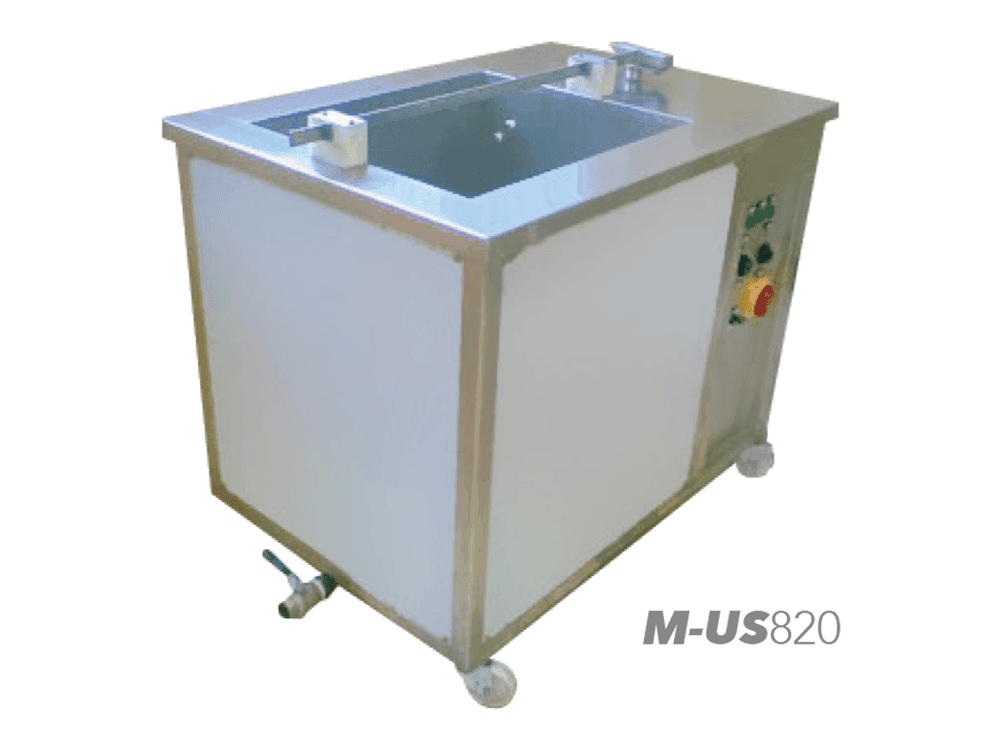
Ultrasonic cleaning is preferred when parts have complex internal features, blind holes, fine threads, or micro-scale surface contamination that mechanical spray cannot reliably reach. Ultrasonic systems generate cavitation in the cleaning bath, which dislodges particles from inaccessible areas through acoustic energy rather than direct mechanical impingement. The KAYAKOCVIB USW ultrasonic cleaner series is applicable for aluminum die cast components, hydraulic valve bodies, and precision-machined automotive parts where internal cleanliness is a functional requirement. Ultrasonic cleaning is typically combined with a post-rinse stage and a corrosion inhibitor bath for steel parts.
Standard multi-stage spray washing is the most widely used route for volume automotive production. Parts travel through a sequence of wash and rinse zones on conveyors or in baskets, with water temperature and detergent concentration controlled per zone. This approach integrates well with automated finishing lines and allows high throughput with consistent cleanliness results.
Washing Parameters That Affect Cleaning Quality
The effectiveness of the washing stage depends on several controllable process variables. Water temperature is one of the most significant. Increasing wash water temperature generally improves compound solubility and accelerates oil emulsification, but excessively high temperatures may cause flash evaporation that leaves residue on aluminum surfaces before rinsing is complete.
Detergent or cleaning compound concentration must be matched to the contamination type. Parts carrying heavy oil, cutting fluid, or metallic chips from CNC machining require stronger degreasing chemistry than parts exiting a vibratory finishing cycle with only mild compound residue. Using a degreasing liquid such as 028-S in the wash stage improves oil and compound removal for both steel and aluminum parts. Over-concentration of alkaline detergents can cause staining on aluminum or attack surface finish on sensitive alloys.
Wash pressure and dwell time must be balanced with part geometry. Fragile thin-wall stamped brackets or soft aluminum castings may require reduced spray pressure to avoid surface marking. Valve bodies and complex hydraulic parts with long internal passages may require extended dwell time or ultrasonic assistance to achieve full internal cleanliness.
| Part Type | Recommended Washing Method | Key Parameters |
|---|---|---|
| Aluminum die castings | Multi-stage spray or ultrasonic | Low-to-medium pressure, controlled temperature, 028-S detergent |
| Steel machined housings | High-pressure spray washing | High pressure, elevated temperature, alkaline detergent |
| Hydraulic valve bodies | Ultrasonic cleaning with rinse | Ultrasonic frequency matched to passage dimensions, corrosion inhibitor rinse |
| Stamped steel brackets | Multi-stage spray washing | Medium pressure, corrosion inhibitor in final rinse |
| Stainless steel parts | Spray washing or ultrasonic | Neutral to mildly alkaline detergent, demineralized water rinse |
Drying After Automotive Washing
Drying is the stage that is most often underestimated in automotive finishing lines. Parts entering a drying stage still carry surface moisture, which on uncoated steel parts can initiate flash oxidation within minutes under ambient humidity conditions. On aluminum parts, water marks and mineral deposits from improperly managed rinse water appear as visible surface defects that are difficult to remove without reprocessing.
Industrial drying methods used after washing automotive parts include hot air drying, centrifugal drying, vibratory drying with drying media, and infrared drying. The selection depends on part geometry, material sensitivity, production volume, and line integration requirements.
Vibratory drying using dry corn cob granules or other absorbent natural media is a widely used method in mass finishing lines. Parts are loaded into a vibratory dryer together with the drying media, and the tumbling action combined with mild heat drives moisture from part surfaces and internal features. This method is particularly effective for small and medium-sized parts with complex geometries because the drying media contacts all surfaces including recessed areas. KAYAKOCVIB DVM series circular vibratory dryers are designed for this application, processing batches of wet parts together with drying media under controlled temperature and vibratory motion.
Hot air conveyor dryers are preferred for larger parts or flat stamped components that benefit from directed airflow rather than media contact. These systems use temperature-controlled air at typically 80 to 120 degrees Celsius depending on material and part mass. Drying time must be validated per part geometry to ensure complete moisture removal without thermal distortion of thin-walled components.
For long automotive components such as shafts, rails, or structural members that do not suit circular drum-type dryers, D-TVM trough-type dryers can be used, where parts move longitudinally through the drying zone.
Corrosion Protection in the Washing and Drying Sequence
Uncoated steel and iron automotive parts are vulnerable to flash corrosion between the washing stage and the downstream coating or assembly operation. Industrial practice includes a corrosion inhibitor in the final rinse water to form a temporary protective film on the clean metal surface. This film must be compatible with the downstream process, meaning it must not interfere with phosphating, powder coating, or painting adhesion.
Corrosion inhibitor concentration and rinse water quality both affect the protection window. Using demineralized or deionized water in the final rinse reduces mineral deposit formation and improves inhibitor film uniformity. For aluminum parts, a pH-neutral final rinse is generally recommended to avoid surface reactions from residual alkalinity.
Integration into Automated Automotive Finishing Lines
In high-volume automotive production, washing drying automotive parts is integrated as a continuous automated sequence rather than a batch operation. Parts exit the vibratory deburring machine on a separator conveyor, pass through automatic part-media separation, enter the washing system, pass through rinse zones, and are transferred to the dryer before moving to the next production stage.
Automation reduces handling-related recontamination, ensures consistent dwell times in each washing and drying zone, and supports production rate matching between the finishing machine and downstream assembly or coating operations. Water management in automated lines typically includes compound water recycling, settling tanks for metallic fines, and wastewater treatment before disposal or reuse. Managing compound water chemistry and wastewater consistently is important for maintaining washing performance across shifts.
Sensor-based controls in automated washing systems can monitor wash water temperature, detergent conductivity or concentration, and rinse water quality in real time, enabling closed-loop adjustment that maintains cleaning consistency without manual intervention.
Quality Control After Washing and Drying
Cleanliness verification after washing and drying should be matched to the cleanliness specification of the downstream process. Common verification methods include gravimetric cleanliness testing per technical cleanliness standards, particle count analysis from rinse water samples, visual inspection under controlled lighting, and water break testing to confirm surface free of oil contamination.
For automotive hydraulic or fuel system components, technical cleanliness requirements are typically defined in engineering specifications that limit particle count and particle size class in critical internal passages. Ultrasonic cleaning combined with a properly controlled rinse stage is typically required to meet these specifications, and process validation through particle extraction and analysis is necessary before production release.
Surface dryness verification should confirm that no moisture remains in blind holes, threads, or recessed features before parts enter a coating or assembly stage. Moisture trapped in internal features can cause coating adhesion failure or corrosion initiation that is not visible at the time of assembly but appears as field failures.
Frequently Asked Questions
Why do automotive parts need a separate washing stage after vibratory deburring?
Vibratory machines operate with active process compound in the water, which means parts exit coated with a compound film rather than being clean. A separate washing stage using clean water and appropriate detergent removes this film along with metal fines and abrasive particles that would otherwise interfere with coating adhesion or contaminate downstream processes.
What is the best drying method for small CNC-machined automotive parts?
Vibratory drying with absorbent drying media such as corn cob granules is commonly effective for small to medium CNC-machined parts with complex geometries. The media contacts all surfaces and assists moisture removal from recessed areas. Actual drying performance depends on part geometry, material, moisture load, media condition, and temperature settings, and requires process validation.
When is ultrasonic cleaning preferred over pressure washing for automotive parts?
Ultrasonic cleaning is preferred when parts have blind holes, narrow internal passages, fine threads, or micro-scale contamination that pressure spray cannot reliably reach. It is typically selected for hydraulic valve bodies, precision-machined housings, and fuel system components where internal cleanliness is a functional or specification requirement.
How does corrosion protection fit into the washing and drying sequence for steel parts?
A corrosion inhibitor added to the final rinse water forms a temporary protective film on clean steel surfaces. This extends the time window between washing and downstream coating or assembly without initiating flash oxidation. The inhibitor must be selected for compatibility with the downstream process chemistry to avoid adhesion problems.
Related Process Equipment
Related Video Demonstration
Conclusion
Washing drying automotive parts after deburring is an engineering decision that must be matched to part material, geometry, contamination type, cleanliness specification, and production volume. The washing method, whether pressure spray, ultrasonic, or multi-stage spray, must be selected based on part complexity and the contamination removed from the deburring process. The drying method must ensure complete moisture removal from all surface features, including blind holes and internal passages, before parts proceed to coating, assembly, or inspection. When integrated into an automated finishing line with controlled wash chemistry, proper rinse quality, and validated drying parameters, the washing and drying stage protects surface quality, enables downstream process reliability, and supports consistent production outcomes across high-volume automotive manufacturing.
Sorry, the comment form is closed at this time.