




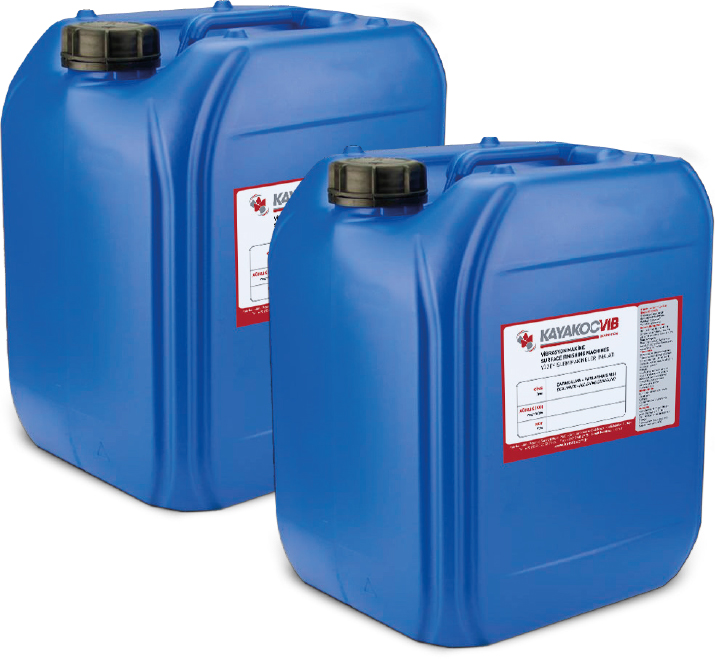
07 Jul Compound Concentration in Vibratory Finishing
Compound concentration in vibratory finishing is one of the most influential yet frequently underestimated process variables in mass finishing operations. Whether the goal is aggressive deburring on steel CNC parts or fine polishing on aluminum components, the concentration of finishing compound in the process water determines how effectively the media cuts, how cleanly it performs, and how consistently the surface result is achieved across production batches. Understanding the engineering logic behind compound dosing is essential for anyone responsible for process quality, cycle time, or consumable cost in a vibratory finishing line.
In This Article
What Finishing Compounds Actually Do in the Process
Finishing compounds are water-soluble chemical formulations introduced into the vibratory machine bowl together with water and media. Their primary functions are to lubricate the media-to-part interface, prevent redeposition of removed material onto part surfaces, control foam, maintain the pH of the process water, and in many cases provide light degreasing or brightening action on the part surface.
Compounds do not replace the mechanical cutting action of the media. The media geometry, composition, and hardness determine how aggressively material is removed. The compound controls the chemical environment in which that removal takes place. Without the correct compound at the correct concentration, even a well-selected media may underperform, produce smearing, cause staining, or leave a dull surface finish.
In wet vibratory finishing, the compound is typically introduced as a diluted water mixture through a metered dosing system or a manual addition point. The compound-to-water ratio used in the machine bowl is what engineers refer to as compound concentration.
Concentration Variables That Control the Finishing Result
Compound concentration in vibratory finishing is not a single fixed number. It depends on the base material of the parts, the type of media, the desired surface finish, the water quality, and the machine type. Several variables interact simultaneously.
The first variable is the dilution ratio of compound to water. Most industrial finishing compounds are supplied as concentrates and are dosed into the machine at ratios typically ranging from 1:20 to 1:100 depending on the compound type and application. A lower dilution ratio means higher compound concentration in the bowl, which generally increases cleaning, brightening, and surface activity but also increases consumable cost and foam risk if overdosed.
The second variable is the flow rate of compound solution into the machine. In automated or semi-automated systems, a dosing pump delivers compound continuously or at timed intervals to maintain a stable concentration in the bowl. Inconsistent flow rates are a common cause of batch-to-batch surface variation.
The third variable is process water quality. Hard water can interfere with compound chemistry, reduce foam control effectiveness, and cause scaling on both parts and media. In industrial environments where water hardness is high, compound formulations and dosing levels must be adjusted accordingly.
The fourth variable is the compound type itself. Different compound formulations are engineered for different base materials and finishing stages. Selecting the correct compound type is a prerequisite before optimizing concentration. Using the wrong compound at any concentration will not produce the required surface result.
Compound Selection by Base Material
Compound selection depends primarily on the material being finished. For steel and stainless steel parts, compounds designed for ferrous metals are formulated to prevent rust formation on freshly finished surfaces, support the cutting action of ceramic media, and provide consistent surface brightening. A typical process for steel deburring uses ceramic media together with a deburring and polishing liquid such as a 943-type formulation, dosed at the manufacturer-recommended ratio for the specific application.
For aluminum, zamak, and other non-ferrous metals, the compound must be compatible with softer base materials that are more sensitive to staining and chemical attack. Plastic media is generally preferred for aluminum because it produces less aggressive material removal. A suitable compound such as an 085-type deburring and polishing liquid supports this process by protecting the aluminum surface while maintaining cleaning and brightening performance.
For copper, brass, and yellow metals, a more acidic compound formulation such as a 028-type degreasing liquid is commonly used. This type of compound is also suitable when heavy scale, oxide contamination, or strong surface soiling is present before finishing.
Mixing different base materials in the same batch without evaluating compound compatibility and media suitability can produce inconsistent results and is generally not recommended in controlled production environments.
Process Parameters for Compound Dosing
The following table summarizes typical compound dosing parameters for common vibratory finishing applications. These values are indicative and must be validated for each specific part, media, machine, and water condition.
| Base Material | Recommended Media | Compound Type | Typical Dilution Ratio | Process Stage |
|---|---|---|---|---|
| Steel / Stainless Steel | Ceramic | 943 deburring and polishing liquid | 1:30 to 1:60 | Deburring / Polishing |
| Aluminum / Zamak | Plastic | 085 deburring and polishing liquid | 1:20 to 1:50 | Deburring / Polishing |
| Copper / Brass | Ceramic or Plastic | 028 degreasing liquid | 1:20 to 1:40 | Degreasing / Brightening |
| Mixed ferrous / non-ferrous | Validate per batch | Validate per material | Validate per application | Not recommended without validation |
Actual dilution ratios and flow rates must be confirmed through sample testing and process validation before committing to full production volumes. The values above represent commonly observed industrial starting points, not guaranteed process specifications.
Effects of Under-Concentration and Over-Concentration
Both under-dosing and over-dosing of compound produce measurable problems in the vibratory finishing process. Understanding these failure modes helps engineers diagnose surface quality issues and adjust dosing correctly.
When compound concentration is too low, the media surface becomes contaminated with removed material that is not adequately flushed away. This causes a reduction in cutting efficiency over time, a dull or smeared surface on finished parts, and in ferrous applications, an increased risk of rust spotting on freshly finished steel surfaces. The process water also becomes cloudy and ineffective at carrying swarf out of the bowl.
When compound concentration is too high, excessive foam can develop inside the machine bowl, reducing media mobility and cutting action. Over-concentration can also cause staining on sensitive materials such as aluminum or copper, increase consumable cost unnecessarily, and complicate wastewater treatment due to higher chemical load in the discharge water.
The optimal concentration window varies by compound formulation, base material, and machine type, and should be established through a controlled trial process before full production release.
Dosing Systems and Process Consistency
Manual compound addition introduces variability that can be difficult to control in high-volume production environments. A metered dosing pump connected to the machine water supply provides stable, repeatable compound delivery regardless of operator variation. In circular vibratory machines such as the KAYAKOCVIB KVM series, dosing connections are typically integrated as part of the standard machine design, allowing continuous or timed compound delivery throughout the cycle.
For production lines with multiple machines running similar processes, centralized compound dosing systems can be used to supply compound to several machines from a single mixing station. This reduces preparation time, improves consistency across machines, and simplifies compound inventory management.
In automated finishing lines where parts move through vibratory finishing, separation, washing, and drying stages, the compound dosing system is part of the overall process control architecture. Consistent dosing at the vibratory stage directly affects the cleanliness and surface condition of parts entering the downstream washing or drying stages.
Water Management and Compound Concentration Stability
In a continuously running vibratory machine, water evaporates and is carried out of the bowl with the separated parts and media. Fresh compound and water must be added regularly to maintain the target concentration. In batch processes, the entire water volume may be replaced between cycles. In flow-through systems, continuous dosing maintains the concentration level throughout the production shift.
Water temperature also affects compound performance. Most industrial finishing compounds are formulated for ambient temperature water. Very cold water may reduce compound activity, while very hot water may cause excessive foam or accelerate evaporation. In most standard vibratory finishing applications, ambient temperature water between approximately 15 and 25 degrees Celsius is used without additional heating.
When wastewater from the vibratory process is collected and treated before discharge, the compound concentration in the outflow water affects the treatment requirement. Higher compound concentrations increase the chemical oxygen demand of the wastewater and may require more intensive treatment. Wastewater treatment and recycling systems designed for finishing operations take compound loading into account when sizing treatment capacity.
Practical Validation Before Production Release
Before setting a final compound concentration for a production process, a structured validation sequence should be followed. This is particularly important when introducing a new part material, changing compound supplier, changing media type, or scaling from sample testing to full production volume.
- Define the target surface condition including required cleanliness, surface roughness range, and acceptable edge condition.
- Select the compound type based on base material, media type, and finishing stage.
- Run a sample batch at the manufacturer-recommended starting dilution ratio and evaluate the surface result.
- Adjust dilution ratio upward or downward in controlled increments and re-evaluate after each adjustment.
- Document the compound dosing rate, flow rate, cycle time, water volume, and surface measurement result for each test condition.
- Confirm the validated concentration with repeat batches to verify consistency before releasing to production.
This validation approach prevents the common mistake of assuming that a compound concentration that worked for one material or part geometry will transfer directly to a different application without adjustment.
Frequently Asked Questions
What happens if compound concentration is not controlled precisely?
Uncontrolled compound concentration leads to inconsistent surface results across batches. Under-dosing causes poor cleaning, reduced cutting efficiency, and rust risk on ferrous parts. Over-dosing causes foam, staining on sensitive metals, and higher consumable cost. Consistent dosing through a metered system is the most reliable way to maintain process stability.
Can the same compound be used for both aluminum and steel parts?
Not in most production applications. Compounds for ferrous metals typically contain corrosion inhibitors and cutting accelerators suited to ceramic media and steel surfaces. Compounds for aluminum are formulated to protect the softer non-ferrous surface and work with plastic media. Using a ferrous compound on aluminum may cause staining or surface damage. Always match the compound formulation to the base material.
How often should compound solution be replaced in a batch process?
In batch vibratory finishing, the compound solution is typically replaced at the start of each new production batch or after a defined number of cycles. In continuous flow processes, fresh compound is dosed continuously to maintain concentration. The replacement interval depends on the soil load, part volume, and compound type, and should be established during process validation rather than assumed from generic guidelines.
Does water hardness affect compound concentration requirements?
Yes. Hard water can reduce compound effectiveness, cause scaling on media and parts, and alter foam behavior. In hard water conditions, compound dosing rates may need to be increased slightly, or water softening may be required upstream of the dosing system. The compound supplier’s technical data sheet typically includes guidance on water quality requirements.
Related Machine and Process Resources
Conclusion
Compound concentration in vibratory finishing is a controllable process variable that directly determines surface cleanliness, cutting consistency, and batch-to-batch repeatability. Getting the concentration right requires matching the compound type to the base material, selecting a dosing method that delivers stable flow, understanding the effects of both under-dosing and over-dosing, and validating the final settings through structured sample testing before full production release. As part geometry, material, and surface quality requirements vary across industries from CNC machining and automotive to aerospace and medical manufacturing, there is no universal dosing number. Engineering judgment, supplier technical data, and validation testing together define the correct operating range for each application.
Sorry, the comment form is closed at this time.