



22 Jul Centrifugal Finishing Problems
Centrifugal finishing problems are a frequent source of inconsistent surface quality, extended cycle times, and unexpected production stoppages in industrial mass finishing operations. Unlike vibratory finishing, centrifugal disc finishing generates significantly higher process forces, which means that media, compound, part loading, and machine settings all have a more direct and rapid impact on the finishing result. When something is wrong, the symptoms appear quickly and can be difficult to diagnose without understanding the underlying process mechanics.
In This Article
How Centrifugal Disc Finishing Works and Why Problems Occur
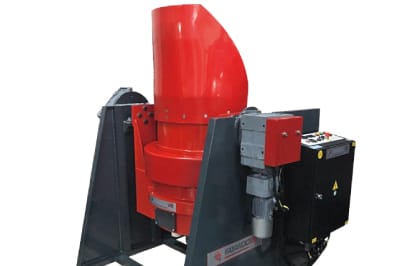
In a centrifugal disc finishing machine, a high-speed rotating disc at the bottom of a stationary barrel creates a powerful toroidal motion. Parts, media, and compound are continuously circulated in a controlled flow pattern that produces high-energy contact between the media and the part surfaces. This process is well suited for deburring, edge rounding, and polishing small to medium precision parts in short cycle times.
Because the process forces are much higher than in conventional vibratory finishing, small deviations in process parameters can cause significant defects. Incorrect media fill levels, wrong compound concentration, poor part loading ratios, or unsuitable disc speed can all lead to surface damage, inadequate material removal, staining, or media lodging. Understanding the root causes of centrifugal finishing problems is essential before making any parameter adjustments.
Root Cause Categories
Most centrifugal finishing problems fall into one of four root cause categories: machine and motion-related causes, media-related causes, compound and water-related causes, and part loading and geometry-related causes. These categories often overlap, and a single defect symptom may have more than one contributing factor.
Machine and Motion-Related Causes
The disc speed is one of the most sensitive process variables in centrifugal disc finishing. Running the disc at too high a speed increases process intensity beyond what the part surface or edge condition can tolerate, which can cause part-to-part impact damage, excessive material removal, or surface bruising on soft metals such as aluminum. Running too slow reduces the toroidal flow energy and leads to insufficient deburring or inconsistent surface coverage.
Disc wear is another mechanical cause that is frequently overlooked. A worn or uneven disc surface disrupts the flow pattern and creates dead zones where parts and media circulate without effective contact. In machines such as the KAYAKOCVIB KSM series, the disc and barrel liner condition should be inspected regularly as part of a preventive maintenance schedule. Uneven liner wear can also concentrate process energy in localized areas, leading to inconsistent results across the batch.
Barrel fill level directly affects the media circulation pattern. Underfilling reduces the process intensity and allows parts to impact each other directly. Overfilling restricts the toroidal motion and creates sluggish circulation, which reduces finishing effectiveness and can cause media impaction at the bottom of the barrel.
Media-Related Causes
Media selection and media condition are among the most common contributors to centrifugal finishing problems. Using the wrong media type for the base material is a fundamental error. For steel and stainless steel parts, ceramic media is generally appropriate because harder cutting action is required for efficient burr removal and surface smoothing. For aluminum, softer plastic media is typically preferred to avoid aggressive cutting and surface scratching. Mixing ceramic and plastic media in the same batch is not recommended and can produce unpredictable surface results.
Media degradation is a gradual problem that often goes unnoticed until the surface quality deteriorates significantly. As media wears, the cutting ability decreases, cycle times increase, and the finishing result becomes inconsistent. Media chips and fragments can lodge in blind holes, threads, or narrow slots, creating a secondary defect problem. Regular media inspection and controlled replacement intervals help prevent this.
Media size selection also affects the risk of lodging. If the media size is close to or smaller than the part features such as holes, slots, or internal radii, lodging becomes a process risk. The general rule is to select media that is clearly too large to enter the smallest part feature. When mixed part geometries are processed, the media size selection should be validated against the most restrictive feature in the batch.
Compound and Water-Related Causes
Compound dosing is a frequently misadjusted parameter. Insufficient compound concentration reduces the lubricating and cleaning action in the process, which can cause media to scratch the part surface rather than produce a clean finishing action. It also leads to staining or discoloration on sensitive metals such as aluminum and stainless steel. Excessive compound concentration creates excessive foam, which cushions the process and reduces cutting efficiency. In centrifugal disc machines, foam in the barrel disrupts the toroidal flow and significantly reduces the process force that reaches the part surface.
Water flow rate must be balanced with compound dosing. Too little water prevents adequate flushing of swarf, worn compound, and metal particles from the barrel. Accumulated swarf acts as an abrasive contaminant and can cause secondary surface scratching. Too much water dilutes the compound and reduces its effectiveness. For steel parts, inadequate compound concentration combined with high water flow is also a risk factor for flash rusting between the finishing stage and the drying stage.
Compound chemistry must match the base material and the process objective. For steel parts, deburring and polishing compounds such as the 943 type are typical. For aluminum and zamak, a compound such as the 085 type is more appropriate because it is formulated for softer metals and provides the surface protection needed during the high-energy centrifugal process. Using a compound intended for steel on aluminum parts can cause surface etching or discoloration.
Part Loading and Geometry-Related Causes
Part-to-part contact damage is a common problem when the part-to-media ratio is too high. In centrifugal finishing, the recommended media volume typically needs to be sufficient to keep parts separated from each other throughout the entire process cycle. If too many parts are loaded relative to media volume, direct part collisions produce dents, edge chipping, or surface marks that cannot be corrected by extending the cycle.
Flat and thin parts present a specific risk in centrifugal disc finishing. These geometries tend to nest together and reduce the effective contact between media and part surfaces, leading to unfinished areas. Process adjustments for flat parts typically include reducing the batch quantity, selecting a different media shape such as a triangular or cylindrical geometry that can separate flat surfaces more effectively, or reducing disc speed to allow more controlled circulation.
Delicate or complex part geometries with deep blind holes, narrow channels, or sharp internal radii require extra attention to media lodging risk. When lodging is detected after a batch, the root cause is almost always a media size or shape selection error. Process validation with new part geometries should always include a media lodging check before releasing the process to production.
Corrective Actions and Parameter Tuning
When diagnosing centrifugal finishing problems, a systematic approach is more effective than adjusting multiple parameters simultaneously. The table below outlines common defect symptoms, their most likely root causes, and recommended corrective actions.
| Symptom | Likely Root Cause | Corrective Action |
|---|---|---|
| Surface scratching or bruising | Disc speed too high, wrong media type, worn media | Reduce disc speed, switch to softer media, replace worn media |
| Incomplete deburring | Disc speed too low, media too soft, underfill, short cycle time | Increase disc speed, switch to harder media, check fill level, extend cycle |
| Part-to-part impact damage | Low media-to-part ratio, overfill | Reduce part load quantity, check barrel fill level |
| Staining or discoloration | Wrong compound, insufficient compound, poor water flush | Correct compound type and dosing, adjust water flow |
| Media lodging in parts | Media too small for part features | Switch to larger media size or different media shape |
| Excessive foam in barrel | Compound overdose | Reduce compound concentration, check dosing pump |
| Inconsistent surface across batch | Worn disc or liner, dead zones in circulation | Inspect and replace disc or liner, check barrel condition |
| Flash rusting on steel parts | Insufficient compound, delay before drying | Increase compound concentration, shorten transfer time to dryer |
When adjusting process parameters, change only one variable at a time and run a controlled test batch before modifying the full production process. This approach makes it possible to isolate the effect of each change and avoid compounding errors.
Prevention Checklist for Process Consistency
Preventing centrifugal finishing problems is more efficient than diagnosing and correcting them after they appear in production. The following checklist covers the key validation points that should be confirmed before releasing a centrifugal finishing process to regular production or when introducing a new part geometry.
- Confirm media type is appropriate for the base material.
- Confirm media size is clearly larger than the smallest part feature at risk of lodging.
- Set barrel fill level within the machine manufacturer’s recommended range.
- Establish the correct part-to-media loading ratio based on part geometry and weight.
- Verify compound type matches the base material and process objective.
- Set compound dosing rate and water flow within validated ranges.
- Check disc speed setting against the recommended range for the part material and size.
- Inspect disc and barrel liner condition regularly and record wear intervals.
- Run a media lodging inspection on the first batch of any new part geometry.
- Confirm post-finishing transfer time to drying is within acceptable limits for oxidation-sensitive materials.
- Document validated process parameters for each part family and use them as the production baseline.
Frequently Asked Questions
Why are parts being scratched after centrifugal disc finishing?
Scratching is most often caused by disc speed set too high for the part material, worn or fragmented media acting as loose abrasive particles, or using ceramic media on soft metals such as aluminum. Reducing disc speed, replacing worn media, and confirming media type compatibility with the base material are the primary corrective steps.
Why is the deburring result inconsistent across the batch?
Inconsistent deburring typically indicates a disrupted circulation pattern in the barrel. Common causes include a worn disc or uneven liner, incorrect fill level, or part nesting in the case of flat geometries. Checking the mechanical condition of the disc and liner and adjusting the fill level to the recommended range usually resolves this issue.
How do I prevent media lodging in small holes or slots?
Media lodging is prevented by selecting media that is clearly larger than the smallest hole, slot, or internal feature on the part. Changing the media shape can also help. Cylindrical or triangular media geometries are less likely to lodge in certain feature types compared to spherical or conical shapes. Always validate against the actual part geometry before production release.
Why is staining appearing on aluminum parts after finishing?
Staining on aluminum is usually caused by an incompatible compound, insufficient compound concentration, or inadequate water flushing. Aluminum parts should be processed with a compound specifically formulated for non-ferrous metals. Increasing the compound dosing rate and ensuring adequate water flow through the barrel during the cycle typically resolves this problem.
Related Process Equipment
Related Video Demonstration
Conclusion
Diagnosing and resolving centrifugal finishing problems requires a structured understanding of the process mechanics, media behavior, compound chemistry, and machine condition. Because centrifugal disc finishing operates at higher process forces than vibratory finishing, small parameter errors can produce visible defects quickly. Most problems trace back to one of four root cause categories: machine and motion, media condition and selection, compound and water management, or part loading and geometry. A systematic approach to parameter tuning, combined with a validated process baseline and regular machine maintenance, is the most reliable way to achieve consistent results. For engineers working with KAYAKOCVIB KSM centrifugal disc finishing machines or similar equipment, confirming process parameters through controlled sample testing before production release remains the most effective strategy for preventing centrifugal finishing problems before they reach the quality inspection stage.
Sorry, the comment form is closed at this time.