



09 Aug Aerospace Finishing Technology Selection
Selecting the correct aerospace finishing technology is one of the most consequential process decisions in aerospace component manufacturing. Aluminum alloy housings, titanium structural brackets, precision turbine parts, and hydraulic valve bodies all impose different surface quality requirements, and no single finishing method satisfies every application. The right selection depends on part geometry, material properties, burr condition, required surface roughness, production volume, and quality control obligations. This guide provides a structured engineering approach to choosing between the available process routes for aerospace and defense component finishing.
In This Article
Why Aerospace Finishing Requires a Different Selection Approach
Commercial and defense aerospace components are subject to tighter surface quality tolerances than most industrial parts. Sharp edges and burrs on titanium or aluminum structural parts can concentrate stress and initiate fatigue cracks under cyclic loading. On fluid system components, surface contamination or residual burrs can cause valve malfunction or contaminate hydraulic circuits. Surface roughness affects aerodynamic performance, coating adhesion, and corrosion resistance.
These requirements mean that the selection of a finishing process cannot be based on cycle time or cost alone. Process engineers must evaluate whether a machine can deliver controlled edge rounding, consistent Ra values across complex geometries, and a clean, particle-free surface without introducing part damage or dimensional distortion.
Main Selection Criteria for Aerospace Finishing Technology
A structured selection approach should evaluate the following criteria before committing to a process route.
- Part material: aluminum alloys, titanium, stainless steel, and nickel-based alloys each respond differently to abrasive media and process intensity.
- Part geometry and size: flat parts, deep-bore components, thin walls, and complex three-dimensional profiles require different machine types.
- Burr type and size: fine CNC-machined burrs differ from heavier milling or drilling burrs in how much cutting action is required.
- Required surface quality: Ra targets, edge radius requirements, and surface cleanliness standards must be defined before media and machine selection.
- Production volume: batch or continuous production determines whether a disc machine, vibratory trough, or drag finishing line is more appropriate.
- Part sensitivity: thin-walled or precision-ground features may not tolerate standard media impact forces.
- Downstream requirements: anodizing, coating, or welding of finished parts often imposes additional surface cleanliness conditions.
Part Material and Media Compatibility in Aerospace Applications
Material compatibility is the first filter in aerospace finishing technology selection. Aerospace aluminum alloys such as 6061, 7075, and 2024 are comparatively soft and susceptible to surface scratching, embedding of abrasive particles, and dimensional loss if processed with overly aggressive media. For aluminum aerospace parts, plastic media with fine abrasive content is generally preferred. Plastic media applies lower unit cutting forces and reduces the risk of abrasive particle embedding, which is a critical concern when parts will be anodized or hard coated after finishing.
Titanium alloys present a different challenge. Titanium is harder and more resistant to abrasion than aluminum, but it also work-hardens under surface impact and can generate fine particles that become a contamination risk. For titanium finishing, plastic media is often still preferred at the deburring stage, with a polishing or burnishing step using denser media to achieve the final surface condition. Ceramic media may be appropriate for titanium when more aggressive material removal is required, but this must be validated through sample testing because ceramic abrasive grains can become embedded in titanium surface layers under certain conditions.
For all aerospace materials, aluminum and titanium parts must never be mixed in the same finishing batch. Cross-contamination between alloys creates galvanic risk and can compromise surface quality of both material groups.
Machine Suitability Logic for Aerospace Components
Once material and surface quality targets are defined, machine type selection follows from part geometry, batch size, and the level of process control required.
Centrifugal Disc Finishing for Precision Aerospace Parts
Centrifugal disc finishing is particularly well suited to small, high-precision aerospace components such as hydraulic fittings, actuator components, precision fasteners, and instrumentation housings. The centrifugal disc machine generates significantly higher process forces than a conventional vibratory machine, which translates into shorter cycle times and more consistent edge treatment. For aerospace applications requiring tight Ra control and uniform edge rounding across complex part geometries, this intensity advantage is meaningful.
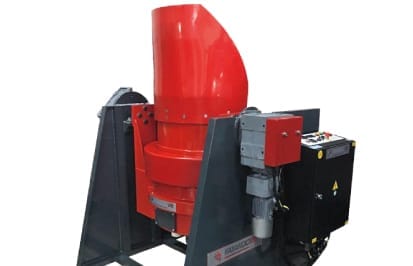
The KAYAKOCVIB KSM series centrifugal disc finishing machines are designed for applications where short cycle times and high surface quality consistency are both required. In aerospace finishing technology applications, the controlled media flow in a disc machine allows fine-tuning of process intensity through disc speed and media-to-part ratio adjustments, which is important when surface requirements are tightly specified. Actual achievable Ra values and cycle times depend on part geometry, alloy, media type, and compound selection, and must be confirmed through process validation and sample testing before production release.
Drag Finishing for High-Value Individual Parts
Drag finishing is the appropriate choice when parts are too valuable, too geometrically complex, or too surface-sensitive to be processed in a mass finishing batch. In drag finishing, individual parts are fixtured and dragged through a rotating media container at controlled speed and depth. This eliminates part-on-part contact entirely and allows the process engineer to control the finishing action on specific part features.
For aerospace finishing applications involving precision turbine blades, mold inserts, or complex five-axis machined parts, drag finishing provides a level of surface control that mass finishing cannot match. The KAYAKOCVIB DRG drag finishing machine is designed for these high-precision, individually controlled applications. Process parameters such as rotation speed, immersion depth, and cycle time can be adjusted per part type, and each part receives an identical and repeatable finishing sequence.
Vibratory Finishing for Larger Aerospace Parts or Batch Processing
When part geometry permits and batch processing is acceptable, vibratory finishing in circular or trough machines provides a cost-effective route for deburring, surface smoothing, and light edge rounding of aerospace aluminum parts at production scale. Trough vibratory machines are preferred for elongated parts such as spars, rails, or extrusions that do not fit well in circular machines. For standard CNC-machined housings or brackets within manageable dimensions, circular vibratory machines handle batch loads effectively.
Vibratory finishing operates at lower process intensity than centrifugal disc or drag finishing, which means cycle times are longer and Ra improvement per unit time is lower. However, for parts that do not require the finest surface condition or for pre-finishing stages before a higher-precision finishing step, vibratory finishing remains a relevant process route in aerospace manufacturing.
Process Route Selection for Common Aerospace Component Types
| Component Type | Typical Material | Recommended Process | Primary Machine Type | Media Type |
|---|---|---|---|---|
| Hydraulic fittings and valve bodies | Aerospace aluminum | Centrifugal disc finishing | KSM disc machine | Fine plastic media |
| Precision actuator components | Aluminum, titanium | Centrifugal disc or drag finishing | KSM or DRG | Fine plastic media |
| Turbine blades and complex profiles | Titanium, nickel alloys | Drag finishing | DRG drag machine | Fine plastic or specialty media |
| Structural brackets and housings | Aerospace aluminum | Vibratory or centrifugal disc | KVM or KSM | Plastic deburring media |
| Precision fasteners and inserts | Titanium, stainless steel | Centrifugal disc finishing | KSM disc machine | Fine plastic or ceramic media |
| Elongated profiles and extrusions | Aerospace aluminum | Vibratory trough finishing | TVM trough machine | Plastic media |
Process Parameters That Control Surface Quality in Aerospace Finishing
Selecting the correct machine type and media is necessary but not sufficient. Process parameters must be set and validated for each part and application. The following variables directly influence surface quality outcomes in aerospace finishing technology applications.
- Media size and shape: smaller media reaches tighter internal radii and cross-bores; larger media removes material faster from exposed surfaces but may not access complex geometry.
- Compound type and concentration: for aerospace aluminum parts, a deburring and polishing compound such as an alkaline finishing liquid is typically used at the deburring stage. Compound concentration affects cutting speed and surface brightness.
- Water flow rate: continuous compound dosing maintains a consistent chemical environment in the machine and prevents media glazing.
- Process intensity: disc speed in centrifugal disc machines and vibration amplitude in vibratory machines control the rate of material removal and edge rounding. Higher intensity shortens cycle time but increases the risk of part damage on thin or delicate features.
- Cycle time: typically determined through sample testing and surface measurement. Overprocessing is a risk in aerospace finishing because it can introduce dimensional loss on tight-tolerance features.
- Media-to-part ratio: a higher ratio distributes finishing action more evenly but reduces throughput. For aerospace parts with complex geometry, higher media-to-part ratios are generally recommended.
Common Selection Mistakes in Aerospace Finishing Technology
Several recurring selection errors reduce process effectiveness or introduce part quality risks in aerospace component finishing.
Using ceramic media on aerospace aluminum without prior validation is a frequent mistake. Ceramic abrasive grains can embed in aluminum surfaces and create contamination that interferes with anodizing adhesion or causes surface corrosion under service conditions. Plastic media is the appropriate starting point for aluminum aerospace parts, and ceramic media should only be considered after testing confirms that no embedding occurs at the selected process parameters.
Selecting a vibratory machine when part value and surface requirements call for drag finishing is another common error. High-value, individually machined aerospace parts should not be processed in uncontrolled batch contact. Part-on-part collisions during batch finishing can cause nicking, surface damage, or localized deformation that requires rework or scrapping of expensive components.
Neglecting the washing and drying sequence after wet finishing is a process oversight that reduces finished part quality. After centrifugal disc or vibratory finishing with compound, aerospace aluminum and titanium parts must be thoroughly rinsed to remove compound residue, loose abrasive particles, and process chemicals before drying. Residual compound that dries on part surfaces can cause staining or contamination that interferes with downstream coating or anodizing operations.
Validation Checklist Before Production Release
Before committing a finishing process to full production volume, process engineers should complete the following validation sequence for aerospace component applications.
- Process a representative sample batch at the selected machine settings and measure Ra on critical surfaces using a contact profilometer.
- Inspect edge radius under magnification to confirm that burr removal is complete and edge rounding meets drawing or specification requirements.
- Inspect internal bores and cross-holes for media lodging risk, particularly when using smaller media sizes.
- Confirm that part dimensions remain within tolerance after finishing by measuring critical features before and after processing.
- Inspect the finished surface for abrasive particle embedding, staining, or surface damage before downstream processes such as anodizing or coating.
- Validate that the washing and drying sequence produces a clean, particle-free surface with no residual compound.
- Document the validated process parameters, media type and size, compound type and concentration, disc speed or vibration amplitude, cycle time, and water flow rate.
Frequently Asked Questions
Can the same finishing machine be used for both aluminum and titanium aerospace parts?
In most cases, yes, the same machine type can be used for both materials, but the media, compound, and process parameters should be adjusted for each material. More importantly, aluminum and titanium parts must not be processed in the same batch due to galvanic contamination risk. Separate media sets for each material group are strongly recommended in precision aerospace production environments.
How do I know whether centrifugal disc finishing or drag finishing is more appropriate for a specific aerospace part?
The primary decision factor is part value and part-on-part contact sensitivity. If the part can tolerate batch processing without risk of collision damage and does not require individually controlled finishing of specific features, centrifugal disc finishing is typically the more productive choice. If the part is individually machined, high-value, or has surface requirements that demand individually controlled processing, drag finishing is the correct selection. Drag finishing eliminates batch contact entirely and allows feature-specific process control.
What surface roughness values are achievable with centrifugal disc finishing on aerospace aluminum?
Achievable Ra values depend heavily on starting surface condition, media type and grade, compound selection, and cycle time. In many industrial aerospace finishing applications, centrifugal disc finishing with fine plastic media and a polishing compound can produce smooth, consistent surface finishes suitable for anodizing or coating. However, specific Ra targets must be confirmed through sample testing and process validation. No surface finishing process guarantees a specific Ra value without application-specific testing.
Related Process Equipment
Related Video Demonstration
Conclusion
Effective aerospace finishing technology selection requires matching machine type, media, compound, and process parameters to the specific combination of material, geometry, burr condition, and surface quality target for each component family. Centrifugal disc finishing is the most productive option for small, high-precision aerospace parts processed in batch, while drag finishing is the appropriate route for individually controlled, high-value components where part-on-part contact cannot be tolerated. Vibratory finishing remains relevant for larger aerospace aluminum structures or pre-finishing stages. In all cases, media compatibility with the base material must be confirmed, the washing and drying sequence must be integrated into the process design, and all process parameters must be validated through sample testing before production release. A disciplined selection and validation approach is what separates a reliable aerospace finishing process from a process that produces inconsistent results at production scale.
Sorry, the comment form is closed at this time.