


28 Jul Ultrasonic Cleaning vs Pressure Washing
Choosing between ultrasonic cleaning vs pressure washing is a practical engineering decision that depends on part geometry, contamination type, material sensitivity, and the required cleanliness standard. Both methods are widely used across automotive, aerospace, medical, and general manufacturing environments, but they operate on fundamentally different physical principles and are suited to different production scenarios. Understanding these differences helps process engineers select the appropriate technology, avoid common mismatches, and integrate washing into a complete surface finishing line.
In This Article
How Each Cleaning Method Works
Pressure washing removes contamination by directing high-velocity water, often mixed with a cleaning compound, at the part surface. The mechanical impact of pressurized water dislodges chips, oils, coolants, scale, and loose particulate. Pressure can typically be adjusted across a range to suit different materials and contamination levels. Rotary nozzle systems, spray cabinets, and conveyor-type pressure washers are common machine formats in industrial use.
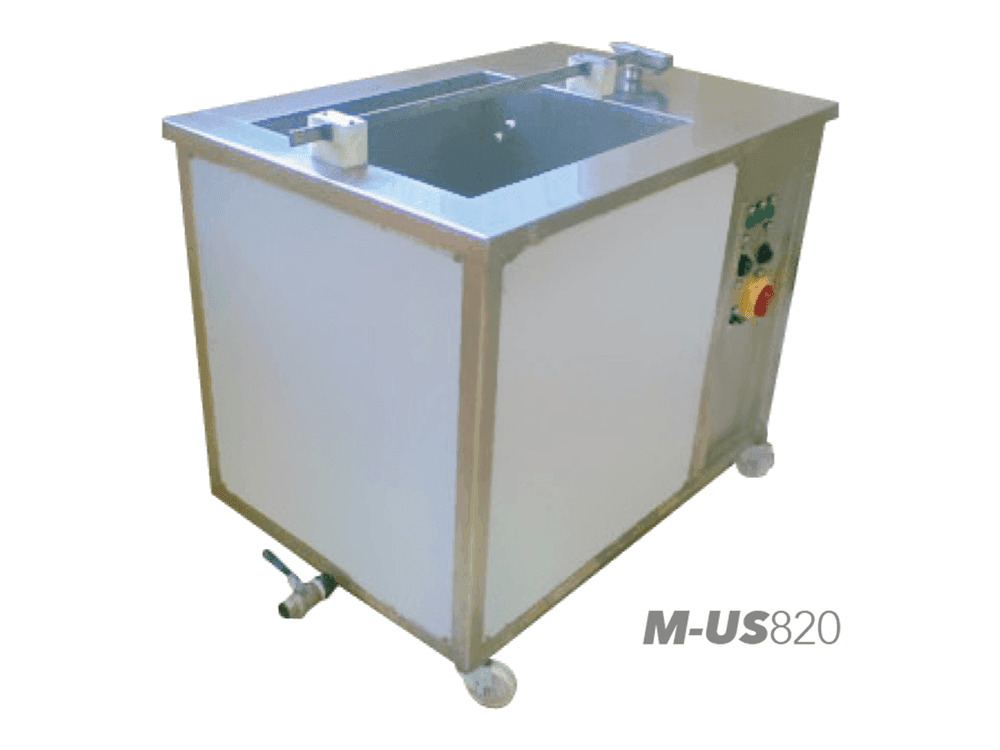
Ultrasonic cleaning uses high-frequency sound waves, typically between 20 kHz and 130 kHz, transmitted through a liquid medium to generate cavitation. Cavitation creates microscopic bubbles that implode against the part surface, releasing energy that dislodges contamination at a microscopic level. This mechanism is highly effective for removing oils, fine metallic particles, polishing pastes, grinding residues, and other difficult contamination from complex geometries including blind holes, threads, undercuts, and internal passages.
Key Selection Criteria
Selecting between the two cleaning approaches depends on several engineering factors that should be evaluated before specifying equipment.
Part geometry has the most significant influence on the selection. For parts with flat or open surfaces, simple cavities, or accessible areas, pressure washing is generally sufficient and offers high throughput. For parts with blind holes, internal channels, fine threads, small recesses, or complex internal geometries, ultrasonic cleaning is typically more effective because cavitation reaches areas that a pressure jet cannot penetrate reliably.
Contamination type also determines the appropriate method. Pressure washing is well suited for removing coolant emulsions, swarf, chips, loose scale, and light oils after CNC machining or stamping operations. Ultrasonic cleaning is more effective for removing fine grinding residues, polishing pastes, light oxide films, thin oil films, and precision-level contamination where a high surface cleanliness standard is required.
Material sensitivity is another important factor. Delicate or thin-walled parts, soft alloys, and precision-ground surfaces may be damaged by high-pressure water jets if process parameters are not carefully controlled. Ultrasonic cleaning can also cause surface fatigue or erosion on very thin-walled or soft components if the frequency and power are not matched to the material. In both cases, process parameters must be validated against the actual part before production release.
Comparison of Process Parameters
| Parameter | Pressure Washing | Ultrasonic Cleaning |
|---|---|---|
| Cleaning mechanism | Mechanical jet impact | Acoustic cavitation |
| Effective geometry reach | Open and accessible surfaces | Complex internal geometries, blind holes |
| Contamination type | Chips, coolant, loose scale, heavy oils | Fine particles, polishing paste, thin oil films |
| Typical operating temperature | 40°C to 80°C depending on compound | 40°C to 70°C depending on application |
| Cycle time | Short for high-volume throughput | Typically 5 to 20 minutes depending on part and contamination |
| Water and compound consumption | Higher, requires filtration and recycling | Lower volume, requires periodic bath maintenance |
| Automation compatibility | High, suitable for conveyor and inline systems | Moderate to high, suitable for batch and indexed systems |
| Capital cost | Generally lower for standard configurations | Generally higher for industrial multi-tank systems |
Industrial Applications by Sector
In automotive manufacturing, pressure washing is commonly used after CNC machining of engine blocks, cylinder heads, and transmission housings to remove chips and cutting fluids before assembly. Ultrasonic cleaning is typically used for fuel injectors, hydraulic valve bodies, and precision components where contamination in small passages would cause functional failure.
In aerospace applications, the cleanliness requirements are more demanding. Ultrasonic cleaning is frequently used for turbine components, hydraulic fittings, and structural fasteners where surface cleanliness must meet strict inspection standards. Pressure washing may be used for larger structural parts, but ultrasonic cleaning tends to be the preferred method when internal cleanliness is specified.
In medical device manufacturing, ultrasonic cleaning is standard for instruments and implant components that require very high surface cleanliness before passivation, coating, or sterilization. The ability to clean internal geometries and fine surfaces without mechanical contact makes it well suited to precision medical parts.
In general CNC machining and metal processing environments, the choice depends on the part mix. Many facilities use both technologies in sequence, with pressure washing handling bulk swarf and coolant removal and ultrasonic cleaning providing a final precision cleaning stage before inspection, packaging, or coating.
Process Sequence Considerations
In both cleaning methods, the washing stage is rarely the only step in the process sequence. For most industrial applications, a complete cleaning line includes pre-cleaning or degreasing, the main cleaning stage, rinsing, and drying. The rinse stage removes cleaning compound residues that could cause staining or interfere with downstream coating or passivation processes. Drying must follow rinsing to prevent flash rusting on steel parts and water staining on aluminum and stainless steel components.
For ultrasonic cleaning systems, a typical multi-tank configuration includes an ultrasonic wash tank, one or two rinse tanks, and a hot air or infrared drying stage. For pressure washing systems, inline conveyor machines often integrate spray washing, rinsing, and drying zones within a single machine housing, allowing continuous throughput.
Compound selection in both cases affects cleaning efficiency and part compatibility. Alkaline compounds are commonly used for steel and stainless steel parts to remove oils and coolants. Neutral or mildly alkaline compounds are preferred for aluminum to avoid surface attack. Concentration, temperature, and bath replenishment intervals should be monitored and controlled to maintain consistent cleaning results.
Ultrasonic Cleaning vs Pressure Washing in Post-Finishing Workflows
Both technologies are frequently used as post-process washing steps after vibratory finishing, centrifugal disc finishing, or other mass finishing operations. After wet mass finishing, parts carry residual polishing compound, fine media debris, and process water that must be removed before the parts proceed to inspection, packaging, or coating. In this context, the ultrasonic cleaning vs pressure washing decision follows the same selection logic: pressure washing handles higher throughput with open geometry parts, while ultrasonic cleaning is preferred when fine compound residues are present in blind holes or when the surface cleanliness specification is tight.
The KAYAKOCVIB USW ultrasonic cleaner and PRS-W pressure washing machine are both designed for integration into complete surface finishing lines, supporting flexible configuration based on part type, contamination level, and downstream process requirements. These systems can be combined with vibratory finishing, separation, and drying equipment to create fully integrated production lines.
Wastewater and Environmental Considerations
Both cleaning methods generate process water that requires treatment before disposal or recycling. Pressure washing typically generates higher volumes of contaminated water due to larger spray volumes and higher flow rates. Ultrasonic cleaning generates smaller bath volumes but requires periodic bath replacement as contamination accumulates and cavitation efficiency drops.
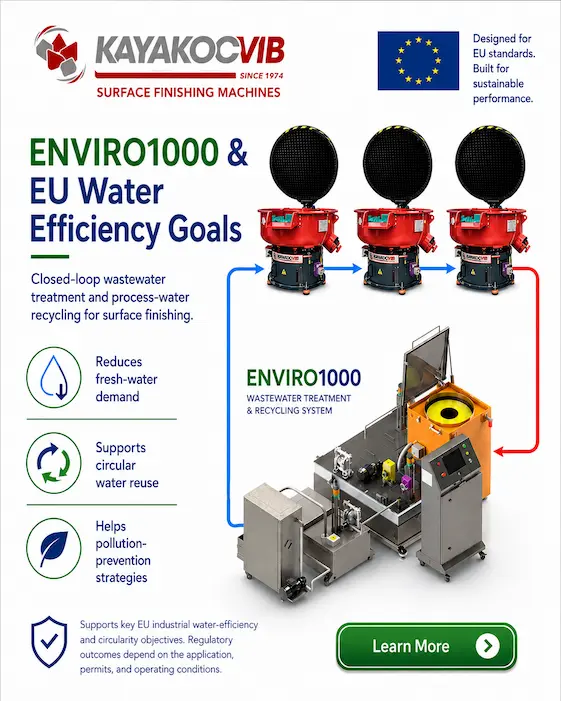
In industrial environments with sustainability targets or wastewater discharge restrictions, both systems benefit from closed-loop filtration and water recycling. Oil separators, paper band filters, and chemical treatment systems can extend bath life, reduce compound consumption, and minimize wastewater disposal costs. Wastewater treatment should be considered as part of the total system specification, not as an afterthought.
Common Selection Mistakes
One frequent mistake is selecting pressure washing for precision parts with complex internal geometry, assuming higher pressure will compensate for accessibility limitations. In practice, high-pressure jets cannot reliably clean blind holes or narrow internal passages regardless of pressure level, and this often results in contamination remaining in critical areas.
Another common error is specifying ultrasonic cleaning for heavy swarf removal after rough machining, where large chips and abrasive particles can accumulate quickly and reduce ultrasonic efficiency. In these cases, a pressure washing pre-clean step is more practical and protects the ultrasonic bath from rapid contamination.
Mismatching frequency to application is also a known issue in ultrasonic system selection. Lower frequencies such as 20 to 40 kHz produce more aggressive cavitation and are better for heavy contamination removal. Higher frequencies such as 80 to 130 kHz produce finer cavitation and are preferred for delicate surfaces and precision cleanliness requirements. Selecting the wrong frequency for a given part and contamination type leads to either insufficient cleaning or surface damage.
Frequently Asked Questions
Can ultrasonic cleaning and pressure washing be used together in the same line?
Yes. Many industrial cleaning lines use pressure washing as a pre-clean step to remove bulk contamination such as chips and coolant, followed by ultrasonic cleaning for precision surface cleanliness. This staged approach is practical for parts that carry both heavy and fine contamination types.
Which method is more suitable for aluminum parts?
Both methods can be used for aluminum, but process parameters must be carefully controlled. For pressure washing, pressure levels and compound alkalinity should be limited to avoid surface damage. For ultrasonic cleaning, neutral or mildly alkaline compounds are preferred. Actual parameters should be validated through sample testing before production release.
Does part size affect the choice between the two methods?
Yes. Large structural parts are generally more suited to pressure washing due to tank size and throughput limitations of ultrasonic systems. Ultrasonic cleaning is more commonly used for small to medium precision components. Very large ultrasonic systems exist but are less common in standard production environments.
What is the typical cycle time for each method?
Pressure washing cycle times depend on machine type and throughput configuration, but inline conveyor systems can process parts continuously. Ultrasonic cleaning typically operates in batch cycles of 5 to 20 minutes depending on contamination level, compound concentration, and part geometry. Actual cycle times depend on application conditions and require process validation.
Related Process Equipment
Related Video Demonstration
Conclusion
The ultrasonic cleaning vs pressure washing decision should be based on a clear analysis of part geometry, contamination type, required cleanliness level, material sensitivity, and production volume. Pressure washing offers strong throughput and practical performance for parts with accessible surfaces and bulk contamination. Ultrasonic cleaning provides superior performance for complex geometries, fine contamination, and precision cleanliness requirements. In many production environments, both technologies complement each other within a complete washing and finishing line. Specifying the right method, or the right combination of both, from the start reduces the risk of cleaning failures, downstream defects, and unnecessary process complexity.
Sorry, the comment form is closed at this time.