


28 Jul Pressure Washing Machine Metal Parts
Pressure washing machine metal parts is a systematic industrial cleaning process used to remove cutting oils, metalworking fluids, chips, grinding dust, and surface contamination from steel, stainless steel, aluminum, and mixed metal components. It is applied before surface finishing operations such as vibratory deburring, coating, and heat treatment, as well as after finishing to remove polishing compound residues and fine media particles. Understanding how pressure washing machines work, how process variables affect cleaning quality, and how to integrate washing into a production line is essential for engineers managing surface quality in automotive, aerospace, medical, CNC machining, and general manufacturing environments.
In This Article
What Pressure Washing Machines Do in Metal Finishing
A pressure washing machine uses a pressurized heated water and detergent solution to remove surface contamination from metal parts. Unlike simple spray rinse systems, industrial pressure washing machines operate at controlled temperatures, pressures, and chemical concentrations to achieve repeatable cleaning results across production batches. The cleaning action depends on four interacting factors: mechanical force from pressurized jets, thermal energy from heated water, chemical action from the detergent or alkaline cleaner, and exposure time inside the machine.
In surface finishing workflows, cleaning is rarely optional. Parts arriving from machining, stamping, die casting, or grinding typically carry residual oils and metalworking fluids that contaminate finishing media, degrade compound performance, and reduce the consistency of deburring and polishing results. Parts exiting wet vibratory finishing or centrifugal disc finishing carry compound residue, fine abrasive particles, and water that must be removed before the parts proceed to inspection, coating, or assembly. Pressure washing machines serve both pre-finishing and post-finishing roles in production lines.
Working Principle of Industrial Pressure Washing Machines
Industrial pressure washing machines used for metal parts typically operate as cabinet washers, rotary drum washers, conveyor washers, or multi-stage tunnel systems. The core operating principle is consistent across configurations: pressurized nozzles direct heated cleaning solution at the part surface from multiple angles, dislodging contamination through kinetic energy and chemical interaction. The solution then drains into a holding tank, passes through a filtration system to remove chips, oils, and particles, and is recirculated through a heating element back to the nozzles.
Nozzle pressure in industrial machines typically ranges from 2 to 10 bar depending on the part material, part geometry, and contamination type. Aluminum and thin-walled parts require lower pressures to avoid surface distortion or marking. Dense steel components with complex internal channels may require higher pressures and specialized nozzle angles to reach inaccessible surfaces. Water temperature is generally maintained between 50 and 80 degrees Celsius. Higher temperatures improve detergent activation, reduce surface tension, and accelerate oil emulsification, which directly improves cleaning speed and consistency.
Multi-Stage Washing Process Sequence
Effective industrial cleaning of metal parts rarely relies on a single wash stage. Production-grade pressure washing machines are designed around a multi-stage process to ensure contaminant removal, rinsing, optional passivation, and drying in a controlled sequence. The following process walkthrough reflects typical industrial configurations for steel and aluminum parts.
- Pre-Wash Stage: A coarse spray removes loose chips, bulk oil, and surface debris. Water temperature is typically 50 to 60 degrees Celsius. This stage extends the service life of the cleaning solution in the main wash stage by reducing bulk contamination loading.
- Main Wash Stage: Pressurized jets deliver heated alkaline or neutral cleaning solution at full pressure. The detergent concentration, temperature, and dwell time are set based on the contamination type and base material. Alkaline cleaners are common for steel parts. Neutral or mildly alkaline cleaners are preferred for aluminum to avoid surface attack or discoloration.
- Hot Rinse Stage: Deionized or softened water rinses residual cleaning agent from the part surface. Rinse water quality directly affects the final surface cleanliness and the risk of white residue or mineral deposits on the finished part. Poor rinse water quality is one of the most common causes of visible staining after washing.
- Passivation Stage (where applicable): For stainless steel parts in medical, food processing, or aerospace applications, a dilute citric acid or nitric acid passivation stage may be incorporated into the washing line to remove free iron, restore the passive oxide layer, and improve corrosion resistance. This stage requires precise chemical concentration and temperature control.
- Hot Air Drying Stage: Heated air blows or circulates through the machine to evaporate surface moisture and achieve dry, inspection-ready parts. Drying temperature and airflow volume must be sufficient to prevent flash rusting on carbon steel parts. Residual moisture in deep holes or blind bores is a common process challenge that requires drying cycle optimization.
Process Parameters and Their Effect on Cleaning Quality
Pressure washing machine metal parts results depend directly on four controllable process parameters. Adjusting these variables allows engineers to optimize the cleaning result for specific part geometries, contamination types, and production volumes.
| Parameter | Typical Range | Effect on Cleaning Result |
|---|---|---|
| Water Temperature | 50 to 80 °C | Higher temperature improves oil emulsification and detergent activation. Essential for heavy cutting oil removal. |
| Nozzle Pressure | 2 to 10 bar | Higher pressure increases mechanical removal of chips and adhered contamination. Must be controlled for aluminum or thin-wall parts. |
| Detergent Concentration | 1 to 5 percent by volume | Controls chemical cleaning action. Over-concentration may cause residue or surface attack. Under-concentration reduces cleaning effectiveness. |
| Dwell Time | 60 to 600 seconds | Longer exposure improves cleaning of complex geometries and heavy contamination. Must be balanced against production cycle time. |
In practice, cleaning parameters must be validated through sample testing. Parts with deep internal channels, blind holes, or complex castings may require extended dwell times, rotating fixtures, or supplementary ultrasonic cleaning stages to achieve consistent results across all surfaces.
Material-Specific Considerations for Metal Parts
The base material of the metal part has a direct influence on the selection of cleaning chemistry, water temperature, and nozzle pressure. Engineers should consider these factors when configuring a pressure washing machine for a specific application.
For steel and stainless steel parts, alkaline cleaners with pH values between 9 and 12 are commonly used. They effectively emulsify cutting oils and neutralize acidic residues from metalworking fluids. Stainless steel parts destined for medical or food processing applications may require a passivation stage following the main wash and rinse sequence. Carbon steel parts are sensitive to flash rusting if drying is insufficient, so hot air drying or corrosion-inhibiting rinse additives may be necessary.
For aluminum parts, the choice of cleaning chemistry requires more care. Strongly alkaline cleaners can attack aluminum surfaces, causing etching, discoloration, or surface roughening. Neutral or mildly alkaline cleaners with pH values between 7 and 9.5 are generally safer for aluminum. Nozzle pressure should be kept at the lower end of the operational range to avoid mechanical marking on softer aluminum surfaces.
Mixed metal batches, where steel and aluminum parts are washed together, present a chemistry selection challenge. The cleaning solution must be compatible with both materials simultaneously, which typically means using a neutral cleaner and accepting a compromise in cleaning intensity for each material individually. Where possible, separating steel and aluminum parts into dedicated wash cycles produces more consistent results.
Integration with Surface Finishing Lines
In production environments, pressure washing machine metal parts is rarely a standalone operation. Washing is integrated into the broader surface finishing line alongside vibratory deburring machines, centrifugal disc finishing units, separators, dryers, and wastewater treatment systems. The position and function of the washing machine within the line depends on the production sequence.
Before vibratory or centrifugal finishing, parts arriving from machining may be washed to remove oils and chips that would otherwise contaminate the finishing media and compound solution. Clean parts entering a finishing machine help maintain the pH stability of the compound, extend media service life, and produce more consistent surface results across production batches.
After wet vibratory or centrifugal finishing, parts carry compound residue, water, and fine abrasive particles from the finishing media. A post-finishing wash cycle using a pressure washing machine removes this contamination before the parts proceed to drying, inspection, coating, or assembly. KAYAKOCVIB PRS-W pressure washing machines are designed for integration into complete surface finishing lines, providing a controlled washing stage that handles both pre-finishing and post-finishing cleaning requirements depending on the production configuration.
In automated finishing lines, parts may be conveyed directly from the finishing machine into the washing machine using conveyors, elevators, or vibratory transfer units. This eliminates manual handling, reduces contamination risk, and supports consistent cycle times across shifts. Automation becomes particularly important in high-volume production for automotive and aerospace components where manual intervention introduces variability.
Pressure Washing Versus Ultrasonic Cleaning
Engineers selecting between pressure washing and ultrasonic cleaning for metal parts should understand the fundamental difference in cleaning mechanism. Pressure washing relies on mechanical jet force, thermal energy, and chemical action. Ultrasonic cleaning relies on cavitation bubbles generated by high-frequency sound waves, which implode on the part surface and dislodge contamination at a microscopic level, including contamination inside fine holes, threads, and surface textures that pressurized jets cannot directly reach.
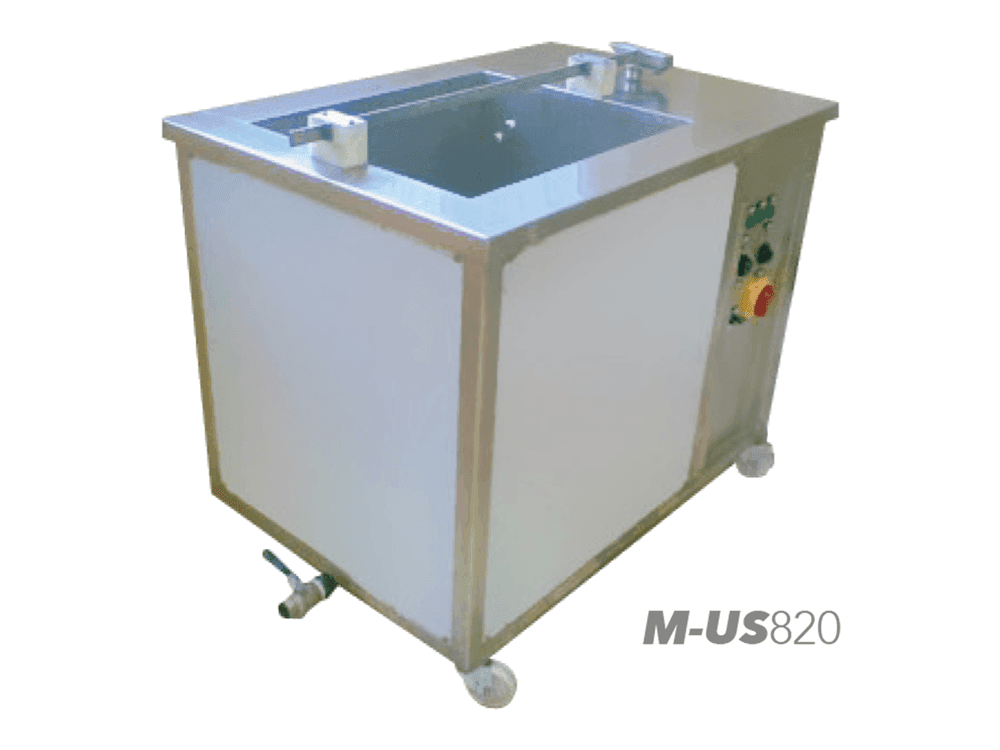
Pressure washing is generally more suitable for high-volume production of parts with accessible surfaces, where bulk oil, chips, and compound residues are the primary contamination types. Ultrasonic cleaning is generally more suitable for precision parts, medical implants, cutting tools, injection molds, and components with complex internal geometries where surface cleanliness must meet stringent inspection or coating adhesion requirements. KAYAKOCVIB USW ultrasonic cleaning systems are used for precision cleaning applications where pressure washing alone does not achieve the required cleanliness level.
In some production lines, both technologies are combined. A pressure washing stage handles bulk contamination removal, and an ultrasonic stage provides precision cleaning of critical surfaces or complex geometries. This combined approach is common in medical device manufacturing and high-precision aerospace component production.
Filtration and Water Management
The service life and cleaning performance of a pressure washing machine depend heavily on filtration system quality. As the machine operates, the circulating wash solution accumulates chips, metallic fines, oil, and degraded cleaning chemistry. Without effective filtration, contaminated water is recirculated onto parts, reducing cleaning effectiveness and depositing contaminants back onto the part surface.
Industrial pressure washing machines use a combination of coarse mesh pre-filters, fine particle filters, and oil skimmers to continuously remove chips and oils from the circulating solution. Oil skimmer systems float on the solution surface and collect emulsified or free-floating oil layers. Regular filter maintenance and scheduled bath replacement are required to maintain cleaning consistency. Engineers should establish bath monitoring intervals based on production volume and contamination load, not on fixed calendar schedules.
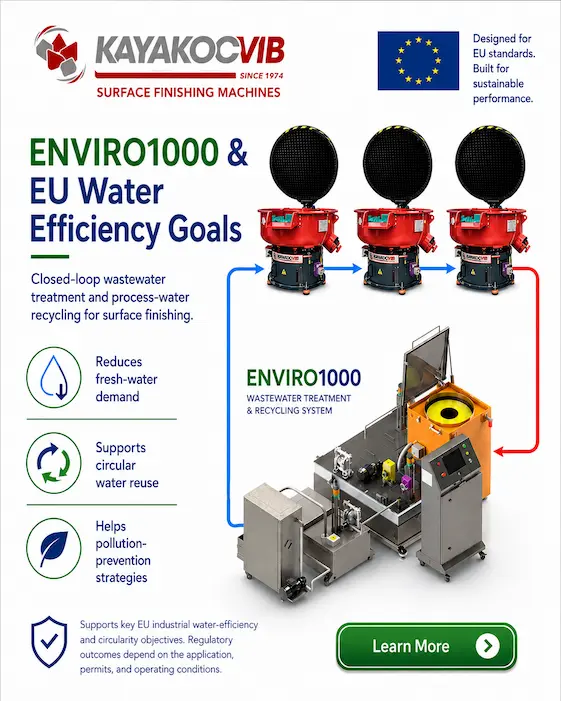
Wastewater generated during washing operations must be treated before discharge according to applicable environmental regulations. Wash water contains detergents, emulsified oils, and metallic particles that require pH adjustment, oil-water separation, and in some cases flocculation before disposal. Integrating a wastewater treatment or recycling system into the washing line reduces discharge volume, minimizes chemical consumption, and supports environmental compliance. This is particularly relevant for high-volume metal processing operations where daily wash water generation is significant.
Common Process Risks and Validation Points
Engineers implementing or optimizing a pressure washing process for metal parts should be aware of several common process risks that affect cleaning consistency and part quality.
- White residue or mineral deposits on the part surface after drying typically indicate poor rinse water quality, insufficient rinse stage, or mineral precipitation from hard water. Deionized or softened water in the rinse stage reduces this risk.
- Flash rusting on carbon steel parts after washing indicates insufficient drying, excessive moisture retention in blind holes, or absence of a corrosion-inhibiting rinse additive. Increasing drying temperature, airflow volume, or cycle time usually corrects this problem.
- Incomplete cleaning of internal channels and blind bores indicates insufficient dwell time, low nozzle pressure, or inaccessible nozzle angles. Rotating fixtures, extended dwell times, or supplementary ultrasonic cleaning may be required.
- Aluminum surface discoloration or etching after washing indicates an incompatible cleaning chemistry. Switching to a neutral or mildly alkaline cleaner resolves the issue in most cases.
- Foam buildup in the wash tank indicates excessive detergent concentration or use of a detergent that is not compatible with the oil type being removed. Adjusting concentration or selecting a low-foam industrial cleaner corrects this.
Process validation should include visual inspection of cleaned parts, cleanliness testing using water break or contact angle measurement, and where required, gravimetric cleanliness testing using membrane filtration. For medical and aerospace applications, cleanliness specifications are typically defined by the customer or by industry standards, and washing process parameters must be validated against these specifications before production release.
Related Process Equipment
Related Video Demonstration
Conclusion
Pressure washing machine metal parts is a technically controlled industrial process where cleaning quality depends on the precise interaction of water temperature, nozzle pressure, detergent chemistry, and dwell time. Material selection, part geometry, contamination type, and downstream process requirements all influence how the washing system should be configured. Effective integration of washing into a surface finishing line, combined with proper filtration, rinse water quality control, and adequate drying, produces consistent cleanliness results across production batches. For applications requiring cleanliness beyond what pressure washing alone can achieve, combining pressure washing with ultrasonic cleaning provides a more complete solution for complex geometries and precision parts. Process parameters should always be validated through sample testing before production release, as actual cleaning results depend on application-specific conditions.
Sorry, the comment form is closed at this time.