



24 Jul Deburring Compound Selection
Choosing the correct deburring compound is one of the most influential decisions in any mass finishing process. The compound affects cutting rate, surface brightness, foam control, part cleanliness, and media condition. In many production environments, a poorly matched deburring compound causes inconsistent results even when the machine type, media, and cycle time are correctly configured. This guide explains how to approach compound selection from an engineering perspective, covering material compatibility, machine type, process chemistry, and practical validation logic.
In This Article
What a Deburring Compound Actually Does
A finishing compound in mass finishing is not simply a cleaning agent or lubricant. It serves multiple simultaneous functions during the finishing cycle. The compound conditions the media surface, keeps the media cutting efficiently, removes swarf and debris from the working chamber, controls foam and pH, protects parts from corrosion between processing stages, and influences the final surface brightness or roughness.
Without a compound, ceramic or plastic media quickly becomes loaded with metal fines, cutting action drops sharply, and part surfaces become scratched or discolored. The compound keeps both the media and the part surface in a controlled working state throughout the cycle.
Different compound formulations achieve different outcomes. Some are optimized for aggressive deburring and cutting. Others are designed primarily for surface brightening and pre-polish preparation. Some combine degreasing with light finishing action. Selecting the wrong formulation often means accepting a trade-off between burr removal efficiency and final surface appearance.
Primary Selection Criteria
The first step in deburring compound selection is to define the process requirements clearly before reviewing available formulations. The following criteria determine which compound category is appropriate.
- Base material of the part: steel, stainless steel, aluminum, copper, brass, or mixed metals
- Type and severity of burrs: light edge burrs from CNC turning, heavier burrs from stamping or casting flash
- Required surface condition after finishing: bright, matte, pre-polished, or dimensionally clean only
- Machine type in use: vibratory finishing or centrifugal disc finishing
- Water hardness and supply conditions at the production facility
- Whether parts require rust inhibition between processing stages or before packaging
- Wastewater management constraints and compound biodegradability requirements
No single compound satisfies every requirement across all part materials and machine configurations. Compound selection must be treated as part of the overall process definition, not as an afterthought.
Material-Based Compound Logic
Part material is the most critical starting variable in deburring compound selection. The chemistry of the compound must be compatible with the base metal to avoid staining, pitting, discoloration, or unwanted surface reactions.
Steel and Stainless Steel
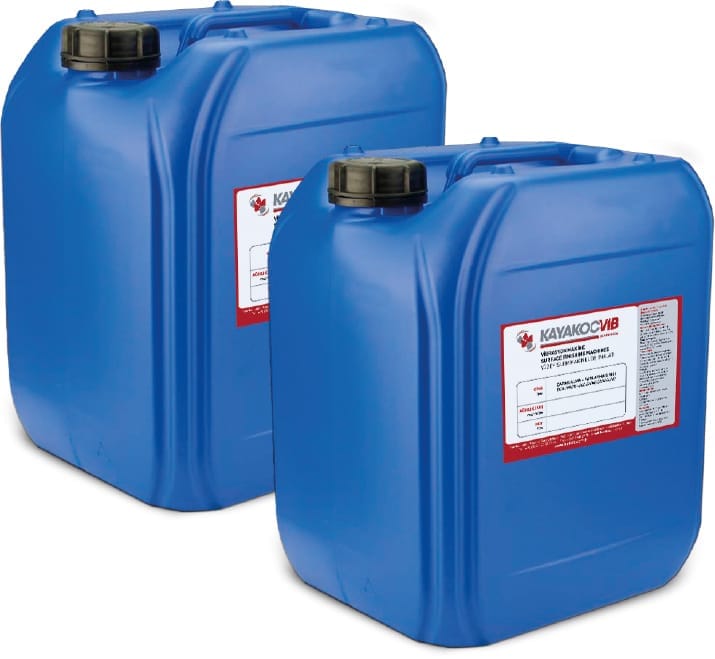
For steel and stainless steel parts processed with ceramic media, an alkaline deburring and polishing compound is generally appropriate. A formulation such as a 943-type deburring and polishing liquid supports aggressive ceramic media cutting action while maintaining a controlled pH that protects steel surfaces. These compounds keep the media clean, prevent steel fines from embedding into the media surface, and provide light rust inhibition on steel parts during and immediately after the cycle.
Stainless steel parts require careful compound selection because the wrong formulation can cause surface staining or micro-pitting. Neutral to mildly alkaline compounds are preferred for stainless steel to maintain passivation integrity.
Aluminum and Zamak
Aluminum and zamak parts are chemically more reactive and mechanically softer than steel. Alkaline compounds that are appropriate for steel can cause surface darkening or etching on aluminum. For these materials, a milder formulation such as an 085-type deburring and polishing liquid is generally used alongside plastic media. This combination provides sufficient cutting action for burr removal while protecting the aluminum surface from chemical attack.
Plastic media is preferred for aluminum and zamak because ceramic media can be too aggressive for these softer materials, risking surface scratching or dimensional change on thin sections.
Copper, Brass, and Yellow Metals
Copper, brass, and other yellow metals are sensitive to both mechanical abrasion and chemical exposure. An acidic or mildly acidic degreasing compound such as a 028-type formulation is commonly used for these materials. The slightly acidic character helps remove oxide films and surface discoloration while keeping the part surface bright. Alkaline compounds used with copper alloys can cause surface dullness or uneven color.
Mixed Metal Batches
Processing mixed metal batches in the same finishing cycle is generally not recommended. Different base metals require different compound chemistries, and a compromise formulation often protects neither material effectively. Where mixed batches are unavoidable, the compound must be selected based on the most sensitive material in the batch, and the process parameters must be validated carefully before production release.
Machine Compatibility and Compound Concentration
The machine type directly affects how a compound is dosed, diluted, and refreshed during the process cycle. Compound concentration and dosing method differ significantly between vibratory finishing machines and centrifugal disc finishing machines.
Vibratory Finishing Machines
In circular vibratory finishing machines such as the KAYAKOCVIB KVM series, compound is typically added continuously through a drip or flow system at a controlled rate throughout the cycle. The compound is diluted with water before entering the machine. Concentration is expressed as a percentage of compound in the water feed, and typical working concentrations depend on the specific formulation, the burr severity, and the desired surface result.
Too low a compound concentration causes the media to become loaded and cutting action to drop. Too high a concentration can cause excessive foam, poor media contact, or unnecessary compound consumption. Correct dosing requires balancing the compound feed rate against water flow rate and cycle duration.
Centrifugal Disc Finishing Machines
In centrifugal disc finishing machines such as the KAYAKOCVIB KSM series, the process chamber operates at significantly higher energy than vibratory machines. This means the compound must be compatible with higher process intensity, shorter cycle times, and more aggressive media action. Compound formulations suitable for vibratory finishing may foam excessively or lose effectiveness rapidly in centrifugal disc machines. Verify compound suitability for the specific machine type before committing to a production formulation.
Dosing in centrifugal disc machines is also typically more precise because cycle times are shorter, often between three and twenty minutes, and compound concentration changes have a more immediate effect on the finishing result.
Deburring Compound Selection Matrix
The following table summarizes typical compound selection logic based on part material, media type, and process objective. Actual compound selection must be validated through sample testing before production release.
| Part Material | Recommended Media | Compound Type | Primary Function |
|---|---|---|---|
| Steel, Iron | Ceramic | 943-type alkaline finishing liquid | Deburring, polishing, rust inhibition |
| Stainless Steel | Ceramic (medium grade) | Neutral to mildly alkaline liquid | Deburring, surface protection |
| Aluminum, Zamak | Plastic | 085-type mild finishing liquid | Deburring, brightening, no chemical attack |
| Copper, Brass | Plastic or fine ceramic | 028-type acidic degreasing liquid | Oxide removal, brightening |
| Mixed metals (if unavoidable) | Plastic (safest option) | Mild neutral compound | Cleaning, light deburring only |
Process Variables That Affect Compound Performance
Even a correctly selected deburring compound will underperform if the surrounding process variables are not controlled. The following parameters directly influence how effectively the compound works during the finishing cycle.
- Water hardness: Hard water reduces compound effectiveness by reacting with active ingredients. A water softener or compound formulation adjusted for high water hardness may be required.
- Water temperature: Cold water reduces compound activity. In cold production environments, compound feed temperature should be monitored.
- Compound feed rate: Inconsistent dosing causes inconsistent finishing results. Use metered pumps rather than manual addition whenever possible.
- Media-to-part ratio: Low media ratios reduce the compound’s ability to maintain a clean working surface. Maintain the ratio recommended for the part geometry and burr severity.
- Cycle duration: Very short cycles may not give the compound sufficient time to condition the media and stabilize the working chemistry. Very long cycles may cause excessive surface material removal.
Common Selection Mistakes
Several recurring errors in deburring compound selection consistently lead to poor finishing results in production environments.
Using a steel compound on aluminum parts is one of the most common mistakes. The alkaline formulation that performs well on steel can cause surface darkening or etching on aluminum within a single finishing cycle. The surface damage may not be immediately visible but becomes apparent during subsequent cleaning or inspection steps.
Selecting a compound based on price rather than material and process compatibility reduces finishing consistency and often increases total process cost through rework, media replacement, and extended cycle times. A lower-cost compound that requires double the concentration or causes media loading is not a cost saving.
Ignoring foam control is another frequent issue. Some compounds generate significant foam under certain water pressure, temperature, or concentration conditions. Excessive foam cushions the media-to-part contact, reducing cutting efficiency and leading to inconsistent deburring results. Foam control additives or a low-foam compound formulation may be required depending on the machine and process conditions.
Finally, assuming that a compound used successfully in one machine type will perform identically in a different machine is incorrect. A deburring compound validated for a vibratory machine may behave differently in a centrifugal disc machine due to differences in process energy, water turnover rate, and cycle duration.
Validation Before Production Release
No deburring compound selection should be transferred directly from a data sheet to full production without process validation. The correct approach is to run sample parts under production-representative conditions and measure the finishing result against defined acceptance criteria.
Validation should confirm that the compound achieves the required burr removal on the target material, that no surface staining or discoloration occurs, that media condition remains acceptable after the cycle, and that the compound can be dosed consistently with the available equipment. Where the part has critical surface requirements, such as in medical, aerospace, or precision automotive applications, additional inspection steps such as surface roughness measurement or visual examination under magnification are typically required.
Process conditions confirmed during validation, including compound type, concentration, water flow rate, cycle time, and media grade, should be documented and used as the controlled baseline for production. Any future compound change or concentration adjustment should be re-validated before implementation.
Frequently Asked Questions
Can the same compound be used for both deburring and polishing cycles?
Some compounds are formulated for combined deburring and polishing in a single stage, but the result is typically a compromise between cutting speed and surface brightness. For applications requiring a high-brightness finish, a two-stage process using a deburring compound followed by a separate polishing compound typically produces better surface quality than a single-stage approach.
How does water hardness affect deburring compound performance?
Hard water reacts with active compound ingredients and reduces their effectiveness. This can cause media loading, reduced cutting action, and surface residue on parts. If local water supply exceeds approximately 200 mg/L total hardness, consider installing a water softening system or selecting a compound formulated for hard water conditions.
Is compound dosing the same for all machine sizes?
No. Compound dosing must be adjusted based on machine working volume, media-to-part ratio, water flow rate, and cycle duration. Larger machines with higher water turnover rates typically require proportionally adjusted compound feed rates. Always follow the compound manufacturer’s recommended concentration range and verify dosing through process testing.
Should compound selection change if parts require rust inhibition after finishing?
Yes. If steel or iron parts must be stored or transported before further processing, select a compound that includes rust inhibiting chemistry or add a separate rust inhibitor to the final rinse stage. Some alkaline finishing compounds include rust inhibition as part of their formulation, which reduces the need for separate post-process treatment.
Related Machine and Process Resources
Conclusion
Effective deburring compound selection requires a structured approach based on part material, burr severity, machine type, and target surface condition. The deburring compound must be chemically compatible with the base metal, mechanically appropriate for the media type in use, and physically matched to the dosing and dilution capabilities of the finishing machine. Aluminum and zamak parts typically require mild finishing liquids used alongside plastic media, while steel and stainless steel parts are generally processed with alkaline finishing compounds and ceramic media. Copper and brass materials typically benefit from mildly acidic degreasing formulations. Each selection must be validated through sample testing under real production conditions before full-scale implementation. Treating compound selection as an integrated part of the finishing process definition, rather than a secondary consumable decision, consistently produces more reliable deburring results across variable production conditions.
Sorry, the comment form is closed at this time.