




18 Jun Finishing Media Size Selection
Finishing media size is one of the most consequential variables in any mass finishing process. Choosing the wrong size relative to the part being processed leads to inefficient deburring, inconsistent surface results, media lodging inside part cavities, or physical damage to part edges and surfaces. This guide explains the engineering logic behind media size selection for both small and large parts, covering part geometry analysis, machine suitability, material considerations, and common sizing mistakes that reduce process efficiency.
In This Article
Why Media Size Relative to Part Size Matters
In vibratory finishing and centrifugal disc finishing, media acts as the cutting and polishing tool. The size of the media determines how effectively it contacts the part surface, whether it can reach recessed features, and whether it will lodge inside holes, slots, or internal channels. Media that is too large for the part will ride over surface features without cutting them effectively. Media that is too small may become trapped inside the part geometry, creating a safety and quality risk that requires a secondary media separation or removal step.
The relationship between part size and finishing media size must be evaluated in three dimensions: the overall part envelope, the smallest internal feature or hole diameter, and the depth-to-width ratio of any recesses or slots. A part with a 50 mm outer dimension but a 4 mm drilled hole presents a very different media sizing challenge than a flat stamped part with no enclosed features.
The Core Selection Rule: Media-to-Part Size Ratio
A widely applied engineering rule in mass finishing is that media should not be smaller than one-third of the smallest open feature on the part, and the largest media dimension should not exceed approximately one-half of the smallest part dimension in most configurations. These are not absolute values and must be validated through sample testing, but they provide a starting framework for initial media selection.
For lodging prevention specifically, the most important rule is that media must be too large to enter any hole, slot, undercut, or blind cavity on the part. If a part has a 6 mm through-hole, the media should have at least one dimension larger than 6 mm so that it physically cannot enter and become trapped. In practice, a safety margin of 20 to 30 percent above the feature opening is commonly applied.
When parts have no enclosed features, media size selection becomes more focused on achieving the right surface contact pattern and cutting efficiency for the part’s weight, geometry, and material.
Media Size for Small Parts
Small parts such as fasteners, watch components, medical screws, small CNC turned parts, and stamped connectors typically require smaller finishing media. Smaller media provides higher contact frequency per unit area, which is beneficial for fine deburring, edge rounding, and achieving smooth surface finishes on parts with complex external geometry.
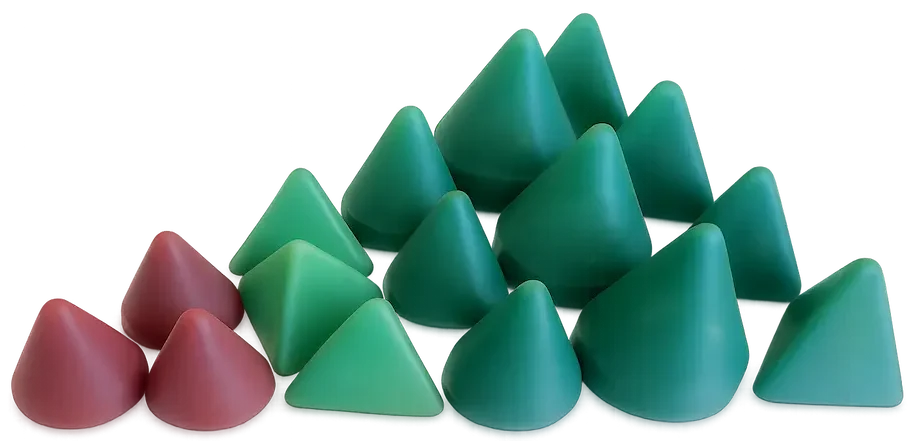
For very small parts in the 5 to 20 mm range, media in the 5 to 15 mm size range is commonly used, depending on part geometry and the target surface condition. Plastic media in small triangular, cylindrical, or satellite shapes is frequently used for aluminum, zinc alloy, and soft metal small parts. Ceramic media in small cone, triangle, or cylinder shapes is used for steel and stainless steel small parts requiring stronger cutting action.
One engineering consideration with small parts is that very small media increases the risk of scratching delicate part surfaces if the cutting grade is too aggressive. For small precision parts requiring fine surface finishes, a staged process is often used: a larger cutting media in the first stage removes burrs and sharp edges, followed by smaller finer media or polishing media in a second stage to refine the surface.
Media Size for Large Parts
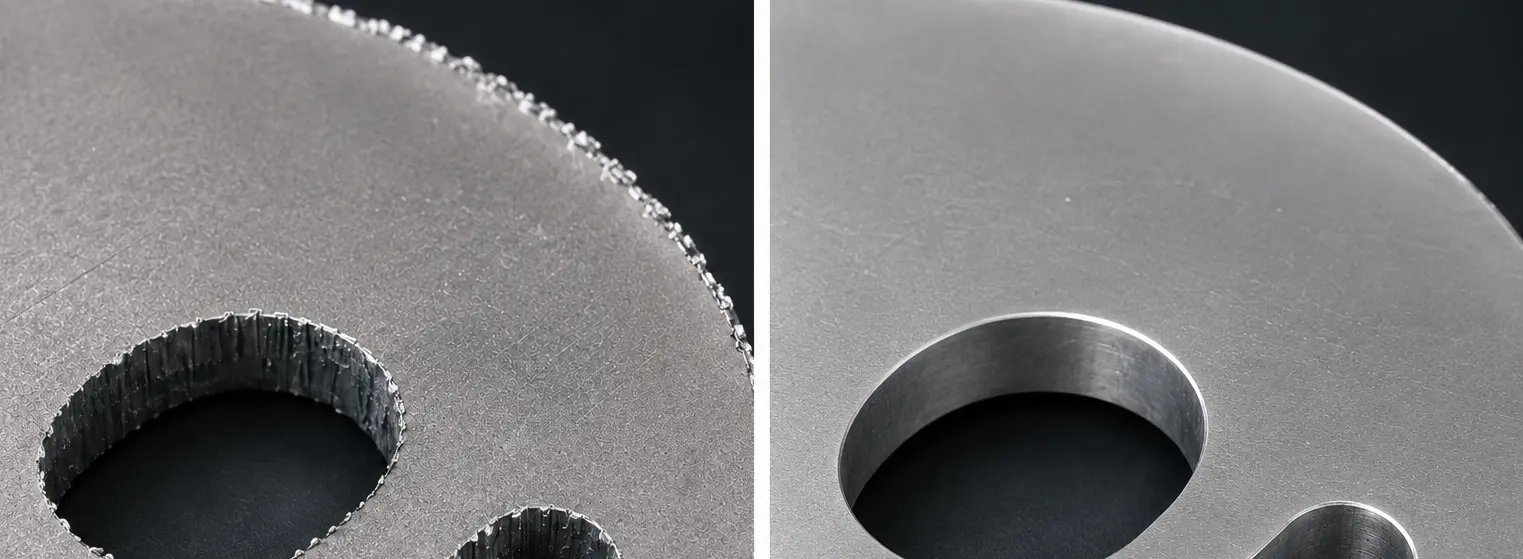
Large parts such as automotive castings, large CNC milled housings, hydraulic components, and structural brackets require larger media to generate sufficient mechanical action on heavy surfaces and to avoid becoming lost inside complex geometry. Larger media also produces higher energy per contact point, which supports effective burr removal on heavy flash, casting gates, or machining burrs on thick cross-sections.
For parts in the 100 to 300 mm range, media sizes of 20 to 50 mm or larger are commonly selected depending on surface accessibility, internal features, and required surface quality. Ceramic media in larger cylindrical, ball, or triangular shapes is typical for steel and iron large parts. For large aluminum die castings, larger plastic media is often preferred to avoid aggressive material removal from softer parent material.
Large parts also impose machine loading constraints. In a circular vibratory finishing machine such as the KAYAKOCVIB KVM series, large parts consume a significant portion of the working volume, which affects the media-to-part volume ratio. A minimum media-to-part volume ratio of approximately 3:1 to 5:1 is commonly recommended, meaning the media volume should be three to five times the part volume. Insufficient media volume around a large part reduces contact frequency and slows down deburring and finishing action. Actual ratios must be confirmed by process testing for each application.
Media Size Selection Criteria Table
| Part Category | Typical Part Size Range | Recommended Media Size Range | Media Type | Key Lodging Risk |
|---|---|---|---|---|
| Micro and miniature parts | Under 10 mm | 3 to 8 mm | Plastic, ceramic fine grade | High if internal holes present |
| Small precision parts | 10 to 40 mm | 8 to 15 mm | Plastic or ceramic depending on material | Moderate for drilled features |
| Medium CNC and stamped parts | 40 to 100 mm | 15 to 25 mm | Ceramic or plastic | Low to moderate |
| Large machined or cast parts | 100 to 300 mm | 25 to 50 mm | Ceramic or large plastic | Low if no small internal features |
| Very large or complex castings | Over 300 mm | 40 to 80 mm or custom | Ceramic or abrasive block media | Depends entirely on internal geometry |

Media Shape Interaction with Part Geometry
Media size cannot be evaluated independently of media shape. A cylindrical media of 20 mm length and 10 mm diameter behaves differently from a 20 mm cone or a 15 mm sphere of comparable volume. Shapes with sharp angles or points provide better access into recesses and edge zones but may also apply higher localized force. Rounded or spherical shapes generate more burnishing action and are suitable for smooth surface finishing stages.
For parts with deep slots or grooves, elongated shapes such as short cylinders or wedges with dimensions just above the slot opening can reach into the feature and deburr it effectively. For flat stamped parts with only external edges to deburr, larger triangular or conical shapes provide good edge contact without penetrating any features.
Shape selection should always follow size selection. First confirm that the selected size prevents lodging, then select the shape that provides the correct surface contact pattern for the part geometry.
Material Considerations in Finishing Media Size Decisions
Material hardness affects how aggressively media acts on the part surface and whether a specific media size will achieve the required result within a reasonable cycle time. For aluminum and softer non-ferrous alloys, plastic media in the appropriate size range is generally preferred. Plastic media cuts more gently, reducing the risk of surface gouging or excessive material removal from soft parent metal. For aluminum parts, process compounds such as an 085 deburring and polishing liquid combined with a 028-S degreasing liquid are typically used.
For steel and stainless steel parts, ceramic media in the appropriate size range provides the cutting hardness needed to remove machining burrs and sharp edges efficiently. For steel parts, 943 deburring and polishing liquid combined with 028-S degreasing liquid is a common chemical pairing. Mixed material batches, such as processing aluminum and steel parts together, should generally be avoided because media size and aggressiveness appropriate for one material may damage the other.
Machine Type and Its Influence on Media Size Range
The finishing machine type sets practical boundaries on usable media sizes. Circular vibratory finishing machines such as the KAYAKOCVIB KVM series are suitable for a wide range of media sizes and are a common choice for small to medium parts with standard geometry. Trough vibratory machines are better suited for long or large parts that would not tumble correctly in a circular bowl, and they can accommodate larger media sizes and part volumes with appropriate loading configurations.
Centrifugal disc finishing machines operate at significantly higher energy levels than standard vibratory machines and are typically used with smaller, finer media for short cycle times on precision parts. The higher centrifugal force in these machines limits the practical media size range, and very large media would not perform correctly in this machine type.
For automated finishing lines where parts are loaded and unloaded mechanically, media size also affects the performance of the separator. Media that is too close in size to the part can cause separation difficulties at the SM series separator stage, so a sufficient size difference between parts and media must be maintained for reliable automated separation.
Common Finishing Media Size Mistakes
Several recurring errors in finishing media size selection lead to poor process results in production environments. The most common is selecting media that is too small relative to part features, resulting in media lodging inside holes or slots. This creates a secondary manual de-lodging operation that eliminates the efficiency benefit of automated finishing.
Another frequent mistake is selecting media that is too large for small parts, which results in inadequate surface coverage and long cycle times because the large media cannot contact the part geometry at sufficient contact points. Operators then extend cycle time as a compensation, which increases energy use and media wear without necessarily improving surface quality.
A third error is maintaining the same finishing media size across parts of very different geometries without reassessing lodging risk and surface coverage. Part families may share a similar outer dimension but differ significantly in internal feature complexity, requiring separate media selection reviews.
Practical Validation Before Full Production
Media size selection should always be confirmed through controlled sample testing before full production release. A short trial using the candidate media size with representative parts under actual machine conditions will reveal lodging risk, surface quality, cycle time, and media wear rate. If lodging occurs, the media size must be increased. If surface coverage is insufficient, the shape or size combination must be reconsidered.
Surface roughness after the trial should be measured and compared against the part drawing specification. Cycle time should be recorded. Any media breakage, part-to-part impact marks, or edge over-rounding observed during the trial should be documented and used to refine the selection before production approval.
Frequently Asked Questions
How do I choose finishing media size if my part has both large surfaces and small holes?
The smallest internal feature determines the minimum media size for lodging prevention. Select media large enough to prevent entry into any hole, slot, or cavity on the part, then verify that the selected size also provides adequate surface contact on the larger external surfaces. If the minimum lodging-safe size is too large for effective surface finishing, consider masking or plugging critical holes before processing.
Can I mix different media sizes in the same machine load?
Mixed media sizes are sometimes used intentionally to achieve different finishing actions simultaneously, but this requires careful engineering evaluation. Mixing sizes can improve contact frequency on complex geometry. However, mixed sizes complicate separator performance and may create unpredictable surface results. Mixed media is more common in experienced process engineering contexts and should be validated by sample testing before production use.
Does finishing media size affect cycle time?
Yes. Smaller media generally increases contact frequency per unit area, which can reduce cycle time for fine finishing tasks on small parts. Larger media generates higher energy per contact but lower frequency, which suits heavy burr removal on large parts. An incorrect size for the application typically increases cycle time without improving the final surface condition. Actual cycle time depends on part material, burr size, machine type, and compound selection, and must be confirmed through process testing.
What happens if media is too small for the part?
If media is significantly undersized relative to the part, the media-to-part contact pattern becomes inefficient. The media may accumulate underneath large parts without providing effective finishing action on upper surfaces or recessed areas. For parts with enclosed features, undersized media may become lodged and require manual removal after each cycle, which defeats the purpose of automated mass finishing.
Related Machine and Process Resources
Conclusion
Correct finishing media size selection requires a structured analysis of part geometry, smallest internal features, material type, required surface quality, and machine type. The media must be sized to prevent lodging inside any part feature while remaining small enough to provide adequate surface coverage and cutting contact. For small precision parts, smaller media with finer grades delivers effective high-frequency contact. For large machined or cast parts, larger media provides the energy density needed for efficient burr removal. Both scenarios depend on media shape, compound selection, and machine configuration working together as a system. No media size decision should be treated as final until confirmed through controlled sample testing under real production conditions.
Sorry, the comment form is closed at this time.