


12 Jun Washing Die Cast Parts
Washing die cast parts after deburring is a process step that is frequently underestimated but has a direct impact on coating adhesion, dimensional accuracy, and downstream assembly quality. When vibratory or centrifugal finishing is used to deburr, edge-round, or surface-condition die cast components, the parts exit the machine carrying residual finishing compound, fine media fragments, metallic fines, and process water. If these residues are not removed before the next operation, they can cause paint adhesion failures, masking defects in anodizing, corrosion initiation points, or contamination of assembly components. Understanding how to select the right washing method, control the process parameters, and integrate washing into a complete finishing line is essential for reliable production output.
In This Article
What Residues Remain After Deburring Die Castings
Die cast parts made from aluminum, zinc, or mixed metal alloys typically carry several types of surface contamination after finishing. The most common residues include finishing compound emulsion, fine abrasive particles from the media, metallic swarf detached from the part surface, and oils or release agents that were already present on the casting before the finishing cycle. In wet vibratory finishing, the compound is intentionally introduced in diluted form and circulates through the machine continuously. While much of it drains during the finishing cycle, a residual film always remains on the part surface and in blind holes, threads, and recesses.
Aluminum die castings are particularly prone to retaining compound residues in internal channels and near-gate areas where surface porosity is higher. Zinc alloy die castings are sensitive to chemical attack from alkaline compounds if washing is delayed or inadequately rinsed. For both materials, timely and complete washing is not optional when parts proceed to coating, anodizing, or functional assembly.
Process Sequence: From Finishing to Clean Surface
The correct process sequence for washing die cast parts after deburring follows a defined flow. Each stage has a specific function and must be sized and controlled to match the throughput of the upstream finishing machine.
- Finishing cycle completion in the vibratory or centrifugal machine, with compound dosing stopped in the final minutes to pre-drain residue.
- Part and media separation using a separator screen or integrated separation unit. Parts exit the machine while media is retained and recirculated.
- Pre-rinse or coarse spray wash to remove loose fines and bulk compound before the main washing stage.
- Main washing stage using either pressure washing or ultrasonic cleaning depending on part geometry, cleanliness requirement, and production volume.
- Rinsing stage with clean or demineralized water to remove wash chemistry and prevent drying marks or chemical residue on the part surface.
- Drying stage using hot air, infrared, or centrifugal drying depending on part geometry and moisture retention risk.
- Surface inspection before transfer to coating, assembly, or packaging.
Each stage in this sequence is a control point. Skipping or shortening any stage creates a detectable quality risk at later production steps.
Pressure Washing Versus Ultrasonic Cleaning for Die Cast Parts
The two primary technologies used for washing die cast parts after finishing are pressure washing and ultrasonic cleaning. Each has a distinct working principle and suits different production and geometry requirements.
Pressure washing uses high-pressure water jets, often combined with a cleaning chemistry, to mechanically dislodge surface contamination. Parts are conveyed through a cabinet or tunnel machine where rotating or fixed nozzle systems spray the parts from multiple angles. The KAYAKOCVIB PRS-W pressure washing machine is designed for integration into finishing lines and delivers controlled spray pressure, wash chemistry dosing, and drying in a single pass. Pressure washing is well suited to medium and larger die castings with accessible surface geometry. It is a high-throughput method and handles batch or continuous flow configurations.
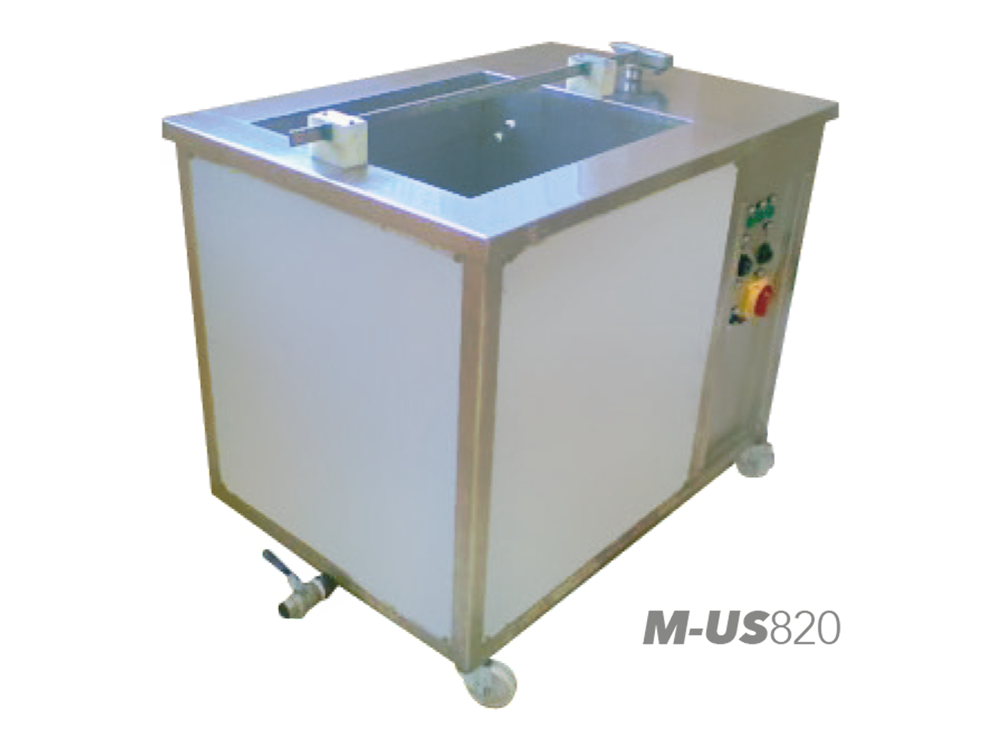
Ultrasonic cleaning uses high-frequency sound waves transmitted through a liquid cleaning bath to generate cavitation. Microscopic cavitation bubbles collapse at the part surface and dislodge contamination from both accessible and inaccessible areas. The KAYAKOCVIB USW ultrasonic cleaner is used when parts have complex internal geometry, blind holes, narrow channels, or threaded features where pressure jets cannot reach effectively. Ultrasonic cleaning achieves higher cleanliness levels for geometrically complex die castings but typically operates at lower throughput than pressure washing.
| Parameter | Pressure Washing | Ultrasonic Cleaning |
|---|---|---|
| Working principle | Mechanical jet force | Acoustic cavitation in liquid |
| Best for | Open geometry, medium to large parts | Complex geometry, blind holes, threads |
| Throughput | High, continuous or batch | Moderate, typically batch |
| Chemistry type | Alkaline or neutral detergent | Alkaline or mild neutral solution |
| Cleanliness level | Good for accessible surfaces | High, including inaccessible areas |
| Integration | Inline tunnel or cabinet | Tank-based, typically standalone or integrated |
Washing Chemistry Selection for Die Cast Materials
The cleaning chemistry must be matched to the part material. Aluminum die castings require a pH-neutral or mildly alkaline cleaner. Strongly alkaline solutions attack the aluminum surface and can cause etching, discoloration, or dimensional change in anodizing-sensitive parts. Zinc alloy die castings are similarly sensitive to both strong alkali and strong acid chemistry. Steel or stainless steel inserts present in mixed-metal assemblies introduce additional compatibility requirements.
In most industrial die casting washing lines, a purpose-formulated alkaline detergent with corrosion inhibitor is used at controlled dilution, temperature, and contact time. Typical wash bath temperatures range from 40 to 70 degrees Celsius depending on the compound type and the level of contamination to be removed. Concentration is maintained automatically in integrated systems using dosing pumps and conductivity monitoring. Actual chemistry selection and concentration must be validated through laboratory testing and supplier consultation before production implementation.
Key Process Parameters to Control
Reliable washing of die cast parts requires control of several interconnected parameters. Variation in any of these without adjustment in the others will produce inconsistent cleanliness results.
- Wash temperature: Higher temperatures improve chemistry activation and surfactant effectiveness. Too high a temperature can affect thin-wall aluminum castings or cause flash evaporation before rinsing.
- Chemistry concentration: Under-dosed solutions lose cleaning effectiveness. Over-dosed solutions leave residue on parts and increase water treatment load.
- Contact time: Parts must be exposed to the washing action long enough for complete contamination removal. Contact time is adjusted through conveyor speed in tunnel machines or cycle time in batch machines.
- Spray pressure or ultrasonic frequency and power: These control the mechanical intensity of the cleaning action. Higher intensity improves removal from complex geometry but must be verified against part surface sensitivity.
- Rinse water quality: Demineralized water in the final rinse stage prevents mineral deposits on part surfaces, which are particularly visible on aluminum after drying.
- Drying completeness: Residual moisture in recesses or blind holes causes corrosion initiation points, especially in zinc or steel components.
Drying After Washing Die Cast Parts
Drying is the final stage of the washing sequence and directly affects the surface condition of the part when it reaches the next process step. Hot air drying is the most commonly used method in industrial finishing lines. Parts are conveyed through a heated air chamber where directed airflow removes surface moisture. Centrifugal drying may be used for bulk parts where tumbling during drying is acceptable for the part geometry.
For die cast aluminum parts with complex recesses, drying temperature and air direction must be controlled carefully to ensure moisture is fully removed from internal channels. Insufficient drying before powder coating, wet paint, or anodizing causes adhesion failure or surface blistering. In automated finishing lines, drying time and temperature are typically set in the PLC recipe and validated during process qualification.
Integration of Washing Into an Automated Finishing Line
In high-volume die casting production, washing die cast parts is rarely performed as a manual isolated step. Finishing, separation, washing, rinsing, and drying are integrated into a continuous or semi-continuous automated line controlled by a PLC system. Parts move from the finishing machine to the separator, then through the wash cabinet, rinse section, and dryer in a defined sequence with controlled timing at each stage.
Automated line integration eliminates process variation caused by manual handling delays between finishing and washing. Delayed washing after wet vibratory finishing allows compound residue to dry on the part surface, making it significantly more difficult to remove. In automated configurations, the transfer time between finishing and washing is minimized and controlled as a process parameter.
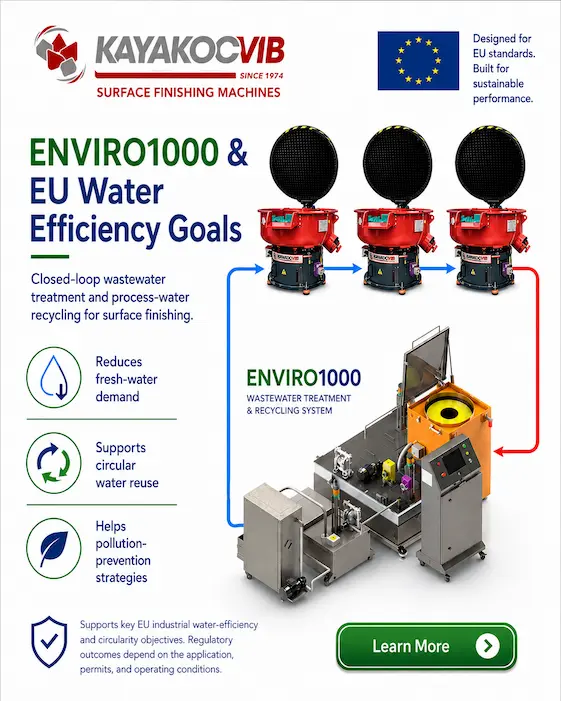
Wastewater from the washing and rinsing stages requires treatment before discharge or reuse. Integrated wastewater treatment systems allow wash water to be filtered, pH-adjusted, and partially recycled, reducing fresh water consumption and chemistry costs. This is a relevant consideration when designing a new finishing line or evaluating the total operating cost of washing die cast parts at scale.
Surface Quality Verification After Washing
Cleanliness verification after washing should be included in the process control plan. Visual inspection under adequate lighting is the baseline method and will detect visible residue, water marks, or surface staining. For more demanding applications such as parts proceeding to anodizing or functional sealing surfaces, surface cleanliness may be verified using water break testing, contact angle measurement, or wipe testing.
Parts that fail the cleanliness check should not proceed to coating or assembly. Root cause analysis should identify whether the failure originated from washing chemistry concentration, contact time, spray coverage, rinse water quality, or drying completeness. Each failure mode has a specific corrective action and should be addressed at the parameter level rather than by reworking individual parts.
Frequently Asked Questions
Why must die cast parts be washed immediately after vibratory finishing?
Compound residue from wet vibratory finishing dries on the part surface if washing is delayed. Dried compound is significantly harder to remove and may require higher chemistry concentration or longer contact time. In automated lines, minimizing transfer time between finishing and washing is a standard process control measure.
Can pressure washing remove residue from blind holes in aluminum die castings?
Pressure washing is effective on accessible surfaces but has limited penetration into deep blind holes or narrow internal channels. For parts with complex internal geometry, ultrasonic cleaning provides more reliable contamination removal from inaccessible areas. In some production lines, both methods are used in sequence for parts with mixed geometry.
What washing chemistry is safe for aluminum die castings?
Aluminum die castings require pH-neutral or mildly alkaline cleaning chemistry with a corrosion inhibitor. Strongly alkaline solutions will etch or discolor the aluminum surface and may create dimensional or cosmetic defects. Specific chemistry selection should be validated through supplier testing before production implementation.
How does washing affect the surface finish result from vibratory finishing?
Washing does not change the mechanical surface condition produced by the finishing cycle. It removes chemical and particulate contamination without altering the edge rounding, burr removal, or roughness achieved in the finishing machine. Inadequate washing, however, masks the actual surface condition and causes downstream process failures that are often incorrectly attributed to the finishing step.
Conclusion
Washing die cast parts after deburring is a defined process stage with specific engineering requirements, not a simple rinse step. The choice between pressure washing and ultrasonic cleaning should be based on part geometry, cleanliness specification, and production throughput. Chemistry selection, temperature, concentration, contact time, rinse water quality, and drying completeness are all control variables that must be defined, monitored, and validated for each application. In automated production environments, integrating washing directly into the finishing line eliminates handling delays and process variation. Engineers designing or optimizing a die casting surface finishing line should treat washing as a process stage with the same level of engineering attention as the finishing step itself, because failures at the washing stage are often only detected at the final coating or assembly inspection point.
Sorry, the comment form is closed at this time.