


10 Jul Finishing Compounds Wastewater
Finishing compounds wastewater is a practical engineering challenge that affects every wet surface finishing line. The chemical compounds used during vibratory finishing, centrifugal disc finishing, and other mass finishing processes do not disappear after the process ends. They accumulate in the process water, modify its chemistry, and determine how difficult and expensive it is to treat or recycle that water before discharge or reuse. Understanding how compounds interact with the wastewater stream is essential for process engineers who manage both surface quality and environmental compliance.
In This Article
What Finishing Compounds Contain and Why It Matters
Industrial finishing compounds are aqueous chemical formulations designed to perform specific functions during wet mass finishing. Most compounds contain surfactants, corrosion inhibitors, pH buffers, brightening agents, lubricants, and in some cases chelating agents or descaling components. Each of these chemical groups contributes to the finishing result, but each also modifies the wastewater chemistry in a distinct way.
Surfactants reduce surface tension, improve media wetting, and help carry away swarf and abraded particles. However, surfactants also increase the biochemical oxygen demand of the effluent and can create foam in treatment systems if not properly managed. Chelating agents help remove oxides and improve brightness, but they also bind heavy metal ions dissolved from the workpieces, making those metals harder to precipitate during treatment. Corrosion inhibitors protect parts between stages but can contain nitrogen-based compounds that complicate biological treatment downstream.
The specific compound formulation selected for a finishing process therefore directly determines the wastewater treatment path required. This connection between compound chemistry and effluent management is frequently underestimated during process design, leading to compliance problems and unexpected treatment costs later in production.
How Compound Type Affects Wastewater Chemistry
Different compound families produce significantly different wastewater profiles. For steel and stainless steel parts, compounds such as those in the 943 series are typically alkaline, designed to clean and protect ferrous metals while supporting ceramic media cutting action. These alkaline effluents generally respond well to pH adjustment and conventional sedimentation treatment.
For aluminum, zamak, and softer non-ferrous parts, compounds such as the 085 series are formulated for lower aggressiveness and are commonly used with plastic media. These compounds often contain organic brighteners and corrosion inhibitors specific to light alloys. Their effluents may have different pH ranges and dissolved organic loads compared to ferrous finishing effluents, requiring separate treatment parameters or segregated collection systems.
Degreasing compounds such as 028-S, used to remove machining oils and coolant residues before or during finishing, introduce higher concentrations of surfactants and emulsified oils into the wastewater. Oil-laden effluents require oil-water separation as a first treatment stage before pH correction and sedimentation can be effective. When 028 acidic degreasing compounds are used for brass, copper, or heavily oxidized parts, the effluent acidity and dissolved metal content increase further, requiring acid neutralization capacity in the treatment system.
Compound Concentration and Dosing Control
The volume of compound introduced into the process water is not fixed. Dosing is typically controlled by a metering pump connected to the machine’s process water system. The compound concentration in the process tank changes over time as water evaporates, parts absorb moisture, and compound is carried out on wet parts or discharged with overflow water.
Overdosing compounds is a common cause of elevated wastewater treatment difficulty. Excess surfactant loading produces persistent foam in treatment tanks, interferes with gravity sedimentation, and increases sludge volume. Overdosing chelating compounds makes heavy metal removal by conventional precipitation significantly less effective. Maintaining correct compound concentration through metered dosing and regular process water monitoring reduces the effluent load substantially without compromising surface finishing quality.
Underdosing creates different problems: inadequate lubrication between media and parts increases surface scratching risk, reduced corrosion inhibition allows part staining between finishing and drying stages, and insufficient buffering allows pH to drift during the process. The ideal dosing range for each compound must be established through process testing and validated under production conditions.
Wastewater Generation Points in a Finishing Line
In a complete wet finishing line, wastewater is generated at several points, not only from the finishing machine itself. Each generation point has a different chemical profile and volume, and this affects how collection and treatment should be designed.
- Process water overflow from the vibratory or centrifugal finishing machine during continuous flow operation carries dissolved compound, suspended swarf, abraded media fines, and dissolved metals from the workpieces.
- Rinse water from the separation stage or post-finishing washing station dilutes the compound concentration but adds volume to the total effluent flow.
- Cleaning water from periodic machine tank cleaning contains accumulated sludge, concentrated compound residues, and higher metal content than normal process overflow.
- Pressure washing or ultrasonic cleaning effluents, if used as a pre-treatment or post-treatment stage, carry machining oils, coolant residues, and cleaning chemistry into the wastewater system.
Segregating these streams at the source allows the treatment system to handle each stream appropriately. Mixing high-oil pre-cleaning effluent with alkaline finishing effluent before treatment often reduces the efficiency of both oil separation and metal precipitation. Well-designed finishing lines route each effluent type to the correct treatment stage or collection tank before combining flows.
Treatment System Selection Based on Compound Chemistry
The compound formulation used in the finishing process directly drives the required treatment system configuration. There is no single universal treatment approach for all finishing compounds wastewater.
| Compound Type | Primary Effluent Characteristic | Required Treatment Stage |
|---|---|---|
| Alkaline deburring compound (e.g., 943 series) | Alkaline pH, suspended metal swarf, low surfactant load | pH neutralization, sedimentation, sludge dewatering |
| Aluminum finishing compound (e.g., 085 series) | Moderate pH, dissolved aluminum, organic inhibitors | pH adjustment, coagulation, sedimentation |
| Degreasing compound (e.g., 028-S) | Emulsified oil, high surfactant load | Oil-water separation, then pH correction and sedimentation |
| Acidic degreasing compound (e.g., 028) | Low pH, dissolved copper or brass, surfactants | Acid neutralization, heavy metal precipitation, sedimentation |
| Brightening or burnishing compound | Low solids, organic acids, brightening agents | pH adjustment, activated carbon filtration if needed |
In finishing lines processing mixed materials or using multiple compound types across different machines, a centralized wastewater collection system with flow equalization before treatment is typically more practical than separate treatment systems for each machine. Flow equalization dampens concentration spikes and allows the treatment chemistry to be set for average conditions rather than worst-case peaks.
Water Recycling Feasibility and Compound Compatibility
Closed-loop water recycling in finishing lines reduces freshwater consumption and minimizes effluent discharge volume. However, not all compound formulations are equally compatible with recycling. Compounds that contain strong chelating agents, high surfactant concentrations, or aggressive descaling chemistry tend to accumulate problematic compounds in the recycled water over time, progressively degrading water quality and finishing performance.
In recycling systems, the process water is filtered to remove suspended solids, treated to reduce dissolved metal content and chemical oxygen demand, and returned to the process tanks. The effectiveness of recycling depends on the compound’s biodegradability, the solids loading from the specific finishing process, and the filtration and treatment stages available in the system.
For finishing lines using compounds with moderate surfactant loading and good biodegradability, water recycling rates of 70 to 90 percent are achievable in many industrial applications, depending on the process conditions and treatment system design. These figures are application-dependent and require validation through pilot testing and ongoing water quality monitoring. Compounds with high chelating agent content or non-biodegradable components typically require more complex treatment before recycling is feasible and may have lower practical recycling rates.
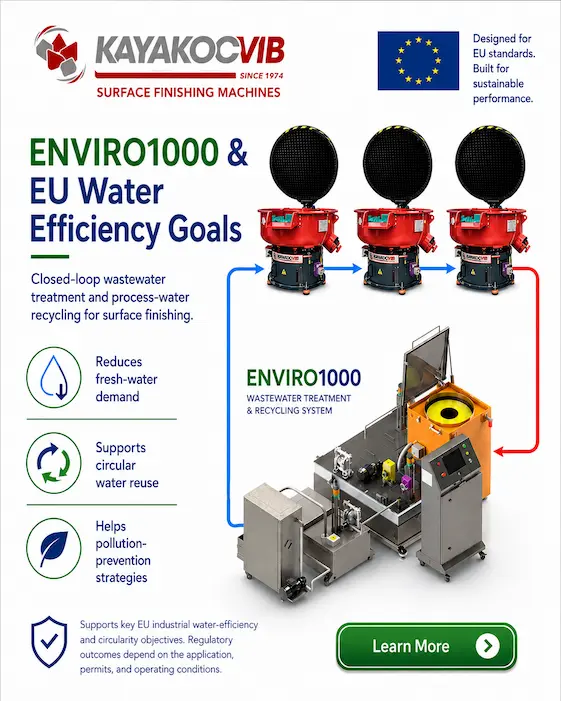
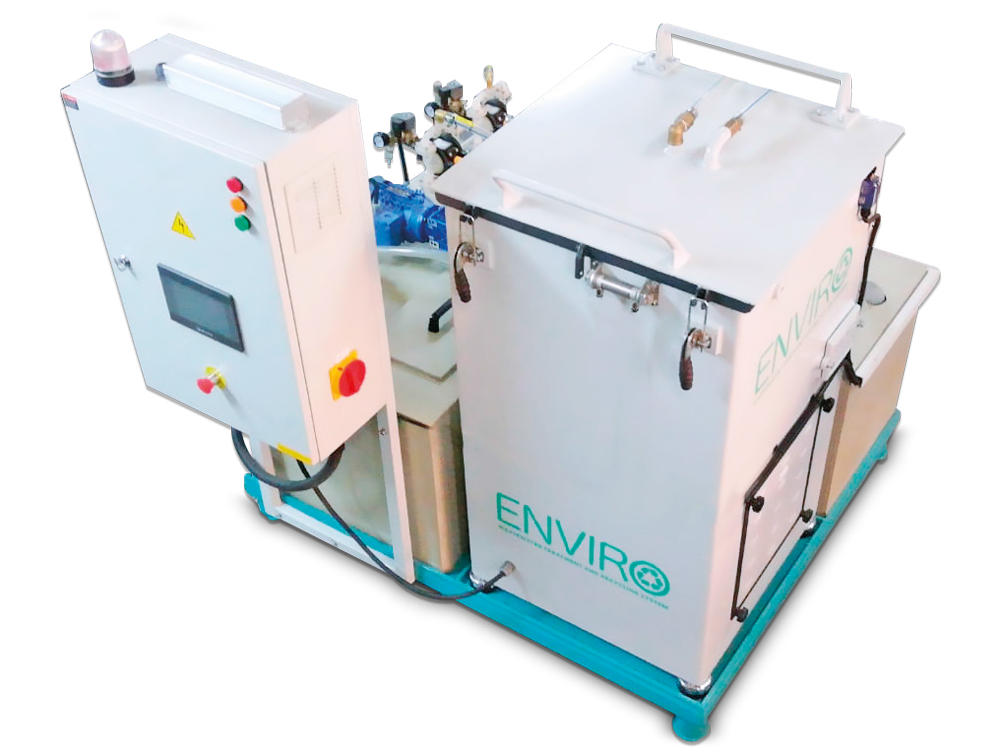
KAYAKOCVIB wastewater treatment and recycling systems are designed to integrate with vibratory and centrifugal finishing lines, taking into account the compound chemistry used in the upstream finishing process. Selecting compatible compound and treatment system combinations during line design avoids retrofitting costs later.
Process Parameters That Influence Wastewater Load
Several process parameters beyond compound selection affect the volume and concentration of finishing compounds wastewater generated per production shift.
Water flow rate during continuous-flow finishing determines how quickly compound is diluted and carried out of the process tank. Higher flow rates reduce compound concentration in the tank but increase effluent volume and dilute the wastewater, which can complicate treatment by requiring larger tank capacity. Lower flow rates concentrate the process water but reduce total effluent volume per hour.
Cycle time affects the total volume of water processed per batch or per shift. Longer cycle times with continuous water flow generate more total effluent. Short-cycle processes with batch water use generate effluent only during discharge intervals, allowing treatment systems to be sized for batch peaks rather than continuous flow.
Part loading density affects metal dissolution rate and swarf generation. Dense loads of steel parts in ceramic media generate higher metal particle and dissolved metal concentrations than light loads of aluminum parts in plastic media. The treatment system must be designed for the maximum expected metal loading, not only the average.
Practical Engineering Considerations for Finishing Line Design
When designing or specifying a finishing line, the following engineering points related to finishing compounds wastewater should be addressed before equipment procurement:
- Identify all compound types that will be used across the line and map their expected effluent characteristics before selecting a treatment system.
- Segregate pre-cleaning, finishing, and rinsing effluent streams where possible to improve treatment efficiency.
- Size the wastewater collection tank for batch peak flow, not only average flow.
- Specify metered compound dosing systems on all machines to control effluent concentration.
- Include pH monitoring at the treatment system inlet as a minimum process control measure.
- Evaluate water recycling feasibility for each compound type used, considering both treatment cost and compound compatibility.
- Plan sludge dewatering and disposal as part of the total wastewater management system, since all finishing processes generate metal-bearing sludge that requires compliant disposal.
Frequently Asked Questions
Can the same wastewater treatment system handle all finishing compound types?
Not always. Different compound chemistries produce different effluent profiles. An alkaline ferrous finishing effluent is treated differently than an oil-bearing degreasing effluent or an acidic brass finishing effluent. Lines using multiple compound types should evaluate whether a single combined treatment system with flow equalization or separate dedicated treatment stages are more appropriate.
How does compound overdosing affect wastewater treatment?
Overdosing increases surfactant and chelating agent concentrations in the effluent. Excess surfactants cause persistent foam in treatment tanks and interfere with gravity sedimentation. Excess chelating agents bind dissolved heavy metals, making conventional chemical precipitation significantly less effective and increasing treatment chemical consumption.
Is closed-loop water recycling possible with all finishing compounds?
Closed-loop recycling is feasible for many compound types but depends on biodegradability, surfactant load, and the treatment stages available. Compounds with high chelating agent content or non-biodegradable components are more difficult to recycle and may require advanced treatment steps. Each compound and process combination should be evaluated through pilot testing before committing to a recycling system design.
What is the most common compliance failure related to finishing compounds wastewater?
Heavy metal exceedances in the discharged effluent are among the most frequent compliance issues. Dissolved metals from workpieces accumulate in the process water and must be precipitated and removed before discharge. Compound chelation chemistry can interfere with this precipitation step, and failure to account for this during treatment system design often leads to discharge limit violations.
Related Process Equipment
Conclusion
Managing finishing compounds wastewater effectively requires treating compound selection and wastewater treatment design as two parts of the same engineering decision. The chemistry of the compound determines the chemistry of the effluent, which in turn determines the treatment system configuration, recycling feasibility, sludge handling requirements, and compliance risk. Selecting a compound based only on surface finishing performance without evaluating its downstream wastewater impact leads to avoidable treatment costs and regulatory exposure. Process engineers responsible for finishing lines should specify compounds, dosing systems, and wastewater treatment equipment as an integrated system, validated through sample testing under realistic production conditions before full-scale implementation.
Sorry, the comment form is closed at this time.