


05 Jul Choose Coin Polishing Line
The decision to choose coin polishing line equipment for a minting operation is not straightforward. Coin blanks demand exceptionally consistent surface quality across very high production volumes, and the wrong machine configuration leads to surface defects, throughput bottlenecks, or excessive media consumption. This guide provides a structured engineering approach to evaluating and selecting the correct polishing line configuration for minting and medal production environments.
In This Article
What Makes Coin Polishing Technically Demanding
Coins and medals are surface-critical parts. Unlike general industrial components where minor surface variation is acceptable, a coin blank must present a uniform, bright, and scratch-free surface before striking. Any surface irregularity — microscopic scratches, scale, oxide film, burr residue from blanking — transfers directly into the struck coin and becomes a visible defect on the finished product.
This means the polishing line must achieve consistent surface preparation across millions of blanks per shift, with minimal part-to-part variation. The process must also avoid edge damage, which would cause geometry problems during the coining press operation.
Primary Selection Criteria for a Coin Polishing Line
Before specifying any machine, process engineers must define the following parameters clearly. Each parameter directly affects machine type, media selection, compound selection, and line configuration.
- Blank material: steel, stainless steel, aluminum, copper alloy, bimetallic, or clad
- Blank diameter and thickness range
- Pre-polish surface condition: as-blanked, scaled, oxide-coated, or pre-cleaned
- Required surface finish before striking
- Production volume per shift and per year
- Acceptable cycle time per batch or continuous throughput requirement
- Washing and drying requirements after polishing
- Automation level: manual loading, semi-automatic, or fully automated line
- Available floor space and utility connections
Without clear answers to these criteria, machine selection becomes guesswork. Minting operations with mixed blank specifications should map each blank type against these parameters separately before selecting a unified line or a flexible multi-stage configuration.
Blank Material and Its Effect on Machine and Media Choice
Material hardness determines the appropriate media type and process intensity. Steel and stainless steel coin blanks require ceramic polishing media because harder media provides sufficient cutting action to remove oxide layers and burnishing marks left by the blanking press. For copper, brass, and Nordic gold alloy blanks, porcelain or high-density plastic media is typically more suitable, as these materials are softer and more sensitive to aggressive cutting.
Aluminum blanks require plastic media with low cutting rates to avoid surface gouging. Bimetallic blanks with steel rings and aluminum or copper cores need particular attention: the media selection must be validated against both component materials simultaneously, and the process intensity must be set conservatively to protect the softer core material.
Compound selection follows material selection. For steel blanks, a deburring and polishing liquid such as a 943-type formulation is typically used alongside a degreasing compound. For copper and brass, a mildly acidic compound such as a 028-type liquid is often preferred to remove light oxides and achieve a bright finish. Aluminum requires lower-pH compounds to avoid surface dulling or pitting.
Machine Type Selection Logic for Coin Polishing
Several finishing machine types are theoretically capable of polishing coin blanks, but each has different suitability depending on the coin size, volume, and surface quality target.
| Machine Type | Suitable Blank Size | Throughput | Surface Uniformity | Automation Compatibility |
|---|---|---|---|---|
| Dedicated Coin Polishing System (BCP-10) | All standard coin diameters | Very High | Excellent | Full line integration |
| Circular Vibratory Finishing | Small to medium blanks | High | Good to Very Good | Semi to full automation |
| Centrifugal Disc Finishing | Small to medium blanks | Medium-High | Very Good | Semi-automated |
| Barrel Tumbling | Small blanks | Medium | Moderate | Low |
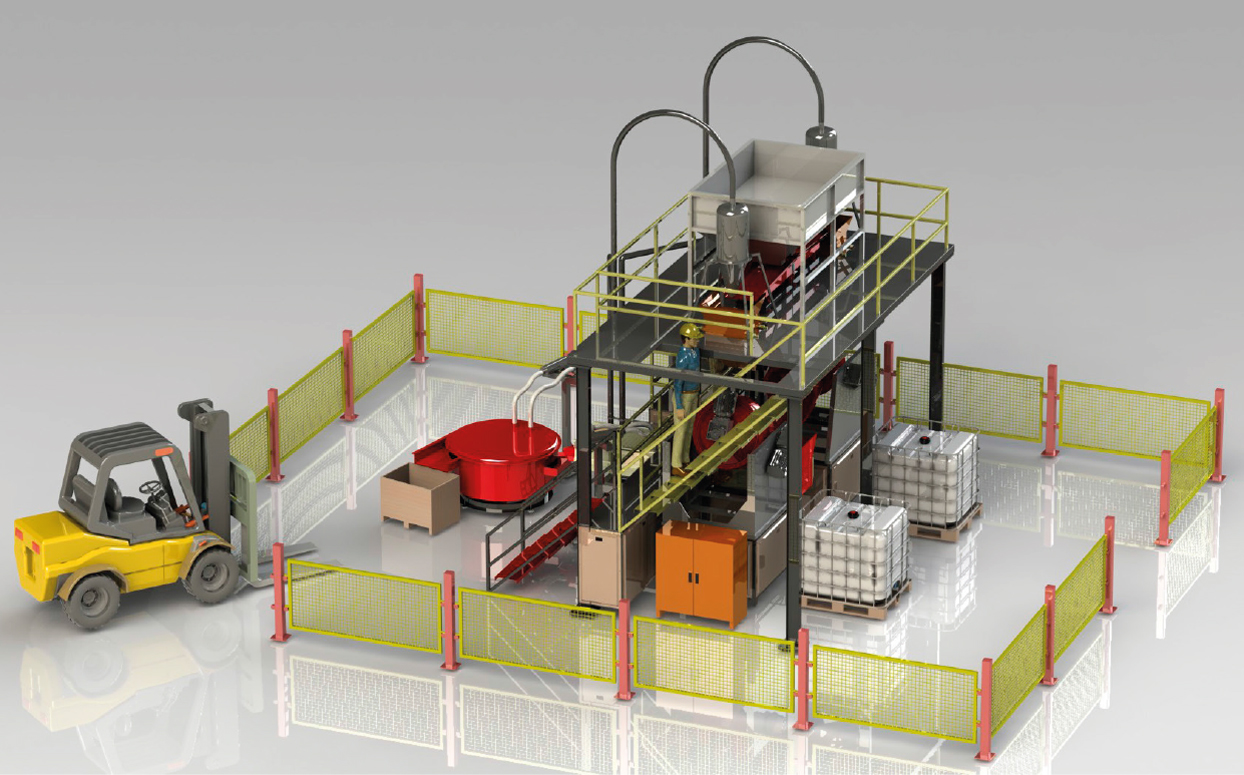
For dedicated minting environments where consistent output quality is mandatory, a purpose-built coin polishing system such as the KAYAKOCVIB BCP-10 is the appropriate reference point. The BCP-10 is designed specifically for coin blank polishing and integrates media separation, compound dosing, and blank handling in a single controlled process unit. Generic vibratory machines can be adapted for coin polishing in lower-volume or prototype environments, but they typically require more process tuning and manual intervention to achieve the surface consistency that minting presses require.
Choosing Between Batch and Continuous Process Configuration
Minting operations above a certain volume threshold benefit significantly from continuous-flow polishing lines rather than batch-based systems. In a batch configuration, blanks are loaded, processed, separated from media, and unloaded in discrete cycles. Cycle times typically range from 15 to 45 minutes depending on blank material, surface condition, and target finish. Batch systems are appropriate for lower-volume operations, mixed-specification production, or flexible trial environments.
Continuous systems convey blanks through a polishing chamber in a controlled flow, allowing for consistent residence time and eliminating the start-stop variation inherent in batch processing. For high-volume national minting operations producing millions of blanks per day, continuous or near-continuous configurations are generally more efficient in terms of labor, footprint, and surface consistency.
The decision between batch and continuous should be made based on annual volume, shift structure, blank mix complexity, and whether the operation runs a single blank specification or multiple diameters on the same line. Mixed-diameter operations may require either multiple dedicated systems or a configurable line with changeover capability built in.
Washing and Drying Integration
After polishing, coin blanks carry residual compound, fine media dust, and polishing liquid. If blanks proceed directly to the coining press without cleaning, compound residue contaminates press tooling and creates surface staining on struck coins. Washing is therefore not optional in a properly configured coin polishing line.
For most minting applications, a pressure washing or rinsing station is integrated directly after media separation. The washing system must achieve complete compound removal from both faces and the edge of each blank without introducing new scratches or water spots. Ultrasonic cleaning may be considered for blanks with tight surface cleanliness requirements or where compound residue in edge recesses is a concern.
Drying must follow immediately after washing to prevent oxidation of freshly polished blank surfaces. Hot air drying at controlled temperature is the standard approach. For steel blanks in particular, the interval between washing and drying must be minimized to avoid flash rusting on the polished surface. Dryer capacity must be matched to washing throughput to avoid queuing wet blanks.
Common Wrong Choices in Coin Polishing Line Selection
Several configuration errors appear repeatedly in coin polishing line procurement decisions. Understanding these avoids costly process restarts or equipment replacements after installation.
- Selecting a general-purpose vibratory machine without validating media and compound compatibility with the specific blank alloy, leading to surface dulling or etching
- Underspecifying machine throughput relative to blanking press output, creating a polishing bottleneck that limits overall minting line capacity
- Omitting washing and drying from the line specification and adding them as afterthoughts, resulting in poor integration and surface contamination problems
- Specifying ceramic media for copper or aluminum blanks without testing, causing excessive material removal and edge damage
- Choosing a batch configuration for a volume requirement that clearly demands continuous processing, then compensating with multiple parallel batch machines instead of a properly designed continuous system
- Ignoring wastewater management requirements for compound-laden process water, which creates regulatory compliance problems during operation
Process Parameters That Control Surface Quality
Once the machine type is selected, surface quality in a coin polishing line is controlled primarily by four process variables: media-to-blank ratio, compound concentration and dosing rate, process time, and water flow. These parameters interact and must be optimized together, not independently.
Media-to-blank ratio determines how frequently each blank contacts media surfaces and at what contact pressure. Too low a ratio produces inconsistent coverage and unpolished zones. Too high a ratio increases machine load and may cause blank-on-blank contact if media fill is insufficient to separate individual blanks. Typical media-to-blank volume ratios for coin polishing range considerably depending on blank size and machine design, and must be determined through process trials rather than assumed from general finishing rules.
Compound concentration affects both the cutting rate and the final brightness. Insufficient compound concentration leaves surface films and reduces brightness. Excessive concentration can cause foaming, compound buildup on media surfaces, and reduced process efficiency. Dosing should be controlled by a metered pump, not by manual addition, to ensure consistency across shifts and operators.
Process time must be validated for each blank specification. Longer cycle times do not automatically produce better surfaces. Over-processing can round coin blank edges beyond acceptable geometry tolerances, which causes problems during the coining strike. The target is the minimum time that consistently achieves the required surface condition.
Automation Readiness Checklist
For operations planning a fully automated coin polishing line, the following points should be confirmed before finalizing the line design.
- Blank infeed system is compatible with machine feed rate and does not cause blank stacking or bridging
- Media separation is reliable for the specific blank diameter and media size combination selected
- Compound dosing is automated and interlocked with machine operation
- Washing station water pressure and rinse volume are validated for complete compound removal
- Dryer output temperature and dwell time are validated for the blank material and thickness
- Reject or inspection station is positioned after drying, before blanks enter the coining press buffer
- Wastewater treatment or recycling system is specified and sized for actual process water volume and compound chemistry
- Line control system provides cycle logging and parameter monitoring for process traceability
Validation Before Production Release
No coin polishing line configuration should proceed to full production without a structured validation phase. During validation, sample blanks from the actual production alloy and blanking press are processed through the proposed line configuration at the intended production parameters. Surface finish should be measured and compared against the minting specification. Edge geometry should be verified to confirm that polishing has not caused measurable diameter or thickness change outside tolerance.
Media wear rate should be observed during validation trials to establish a media replenishment schedule. Compound consumption should be logged to confirm dosing calculations. Any blank orientation sensitivity — where one face consistently polishes differently from the other — should be investigated and corrected through media size adjustment or process parameter change before production release.
Actual results in coin polishing depend on blank alloy composition, blanking press condition, lubricant residue on blank surfaces, media batch consistency, compound quality, and machine condition. Validation must be performed with production-representative blanks, not substitute test pieces.
Frequently Asked Questions
What is the difference between polishing and burnishing for coin blanks?
Polishing uses abrasive media to remove surface material, reduce roughness, and eliminate oxide layers or burr residue. Burnishing uses smooth, non-cutting media to plastically deform and compress the surface, producing a bright mirror-like finish without significant material removal. Many coin polishing lines use a two-stage approach: abrasive polishing first, followed by burnishing to achieve the final surface brightness required before striking.
Can a single polishing line process multiple coin diameters?
Yes, but media separation must be designed to handle the smallest and largest blank diameter in the range without blanks passing through media separation or media passing through blank separation. Changeover between blank sizes may require media size adjustment, compound dosing recalibration, and process time revalidation. Lines designed for a single blank diameter operate more simply and with higher consistency than flexible multi-diameter configurations.
How often does polishing media need to be replaced in a coin polishing line?
Media wear rate depends on media type, blank material, compound aggressiveness, and throughput volume. Ceramic media in steel blank polishing lines typically wears more quickly than plastic media in softer metal applications. Media should be monitored for size reduction and shape degradation. A media replenishment schedule based on weight or volume loss per batch is more reliable than time-based replacement schedules. Actual replacement intervals must be established during process validation.
Is wastewater treatment required for coin polishing operations?
Yes, in virtually all industrial and regulated minting environments. Process water from coin polishing lines contains polishing compounds, fine metal particles, and suspended solids that cannot be discharged directly to drain without treatment. A wastewater treatment or recycling system must be specified as part of the complete line design. The system must be sized for actual water volume and must handle the specific compound chemistry used in the process.
Related Machine and Process Resources
Conclusion
To choose coin polishing line equipment correctly, engineers must evaluate blank material, production volume, surface quality targets, washing and drying requirements, and automation level as a connected set of decisions rather than independent choices. The KAYAKOCVIB BCP-10 coin polishing system provides a purpose-built reference point for dedicated minting environments where consistent surface quality and high throughput are non-negotiable. Generic finishing machines can serve lower-volume or development applications but require careful process validation to meet minting surface standards. Every coin polishing line selection should conclude with a structured validation phase using production-representative blanks before committing to full production parameters.
Sorry, the comment form is closed at this time.