



17 Jul Brass Polishing for Decorative Applications
Brass polishing for decorative applications is one of the most demanding mass finishing tasks in industrial surface treatment. Decorative brass components must meet strict visual standards, with surfaces that are free of scratches, tool marks, oxidation, and handling damage. Whether the parts are plumbing fittings, architectural hardware, lighting fixtures, or precision CNC-machined components, the polishing process must be engineered with the correct sequence, media type, compound selection, and machine parameters to achieve consistent, repeatable results at production scale.
In This Article
Typical Brass Parts and Surface Conditions Before Polishing
Brass components entering a decorative polishing line arrive in different surface conditions depending on the upstream manufacturing process. CNC-turned or milled brass parts typically carry machining marks, sharp edges, and cutting fluid residue. Stamped or drawn brass parts may have burrs along sheared edges, surface stress marks, and forming lubricant contamination. Cast brass components may carry parting lines, surface porosity, and oxide layers from casting heat.
For decorative applications, all of these surface defects must be addressed before a bright, mirror-like finish can be produced. A single-stage polishing cycle is rarely sufficient. Most industrial decorative polishing processes for brass use a multi-stage sequence that moves progressively from surface preparation through pre-polishing to final brightening or burnishing.
Recommended Process Route for Decorative Brass Polishing
A well-designed brass polishing sequence for decorative parts typically follows three stages. The exact number of stages depends on the incoming surface condition, the required final appearance, and the part geometry.
- Stage 1 – Deburring and Surface Preparation: Remove burrs, machining marks, and surface contamination using a cutting media and a compound suited for brass. This stage levels the surface and removes gross defects before finer polishing begins.
- Stage 2 – Pre-Polishing: Use a finer media with a lower cutting action to reduce surface roughness, eliminate scratches left by Stage 1, and prepare a uniform matte-smooth surface that responds consistently to the final brightening stage.
- Stage 3 – Burnishing or Bright Polishing: Use steel media or high-density polishing media with a polishing compound or burnishing fluid to achieve a bright, reflective decorative surface. This stage compresses the surface layer and produces the characteristic shine expected of decorative brass.
Each stage must be followed by a washing step to remove compound residue and media fines before the parts move to the next cycle. Failure to rinse between stages causes compound contamination that degrades surface quality in the subsequent stage.
Media Selection for Brass Polishing
Media selection is one of the most important engineering decisions in any brass polishing process. Brass is a relatively soft metal, and using overly aggressive media will scratch or gouge the surface rather than refine it. The media type, shape, size, and cutting grade must be matched to the part geometry and the polishing stage.
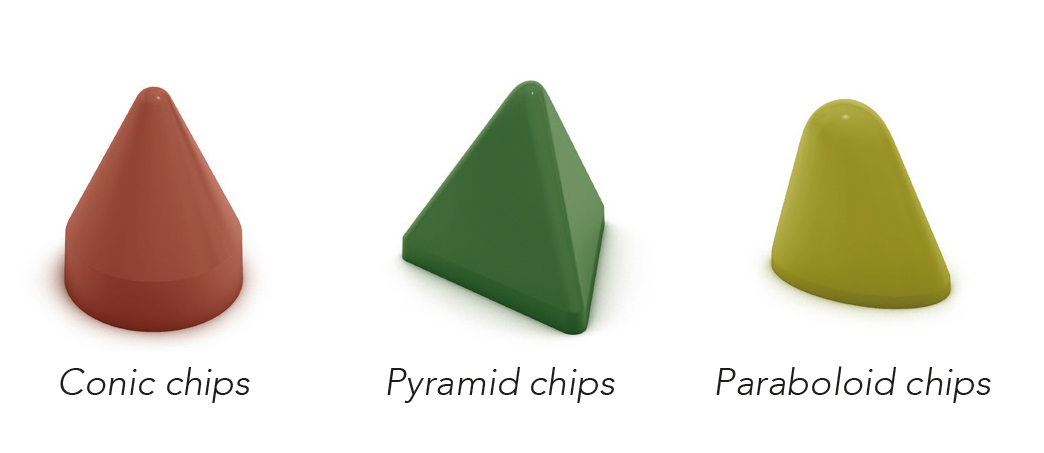
For Stage 1 deburring and surface preparation on brass, plastic media is generally the correct choice. Plastic media provides sufficient cutting action to remove light burrs and machining marks without causing deep scratching on soft yellow metals. Cone or triangle shapes are commonly selected for parts with moderate geometry complexity, while cylindrical or oblique cut shapes are useful for parts with internal features or threaded areas. Ceramic media may be considered only if the incoming burr is exceptionally heavy and plastic media cannot remove it within a practical cycle time, but ceramic must be used with care to avoid excessive surface damage on decorative brass parts.
For Stage 2 pre-polishing, finer plastic media or porcelain media can be used. Porcelain media provides a gentle burnishing action on softer metals and is a practical intermediate-stage media for decorative applications.
For Stage 3 burnishing, stainless steel media is the standard industrial choice. Steel media does not cut the surface but instead compresses and smooths the metal at a microscopic level, producing the bright reflective appearance required for decorative brass components. Steel media is available in ball, pin, and satellite shapes. Balls are used for general burnishing, while pins are useful for reaching into grooves, threads, and internal recesses. A mixed media charge combining balls and pins often gives the best coverage for geometrically complex brass parts.
Compound Selection for Brass
The correct compound is essential for achieving a clean, bright decorative finish on brass without staining, tarnishing, or uneven color. For brass and other yellow metals, the general industrial recommendation is to use a compound that is compatible with copper-based alloys and does not cause surface oxidation or smearing.
For deburring and pre-polishing stages, a standard deburring and polishing liquid designed for non-ferrous metals is appropriate. These compounds provide cutting fluid, corrosion inhibition, and surface conditioning in a single formulation. For burnishing stages with steel media, a dedicated burnishing fluid or bright polishing compound should be selected. These compounds are formulated to produce the characteristic bright surface finish associated with decorative brass parts, and they help prevent the steel media from leaving iron deposits on the brass surface.
For parts with significant oil, grease, or cutting fluid contamination from machining, a degreasing step using a compound such as a 028-type degreasing liquid before the main polishing stages will reduce compound loading and improve finishing consistency. Degreasing liquid formulations that are compatible with brass should be selected, as highly alkaline compounds can attack or discolor copper alloy surfaces.
Machine Selection for Decorative Brass Polishing
The machine type must match the part size, geometry, production volume, and required surface quality. For most decorative brass components in the small to medium size range, a circular vibratory finishing machine is the standard industrial choice. A circular vibratory machine such as the KAYAKOCVIB KVM series provides the controlled part-on-part and part-on-media contact needed to uniformly treat complex brass geometries including external profiles, internal bores, and threaded surfaces.
For small, high-precision decorative brass parts requiring short cycle times and high surface quality, a centrifugal disc finishing machine such as the KAYAKOCVIB KSM series may be preferred. Centrifugal disc machines generate significantly higher finishing intensity than vibratory machines, reducing process time and achieving finer surface refinement in fewer stages. This is particularly relevant in high-volume production environments where cycle time reduction has a direct impact on line output.
For longer brass components such as decorative extrusions, handles, or rail sections, a trough-type vibratory machine provides better media coverage along the full part length compared to a circular machine where longer parts may not circulate correctly.
Process Parameters That Control Decorative Surface Quality
Several process variables directly control the quality of the polished brass surface. Each parameter must be set correctly for the specific part, media, and compound combination used.
| Parameter | Typical Range | Effect on Result |
|---|---|---|
| Media-to-part ratio | 10:1 to 20:1 by volume | Higher ratio improves coverage and surface uniformity; too low causes part-on-part contact damage |
| Compound dosing rate | Application-dependent | Insufficient dosing causes dry running and surface scratching; excess dosing reduces cutting action |
| Water flow rate | Application-dependent | Controls compound dilution, temperature, and surface pH; critical for brass oxidation prevention |
| Cycle time per stage | 20 to 90 minutes typical | Longer cycles improve refinement but increase risk of over-processing on soft brass |
| Machine amplitude | Set by machine design and part requirements | Higher amplitude increases finishing intensity; excessive amplitude can damage delicate parts |
| Burnishing stage media load | Per machine specification | Correct media load ensures consistent part movement and full surface contact |
All parameter ranges listed above are indicative and depend on part geometry, batch size, media type, and compound chemistry. Final parameters must be confirmed through sample testing and process validation before production release.
Washing and Drying After Brass Polishing
After each polishing stage and after the final burnishing stage, thorough washing is essential. Polishing compound residue, media fines, and metal particles left on the surface will cause staining, tarnishing, and visual defects on decorative brass parts if not removed promptly.
Pressure washing systems or ultrasonic cleaning systems can be used depending on part complexity and contamination level. Ultrasonic cleaning is particularly effective for decorative brass parts with fine surface details, threads, or internal channels where mechanical rinsing may not fully penetrate. After washing, parts should be dried immediately to prevent water spotting and surface oxidation, which are especially visible on bright polished brass surfaces.
For production lines processing significant volumes of decorative brass parts, a dedicated drying unit such as a circular vibratory dryer ensures consistent drying without manual handling that could scratch or fingerprint the polished surface. Corrosion inhibitor compounds may be applied during or after the drying stage to protect the polished surface during storage, packaging, and transport.
Quality Control and Inspection Points
Decorative brass polishing produces a visually evaluated output. Quality inspection for decorative applications typically focuses on visual appearance under standardized lighting conditions. Key inspection points include surface brightness and reflectivity, uniformity of finish across the full part surface, absence of scratches, pits, or unfinished low spots, absence of staining, discoloration, or compound residue, and edge condition including sharpness or controlled rounding depending on design requirements.
Surface roughness measurement using profilometry can be used as a supplementary quantitative check, but decorative acceptance criteria are ultimately determined by visual comparison against approved reference samples. Establishing reference samples and approved visual limits at the beginning of a production program is an important quality control step for decorative brass finishing lines.
Production Line Integration and Automation
For high-volume decorative brass component production, manual batch handling between polishing stages introduces risk of surface damage, inconsistent timing, and operator variability. Automated finishing lines link the vibratory or centrifugal finishing machines with separation units, washing stations, and drying units, with automated part transfer between each stage. This reduces handling damage, improves cycle time consistency, and allows process parameters to be controlled and logged for quality traceability.
Wastewater generated from compound-rich process water must be managed in compliance with environmental regulations. In facilities processing large volumes of brass polishing compound effluent, a wastewater treatment and recycling system allows process water to be treated, separated, and reused rather than discharged. This reduces water consumption and compound usage cost over the production life of the line.
Frequently Asked Questions
Can brass polishing be performed in a single stage?
For decorative applications requiring a bright, reflective surface, single-stage polishing is generally not sufficient unless the incoming part surface is already in very good condition from precision machining. Most industrial decorative brass polishing processes use two or three stages to progressively refine the surface from the initial machined or formed condition to the required visual standard.
Is ceramic media suitable for polishing brass parts?
Ceramic media can be used for heavy deburring of brass in Stage 1, but it carries a risk of scratching or over-cutting the soft brass surface. For decorative applications where final surface quality is critical, plastic media is generally preferred for deburring and pre-polishing stages, and steel media is used for final burnishing. Ceramic media on brass should be evaluated through sample testing before committing to production.
How long does a typical brass burnishing cycle take?
Burnishing cycle time depends on part size, geometry, media load, machine type, and required surface brightness. In vibratory machines, burnishing cycles typically range from 20 to 60 minutes. In centrifugal disc machines, the higher finishing intensity can reduce this to 10 to 30 minutes in many applications. Actual cycle time must be determined through sample testing for each specific part and finish requirement.
How should polished brass parts be protected after finishing?
Polished brass surfaces are sensitive to fingerprints, moisture, and atmospheric oxidation. After drying, parts should be handled with clean gloves or automated handling systems. A corrosion inhibitor rinse or protective coating applied during or after drying can extend the period before visible tarnishing occurs. For long-term protection, lacquer coating or clear coating is commonly applied to decorative brass parts in the final production stage.
Related Process Equipment
Conclusion
Brass polishing for decorative applications is a multi-stage engineering process that requires careful selection of media, compounds, machine type, and process parameters matched to the part geometry, incoming surface condition, and required visual standard. A staged process route moving from surface preparation through pre-polishing to final burnishing, combined with thorough washing and immediate drying at each stage, produces the consistent bright surfaces that decorative brass components require. Process parameters must be validated through sample testing before production release, and quality inspection against approved reference samples is essential for maintaining visual consistency across production batches. When properly engineered, industrial brass polishing lines deliver reliable, repeatable decorative surface quality at production scale.
Sorry, the comment form is closed at this time.