


17 Jun Finishing Media Wear Rate and Operating Cost
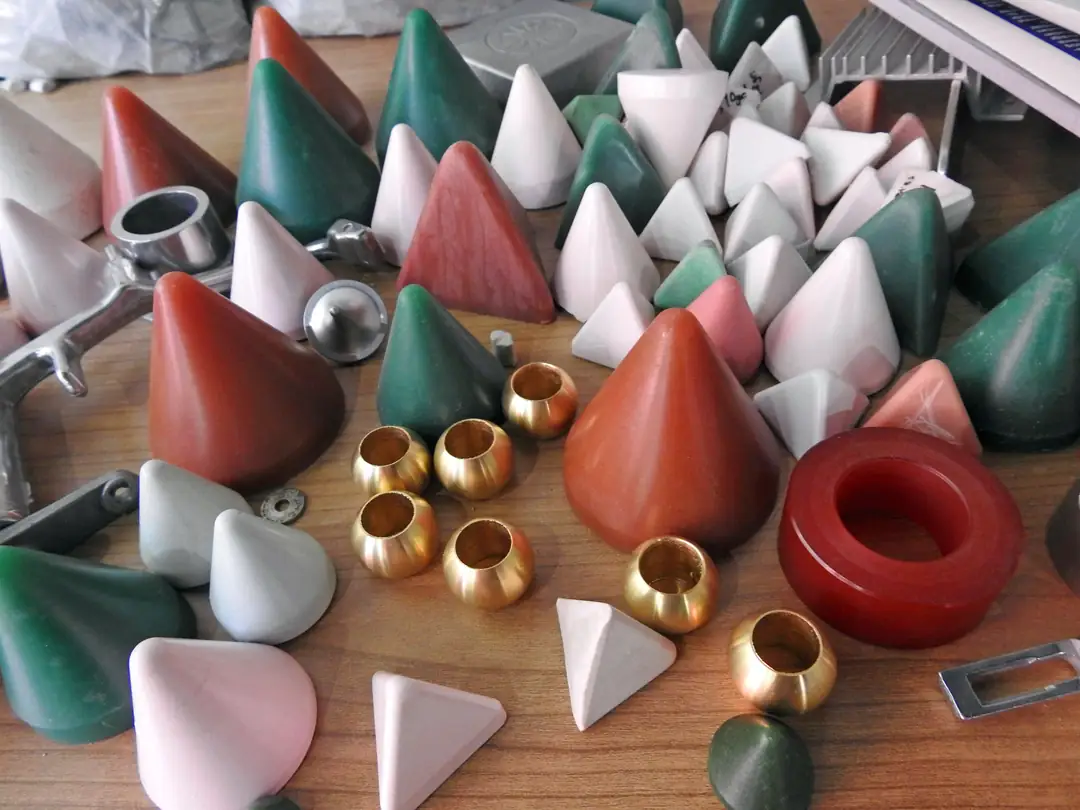
Finishing media wear rate is one of the most consequential variables in the total operating cost of a mass finishing process. In vibratory finishing, centrifugal disc finishing, and similar batch or continuous processes, media is consumed progressively during every cycle. The rate at which media loses volume and cutting performance determines how often it must be replenished, how consistent the process remains over time, and what the true cost per part looks like at production scale. Engineers who understand the drivers of media wear can make better decisions about media selection, compound dosing, machine loading, and cycle time, reducing consumable costs without compromising surface quality.
In This Article
Why Media Wear Rate Matters in Production
In any wet mass finishing operation, media degrades through two mechanisms: abrasive cutting action against the workpiece and attrition between media pieces themselves. Both mechanisms are always active. The question is not whether media wears, but at what rate and whether that rate is controlled or left to drift. Uncontrolled wear leads to several compounding problems. As media size decreases, the kinematic behavior of the machine load changes. Smaller media creates a denser, slower-moving mass that reduces cutting energy and extends cycle time. Eventually the process falls outside its validated parameters without any visible alarm, and parts begin arriving at inspection with inconsistent edge break, residual burrs, or surface quality that does not match the approved sample.
Beyond process consistency, media consumption is a recurring direct cost. In high-volume production, media replenishment can represent 40 to 60 percent of total finishing operating cost depending on the application. A plant running multiple vibratory machines continuously may consume hundreds of kilograms of media per month. Small improvements in wear rate, through better media selection or compound optimization, translate directly into measurable cost reduction at annual scale.
Root Causes of Excessive Media Wear
Diagnosing high finishing media wear rate requires examining several root cause categories. The most common causes fall into three groups: mechanical causes related to machine loading and motion, chemical causes related to compound selection and dosing, and material causes related to the media type relative to the workpiece.
Machine Loading and Motion Causes
Overloading a vibratory finishing machine increases inter-media contact pressure, which accelerates attrition. The recommended part-to-media ratio by volume is typically in the range of 1:3 to 1:5 depending on part geometry, weight, and fragility. Operating outside this range, particularly with heavier or more angular parts, causes the media mass to move less freely and wear faster. Incorrect vibratory amplitude or frequency settings can have a similar effect. Too much vibration energy increases the kinetic impact between media pieces and accelerates breakdown, particularly for ceramic media with a high hardness but moderate toughness.
Compound and Water Causes
The finishing compound serves multiple roles: it lubricates the mass, controls the cutting chemistry, maintains pH, and prevents corrosion on metal parts. Insufficient compound concentration reduces lubrication within the media mass, causing dry abrasive contact between pieces and increasing wear. Excessive compound concentration, conversely, can cause media softening or surface erosion in some bond types, particularly in lower-density plastic media. Water flow rate also affects this balance. Insufficient water flushes compounds too slowly and allows solid loading from swarf and removed material to accumulate in the mass, creating an abrasive slurry that accelerates wear. Correct water flow ensures continuous rinsing of the media bed without diluting the compound below its functional concentration range.
Media and Workpiece Compatibility Causes
Using media that is too hard or too aggressive for the workpiece often creates a misperception that the process is efficient because cutting action is fast. However, overly aggressive ceramic media on softer materials such as aluminum or zamak typically produces faster media wear alongside over-processing of the part surface. For aluminum and zamak parts, plastic media is generally the correct selection because it matches the lower hardness of the substrate and minimizes both part damage and unnecessary media attrition. Using ceramic media on these materials without a specific validated reason increases wear rate without a proportional benefit. For steel and stainless steel parts with significant burrs, ceramic media is technically appropriate and provides the cutting force needed for effective deburring, with a wear rate that is proportional to the work being done rather than excessive.
Finishing Media Wear Rate by Media Type
Different media types have inherently different wear characteristics. Understanding these differences is the starting point for cost modeling and media selection decisions.
| Media Type | Typical Application | Relative Wear Rate | Primary Wear Driver |
|---|---|---|---|
| Ceramic bonded (standard density) | Steel, stainless steel deburring | Moderate | Attrition under high load or incorrect compound |
| Ceramic bonded (high density) | Heavy burr removal, hard metals | Low to moderate | Hard metal abrasion, media-to-media impact |
| Plastic bonded | Aluminum, zamak, brass, delicate parts | Moderate to high | Compound chemistry imbalance, overloading |
| Steel media (balls, pins) | Burnishing, brightening | Very low | Corrosion if compound pH is not maintained |
| Porcelain or natural stone | Polishing, cosmetic finishing | Moderate | Impact fracture, media-to-media contact |
These are indicative comparisons. Actual wear rate in any given application depends on part load, cycle time, compound type, water flow, and machine dynamics. Process validation through controlled trials is required before committing to a media type for production.
Corrective Actions for High Media Wear
When media wear rate is identified as higher than expected, a structured correction sequence produces better results than changing multiple variables simultaneously. The following sequence is recommended for diagnosing and correcting elevated wear:
- Verify the part-to-media loading ratio is within the machine manufacturer’s recommended range for the part weight and geometry.
- Check compound concentration and dosing rate against the compound technical datasheet. Confirm the compound type matches the base material being finished.
- Measure and adjust water flow rate to ensure continuous flushing without excessive dilution of compound. Cloudy or heavily loaded effluent indicates insufficient water flow.
- Inspect media size distribution. If average media size has dropped significantly from the starting size, the worn fraction should be removed and fresh media added.
- Review machine amplitude and frequency settings. Reduce amplitude if inter-media impact appears excessive based on sound or visual observation of mass movement.
- Confirm media type is appropriate for the workpiece material. If ceramic media is being used on aluminum or zamak parts without a validated technical reason, consider testing plastic media.
Compound Selection and Its Effect on Media Longevity
Compound chemistry has a direct effect on media longevity in ways that are often underestimated. For steel and stainless steel parts processed with ceramic media, a deburring and polishing compound such as a 943-type liquid compound maintains the correct pH and provides the cutting activators needed for effective deburring. Running ceramic media without compound, or with incorrect compound concentration, not only degrades surface quality but also increases media-to-media friction and accelerates breakdown.
For aluminum and zamak parts processed with plastic media, an 085-type deburring and polishing liquid is typically used to balance cutting action with the lower surface hardness of the material. In both cases, a 028-S degreasing compound is commonly used at the beginning of the cycle or as a combined process step when parts carry machining oils or coolant residue. Correct compound selection stabilizes the wear environment within the machine and contributes to a more predictable finishing media wear rate over production batches.
Operating Cost Modeling for Media Consumption
Calculating the media-related operating cost per part requires tracking three variables: media consumption rate in kilograms per hour, media unit cost per kilogram, and parts produced per hour. The cost model below illustrates how these variables interact:
| Variable | Example Value | Notes |
|---|---|---|
| Media consumption rate | 0.8 kg/hour | Depends on media type, load, and compound |
| Media unit cost | 2.50 USD/kg | Varies by media type and supplier |
| Media cost per hour | 2.00 USD/hour | 0.8 x 2.50 |
| Parts processed per hour | 400 parts | Depends on batch size and cycle time |
| Media cost per part | 0.005 USD/part | 2.00 / 400 |
These are illustrative figures only. Actual values depend on the specific application, media type, machine type, part geometry, and process parameters. The value of this model is not the absolute numbers but the structure it provides for comparing process configurations. A process change that reduces media consumption rate from 0.8 to 0.5 kg/hour, for example, reduces media cost per part by approximately 37 percent at the same throughput, which compounds significantly across shift and annual production volumes.
Parameter Tuning for Optimized Media Life
Once root causes have been addressed, fine-tuning process parameters can extend media life further. Amplitude settings on vibratory finishing machines directly control the energy input into the media mass. Reducing amplitude by a small increment, typically 10 to 15 percent, can reduce inter-media wear without eliminating effective burr removal action on the part, particularly when the burr size does not require maximum cutting intensity. Cycle time should also be reviewed. Running media longer than necessary to achieve the required surface condition accumulates wear without producing additional part quality improvement.
In automated finishing lines where machines such as the KAYAKOCVIB KVM series circular vibratory finishing machines are integrated with compound dosing systems and water flow controls, these parameters can be set and monitored consistently across shifts. Automated dosing eliminates the variability introduced by manual compound addition, which is one of the most common causes of fluctuating media wear rate in facilities where compound management is done manually.
Prevention Checklist for Controlled Media Wear
- Confirm part-to-media ratio by volume before production startup.
- Verify compound type matches the base material of the workpiece.
- Set and document compound dosing rate using the compound technical datasheet.
- Set water flow rate to maintain continuous rinsing without excessive dilution.
- Check media size distribution at defined production intervals and replenish worn fraction.
- Record media consumption per batch and track against the established baseline.
- Review amplitude and frequency settings after any process change or new part introduction.
- Separate aluminum and steel parts into separate finishing batches to avoid cross-contamination of cutting chemistry and media wear environment.
Frequently Asked Questions
What is a normal finishing media wear rate for ceramic media?
There is no universal normal rate. Ceramic media wear rate typically ranges from 0.5 to 2.5 percent of media volume per hour depending on part load, part material, compound concentration, water flow, and machine amplitude. Process-specific baseline measurement through controlled production trials is the only reliable way to establish a normal rate for a given application.
Does harder media always last longer?
Not necessarily. Higher hardness improves resistance to abrasion from the workpiece surface, but harder media can also fracture more easily under high inter-media impact loads. The correct media hardness depends on the workpiece hardness, burr size, machine energy level, and required surface finish. Selecting media by hardness alone without considering these factors can increase wear rather than reduce it.
How does compound dosing affect media wear?
Compound maintains lubrication between media pieces and controls the chemical environment in the machine. Insufficient compound concentration reduces lubrication, increases dry abrasive contact between media pieces, and accelerates breakdown. Incorrect compound chemistry can also cause surface erosion of some media bond types. Correct compound type and consistent dosing rate are among the most effective controls for managing finishing media wear rate.
When should worn media be replaced versus topped up?
Both strategies are valid depending on the process. Continuous topping up maintains a mixed size distribution and is common in long-running production processes. Periodic full replacement is used when media has degraded to a point where the size distribution is no longer within the validated range. Tracking media weight or volume at defined intervals allows early identification of the point at which topping up is no longer sufficient to maintain process stability.
Conclusion
Managing finishing media wear rate is fundamentally an engineering discipline, not a consumable purchasing decision. The variables that control wear are process variables: machine loading, compound type and concentration, water flow, amplitude, cycle time, and media selection relative to the workpiece material. Each of these variables can be measured, documented, and controlled. When they are managed systematically, media consumption stabilizes at a predictable rate, process quality remains consistent, and the cost per part from media consumption is minimized. For production engineers working with vibratory or centrifugal disc finishing equipment, establishing a documented media consumption baseline and reviewing it against process parameter records is the most practical foundation for ongoing operating cost optimization.
Sorry, the comment form is closed at this time.