


30 May Multi Stage Washing Line
A multi stage washing line is a sequenced cleaning system used in industrial surface finishing and metal processing to remove oils, chips, polishing compounds, buffing residues, and surface contaminants from parts before coating, inspection, assembly, or packaging. Unlike single-stage washers, these lines combine multiple process stages in a controlled flow, allowing manufacturers to achieve defined cleanliness specifications that cannot be reached with one washing step alone. They are widely deployed in automotive, aerospace, medical device, CNC machining, and general metal processing environments where surface cleanliness is a measurable quality requirement.
Why Surface Cleanliness Requires Multiple Stages
After vibratory finishing, centrifugal disc finishing, or machining operations, parts carry a mixture of contaminants. These typically include cutting oils and coolants, grinding or polishing compound residues, loose metallic fines, abrasive particles from finishing media, and surface oxides. No single washing stage can reliably remove all of these at once without cross-contamination or redeposition. A multi stage washing line addresses this by assigning a specific function to each stage: loosening and removing bulk contamination first, then rinsing, then treating the surface chemically if required, then drying under controlled conditions.
The result is a repeatable, validated cleaning sequence rather than a single wash with unpredictable outcomes. For parts destined for electroplating, powder coating, anodizing, or precision assembly, surface cleanliness is not optional — it directly affects coating adhesion, corrosion resistance, dimensional acceptance, and functional performance.
Typical Stage Configuration
The exact number and sequence of stages depends on part material, contamination type, downstream process requirements, and production volume. A commonly used configuration for metal parts after finishing operations follows this general sequence:
- Pre-wash or rough degreasing — removes bulk oil, coolant, and loose particles using heated alkaline solution or solvent-based chemistry
- Main wash — intensive cleaning using spray pressure, ultrasonic energy, or immersion agitation with detergent chemistry matched to the contamination type
- First rinse — removes detergent residues and loosened contamination using clean or recycled water
- Second rinse — further dilution of carry-over chemistry, often using deionized or demineralized water for precision parts
- Passivation or surface treatment stage — applicable for stainless steel parts where chromium oxide layer restoration is required, or for corrosion inhibitor application
- Final rinse — removes passivation chemistry, using high-purity water where needed
- Drying — hot air, vacuum, centrifugal spin, or infrared drying depending on part geometry and required dryness level
Not every application requires all seven stages. A CNC machined aluminum part destined for anodizing may require four stages: alkaline wash, rinse, deionized rinse, and drying. A stainless steel medical component may require six to seven stages including passivation and high-purity final rinse. Stage count should be defined by the cleanliness specification, not by convention.
Washing Technologies Used Within the Line
Two technologies are most commonly integrated into industrial multi stage washing lines: pressure washing and ultrasonic cleaning. Each has a distinct mechanical principle and application range.
Pressure Washing Stages
Pressure washing uses directed high-velocity water jets to mechanically remove surface contamination. Spray pressure, nozzle angle, flow rate, temperature, and chemistry concentration are the key process variables. Pressure washing is effective for removing bulk contamination, chips, and loosely bonded residues from parts with accessible surfaces. It is widely used in automotive and general machining applications where throughput is high and part geometry is not highly complex.
KAYAKOCVIB PRS-W pressure washing machines are designed for integration into automated finishing lines, providing controlled spray washing with temperature management and chemistry dosing as part of a complete post-finishing sequence.
Ultrasonic Cleaning Stages
Ultrasonic cleaning uses high-frequency sound waves transmitted through a liquid medium to generate microscopic cavitation bubbles. When these bubbles collapse near a part surface, they produce localized energy that dislodges contamination from internal channels, blind holes, threads, and complex geometries where spray pressure cannot reach effectively. Ultrasonic cleaning is particularly relevant for precision machined parts, hydraulic components, medical implants, aerospace fuel system parts, and any geometry with internal features.
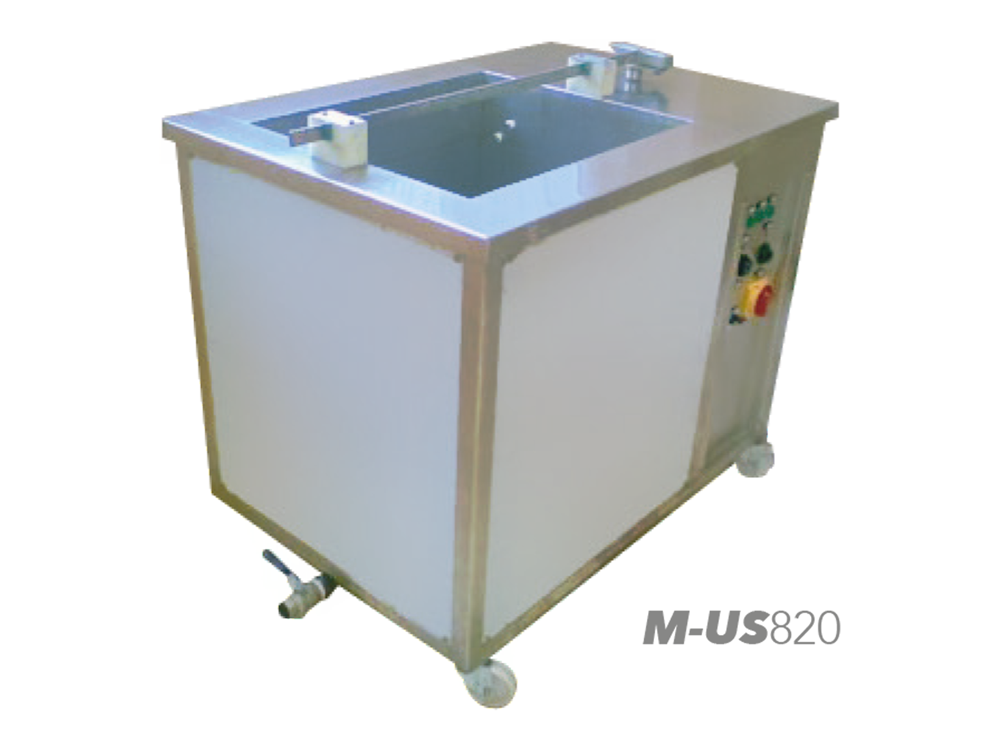
KAYAKOCVIB USW ultrasonic cleaners can be integrated as dedicated stages within a multi stage washing line, typically positioned after pre-wash and before the rinse sequence. Frequency selection, power density, tank temperature, and chemistry type must be matched to the part material and contamination profile. Aluminum parts, for example, require careful ultrasonic frequency and chemistry selection to avoid surface attack.
Process Parameters That Govern Cleaning Performance
Cleaning effectiveness in a multi stage washing line is determined by a combination of chemical, thermal, mechanical, and time variables. These are often described using Sinner’s Circle: chemistry, temperature, mechanical action, and time. Adjusting one factor typically requires compensation in at least one other.
| Stage | Key Parameter | Typical Control Range | Effect on Cleaning |
|---|---|---|---|
| Pre-wash / Degreasing | Temperature | 40 to 70°C | Higher temperature increases oil emulsification rate |
| Pre-wash / Degreasing | Chemistry concentration | 2 to 8% by volume | Must match contamination chemistry |
| Ultrasonic stage | Frequency | 25 to 40 kHz typical | Lower frequency gives stronger mechanical action |
| Ultrasonic stage | Temperature | 40 to 60°C | Optimal cavitation activity requires temperature control |
| Rinse stages | Water conductivity | Depends on specification | Low conductivity required for precision or coated parts |
| Passivation | Acid concentration and time | Application specific | Controls oxide layer quality on stainless steel |
| Drying | Temperature and airflow | 80 to 120°C typical | Residual moisture causes corrosion and coating defects |
Actual parameter ranges depend on part material, contamination type, chemistry selection, and downstream process requirements. All process parameters should be validated through trial runs and confirmed against the applicable cleanliness specification before production release.
Filtration and Water Management
Wash water in an industrial multi stage washing line accumulates contamination over time. Without active filtration, bath efficiency decreases and parts become recontaminated by suspended particles or emulsified oils that redeposit during the wash cycle. A well-designed line incorporates continuous or periodic filtration at each wash stage, oil separation for stages handling machined or finished metal parts, conductivity monitoring for rinse water quality, and bath concentration monitoring and automatic chemistry dosing.
Wastewater from the washing line must be managed according to applicable environmental regulations. Closed-loop water recycling systems reduce fresh water consumption and minimize effluent discharge. In high-volume production environments, the cost of water, chemistry, and wastewater treatment is a significant operating expense that justifies investment in automated bath management and recycling systems.
Drying Stage Considerations
Drying is frequently underestimated in multi stage washing line design. Residual moisture on metal parts causes surface oxidation on steel and stainless steel, adhesion failures in subsequent coating, rejection in optical or cleanliness inspection, and contamination of downstream packaging. The appropriate drying method depends on part geometry, material, and required dryness level.
Hot air drying is the most common method and is suitable for most part geometries. Parts with deep blind holes or complex internal channels may require extended drying time or vacuum-assisted drying to ensure complete moisture removal. Centrifugal spin drying is used for small bulk parts where water pooling in part features is a concern. For parts that cannot tolerate elevated temperatures, such as certain plastic-metal assemblies, lower temperature airflow drying with extended time may be required.
Automation and Line Integration
A multi stage washing line can be configured as a standalone manual loading system, a semi-automated conveyor line, or a fully automated inline system integrated with the finishing machine and downstream handling. In high-volume production environments, full automation reduces labor cost, eliminates process variability from manual handling, and provides PLC-controlled recipe management that ensures every batch follows the same validated sequence.
Automated lines typically incorporate part transport via conveyor, hoist, or robotic transfer between stages, PLC recipe control for stage time, temperature, chemistry dosing, and rinse cycles, sensor-based monitoring of bath conductivity, temperature, and filtration status, and alarm and reject logic for out-of-specification bath conditions. Integration with vibratory finishing machines, centrifugal disc finishers, and separator units allows a complete post-finishing sequence — separation, washing, and drying — to operate as a single automated cell.
Application Examples Across Industries
In automotive manufacturing, multi stage washing lines are used after vibratory deburring of transmission components, connecting rods, valve bodies, and hydraulic fittings. The cleaning sequence removes finishing compound residues and metallic fines before parts proceed to inspection or assembly. Cleanliness specifications in automotive powertrain production are typically defined by gravimetric analysis or particle count per unit area.
In aerospace, parts such as turbine blades, structural fasteners, and hydraulic manifolds require cleaning sequences that include ultrasonic stages for internal channel cleaning and high-purity rinses to prevent ionic contamination before coating. Passivation of stainless steel or titanium parts may also be integrated into the sequence.
In medical device manufacturing, implants and surgical instruments require washing sequences that comply with bioburden reduction and surface cleanliness requirements. Ultrasonic cleaning stages with validated chemistry and high-purity deionized water rinses are standard practice before sterilization or packaging.
In CNC machining and general metal processing, washing lines handle a broader range of part types and contamination profiles. The line configuration is typically more flexible, with adjustable stage timing and chemistry to accommodate different part batches and materials.
Frequently Asked Questions
How many stages does a typical industrial washing line need?
Stage count depends on the cleanliness specification and downstream process. Most industrial applications use three to six stages. Precision parts destined for coating or assembly in regulated industries may require six to seven stages including passivation and high-purity rinse.
When is ultrasonic cleaning required instead of pressure washing?
Ultrasonic cleaning is required when parts have internal channels, blind holes, or complex geometries that spray pressure cannot reach. It is also preferred when contamination is tightly bonded to the surface or when parts are small and fragile. Pressure washing handles open geometries and bulk contamination removal more efficiently.
Can a multi stage washing line be integrated with a vibratory finishing machine?
Yes. In automated surface finishing lines, the washing and drying sequence is typically positioned immediately after the separator that divides finished parts from media. This integration allows separation, washing, and drying to operate as a continuous automated flow without manual handling between steps.
What water quality is required for rinse stages?
Final rinse water quality depends on the downstream process. For general industrial cleaning, tap water with basic softening is often sufficient. For parts destined for anodizing, plating, or precision coating, deionized or demineralized water with conductivity typically below 20 µS/cm is required. Medical device parts may require water meeting specific purity standards defined by the applicable validation protocol.
Conclusion
Designing a multi stage washing line requires a clear understanding of the contamination profile, the cleanliness specification, the downstream process requirements, and the production volume. Stage count, washing technology selection between pressure washing and ultrasonic cleaning, chemistry selection, rinse water quality, passivation requirements, and drying method all contribute to the final cleaning result. There is no universal configuration that suits every application. Engineers should define the required cleanliness standard first, then work backward to select the stages, parameters, and automation level that reliably meet that standard under production conditions. Process validation through sample testing and measurement against the specification is the only reliable method to confirm that the line design is sufficient before committing to full production operation.
Related KAYAKOCVIB Technical Resources
Related Video Demonstration
KAYAKOCVIB tunnel washing and drying machine example for continuous industrial cleaning and drying of metal parts.
Sorry, the comment form is closed at this time.