


20 Jun Coin Blank Washing & Polishing Process with BCP-10
The coin washing polishing process is a multi-stage surface finishing sequence used in industrial coin minting and metal blank production to achieve controlled surface brightness, edge definition, and contamination-free surfaces before coinage striking or final inspection. The process involves mechanical polishing action combined with chemical compound support, followed by separation, washing, and drying stages. Each stage must be engineered to match the blank material, production volume, and required surface condition.
In This Article
Where the Process Starts and What It Must Achieve
Coin blanks typically arrive at the finishing line after blanking or punching from sheet metal. At this point, the blanks carry mechanical burrs along the sheared edge, surface oxides from forming or annealing operations, lubricant residues, and minor surface scratches from handling and stacking. The polishing stage must remove these defects and produce a uniform, reflective surface condition suitable for die striking. The washing stage must remove all compound residue, metallic fines, and surface contamination so the blank exits the line clean and dry, ready for minting or quality inspection.
The combined coin washing polishing process is therefore not a single machine operation. It is a controlled production sequence where each step feeds directly into the next, and an error in any one stage degrades the final surface quality of every blank in the batch.
Coin Blank Materials and Their Finishing Behavior
The material composition of the blank determines the media type, compound chemistry, cycle time, and machine intensity required. Coin blanks are commonly produced from steel, stainless steel, aluminum, copper alloys, brass, bimetallic constructions, and nickel-plated steel. Each material responds differently to mechanical finishing action.
Steel and stainless steel blanks tolerate ceramic media and benefit from its stronger cutting and burnishing action. Aluminum blanks are softer and require plastic media to avoid aggressive surface scratching or material removal beyond the design tolerance. Copper and brass blanks are yellow metals that tarnish readily during wet finishing and require specific compound chemistry to maintain color consistency and surface brightness. Bimetallic and plated blanks require careful media selection and reduced process intensity to avoid edge separation or coating damage.
Step-by-Step Process Sequence
The following process sequence describes a full industrial coin washing polishing process from blank loading through final drying. Parameter ranges are indicative and must be validated through sample testing for each specific application.
- Blank Loading and Pre-Inspection: Coin blanks are loaded into the polishing machine in controlled batch quantities. Before loading, blanks are visually inspected for gross defects such as deep scratches, cracks, or deformation that finishing cannot correct. Overloaded machines produce inconsistent motion and uneven polishing results, so load weight must be controlled according to machine volume and media fill level.
- Media and Compound Selection: Media type and size are selected based on blank material and geometry. For steel coin blanks, ceramic burnishing media in a small spherical or cylindrical form is commonly used to produce a smooth, bright surface. For aluminum blanks, plastic media is preferred to avoid aggressive surface cutting. The finishing compound is dosed continuously with water during the polishing stage. For steel and stainless steel coin blanks, a polishing compound such as a mild alkaline burnishing liquid supports bright surface development and controls foam. For aluminum blanks, a dedicated polishing liquid formulated for soft metals is used. For copper and brass blanks, a mild acidic degreasing compound such as a formulation compatible with yellow metals is selected to maintain color and remove oxidation without aggressive chemical attack.
- Polishing Stage: The coin blanks and media are processed together in a vibratory finishing machine. Circular vibratory machines are widely used for coin polishing because they produce continuous toroidal motion, giving every blank consistent contact with the media mass. The KAYAKOCVIB BCP-10 coin polishing system is designed specifically for this application, with machine settings optimized for coin blank geometry, batch consistency, and surface uniformity. Vibration amplitude, frequency, and compound flow rate are adjusted to produce the required surface brightness without edge rounding beyond tolerance. Typical polishing cycle times vary widely depending on blank material, starting surface condition, media type, and required Ra value. Process duration must be determined through sample testing and cannot be estimated without application data.
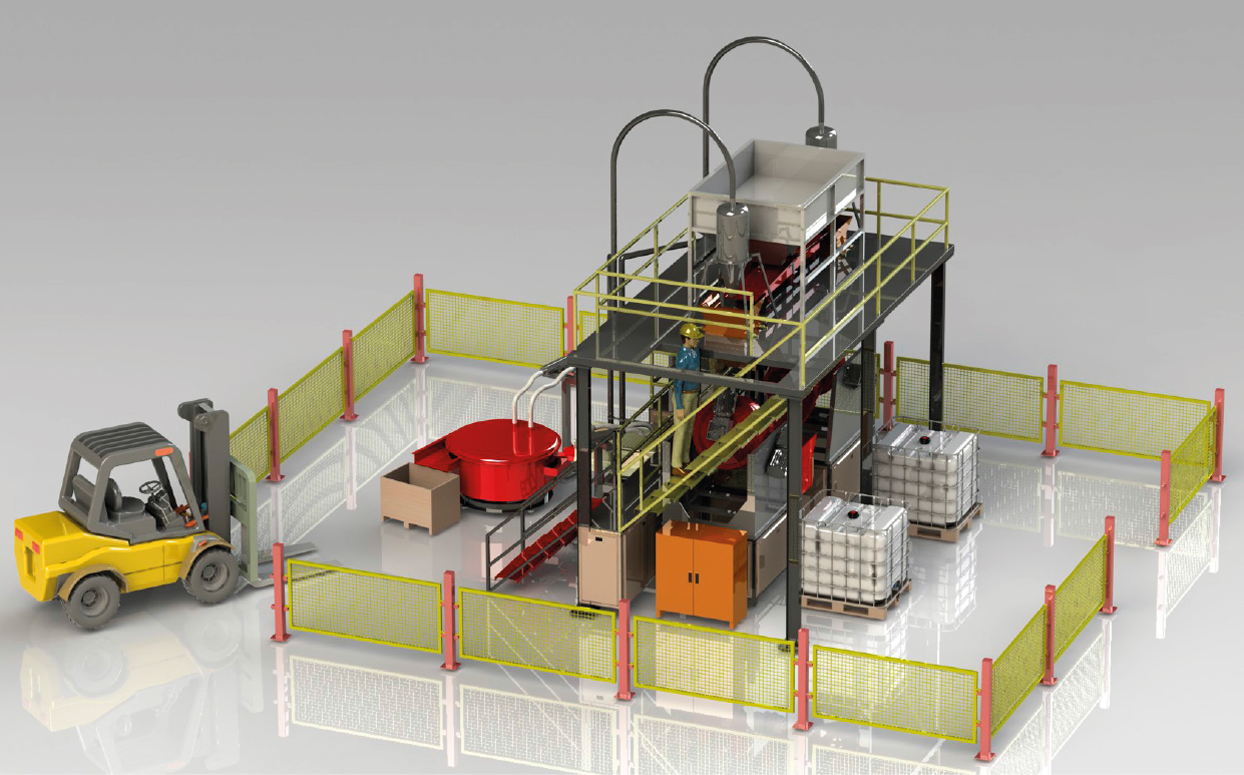
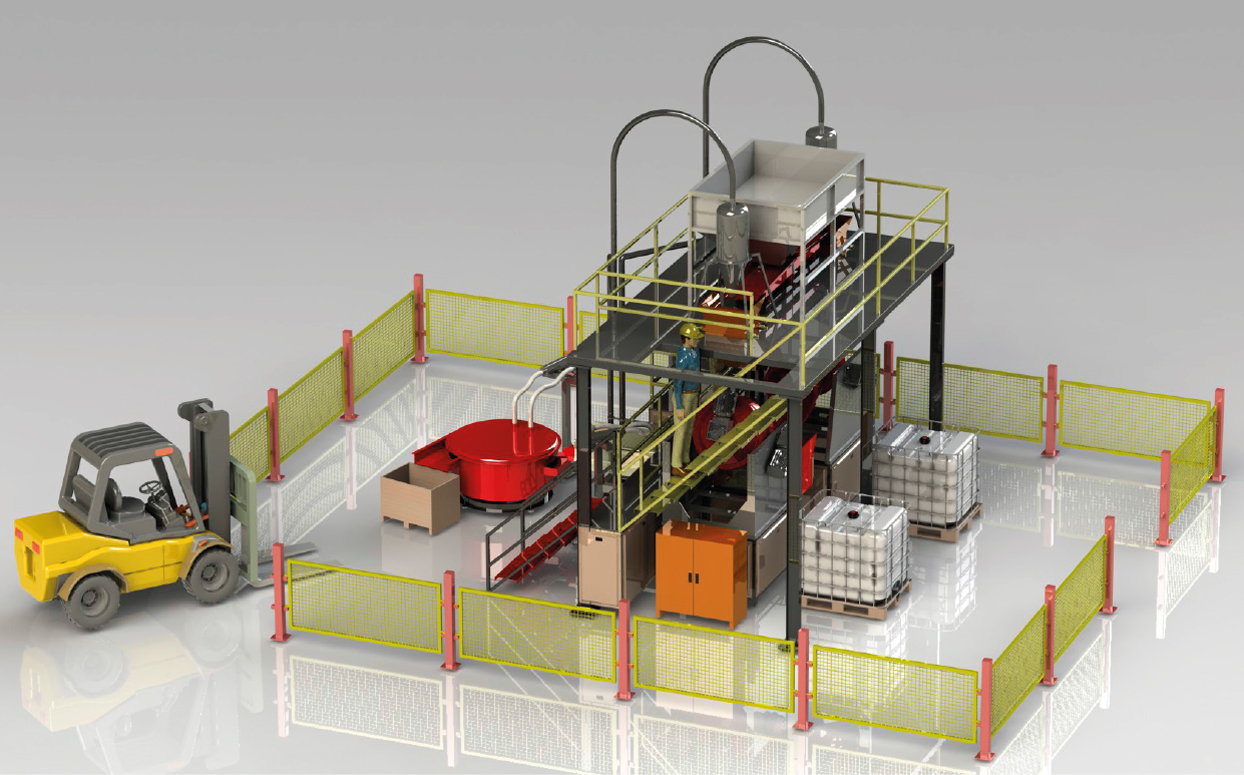
vibratory bowl, multi-level platform, forklift access, IBC tanks, and safety fencing.
- Part-Media Separation: After polishing, the blanks must be separated from the media before entering the washing stage. A vibratory separator with a screen sized to pass blanks while retaining media is used. Separation efficiency depends on blank diameter relative to media size. If blank and media sizes are too close, separation becomes unreliable and requires screen or media size adjustment. Damaged or undersized media fragments that pass through the separator screen must be removed to prevent contamination of the clean blanks.
- Washing Stage: Separated coin blanks carry polishing compound residue, metallic fines from the polishing action, and media dust on their surfaces. These must be removed completely before drying. Industrial pressure washing or spray washing with clean water and a diluted rinsing agent is the standard method. The washing system must deliver sufficient water flow and pressure to clean recessed areas such as edge grooves or design elements on pre-struck blanks. For coin blanks with tight geometry or surface detail, ultrasonic cleaning may be considered as a supplementary stage to ensure complete residue removal from fine surface features.
- Drying Stage: After washing, blanks must be dried quickly and completely to prevent water spotting, surface oxidation, or rust formation on steel blanks. Industrial vibratory dryers filled with dry drying media such as corn cob granules or hardwood chips are the standard solution for batch drying of coin blanks. The drying media absorbs surface moisture through mechanical contact as the blanks tumble through the dryer. Drying temperature, drying media condition, and residence time are controlled to ensure blanks exit dry and free of drying media residue. For high-volume production lines, inline continuous dryers integrated directly after the washing stage eliminate manual handling between stages.
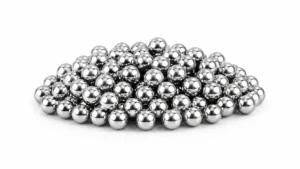
Stainless steel polishing media balls used in mass finishing processes for burnishing and surface smoothing of metal parts.
- Post-Process Inspection: Dried coin blanks are inspected for surface brightness, edge condition, and cleanliness. Common post-process defects include residual compound staining, water spots from incomplete drying, edge over-rounding from excessive cycle time, and surface scratching from incorrect media selection or damaged media. Any batches showing consistent defects are quarantined for root cause analysis before the process continues.
Process Parameters and Adjustment Logic
Controlling the coin washing polishing process requires monitoring several interdependent parameters. The table below summarizes the key variables and their typical influence on surface quality.
| Parameter | Influence on Result | Adjustment Direction |
|---|---|---|
| Vibration Amplitude | Controls media pressure and cutting intensity | Increase for faster deburring; decrease for delicate blanks |
| Compound Concentration | Controls brightness, foam, and cleaning action | Increase for brighter finish; reduce to control foam |
| Compound Flow Rate | Controls media lubrication and surface temperature | Continuous low-rate dosing preferred over intermittent high-rate |
| Cycle Time | Controls surface Ra and edge rounding | Extend for higher brightness; reduce to protect edges |
| Media Fill Level | Controls blank-to-media contact ratio | Reduce if blanks stack; increase if surface coverage is uneven |
| Batch Load Weight | Controls throughput and motion consistency | Do not exceed machine rated load; underloading also reduces efficiency |
Parameter interactions are complex. Increasing amplitude while also extending cycle time may produce higher brightness but risks edge over-rounding on thin blanks. Process optimization requires systematic parameter testing with actual production blanks rather than theoretical estimation.
Washing System Requirements for Coin Blanks
The washing stage is often underestimated in coin production lines. Residual compound left on blank surfaces after polishing causes visual defects on the struck coin surface and may interfere with die lubrication during minting. Washing efficiency depends on water temperature, spray pressure, nozzle arrangement, conveyor speed through the wash zone, and the rinsing agent concentration.
For standard steel coin blanks, warm water pressure washing with a diluted alkaline rinsing agent is typically sufficient. For aluminum blanks, a pH-neutral rinsing agent is preferred to prevent surface staining or micro-etching. For copper and brass blanks, the rinse chemistry must be compatible with yellow metals to avoid color shift or surface dulling caused by alkaline exposure.
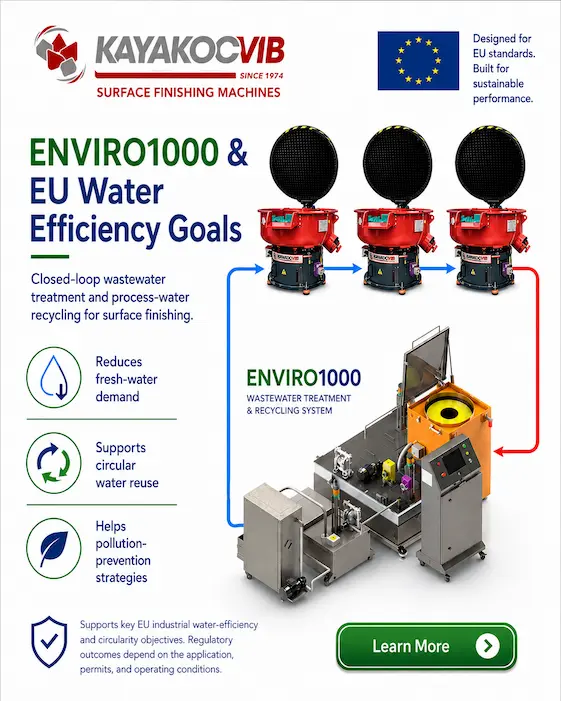
Wastewater from the washing stage contains polishing compound residue, metallic fines, and surfactants. In continuous production environments, wastewater treatment and recycling systems reduce water consumption and ensure compliant disposal of metallic sludge. Closed-loop water management is increasingly standard in modern coin minting facilities operating under environmental compliance requirements.
Automation Integration in High-Volume Coin Production
In high-volume coin minting operations, the coin washing polishing process is integrated into a continuous or semi-continuous automated line. Automated lines typically connect blank loading, vibratory polishing, part-media separation, conveyor washing, inline drying, and optical or weight-based inspection into a single controlled sequence. Automation eliminates manual handling between stages, reduces contamination risk, and improves batch-to-batch consistency.
The KAYAKOCVIB BCP-10 coin polishing system is designed with automation integration in mind, allowing connection to upstream blank feeding systems and downstream washing and drying units. In semi-automated configurations, operators control loading and unloading while the polishing, separation, washing, and drying stages run continuously. Fully automated lines with conveyor systems and robotic handling are used in national mint facilities with very high daily production volumes where manual handling is not operationally viable.
Production Risks and Validation Points
Several production risks must be managed systematically in the coin washing polishing process. Media lodging in blank holes or edge features is a risk with certain blank designs and must be evaluated during initial process setup. Incorrect media size relative to blank diameter is the primary cause. Media breakdown over time changes the cutting and polishing characteristics of the media mass, so media condition must be monitored and media replenishment scheduled based on consumption rate rather than calendar time alone.
Surface staining on copper and brass blanks often indicates compound chemistry incompatibility or inadequate rinsing. Steel blank rust formation after drying indicates incomplete drying or excessive moisture in the drying media. Aluminum blank surface pitting may indicate excessively aggressive media or compound pH outside the safe range for the alloy. Each of these failure modes has a correctable root cause that must be identified and resolved before full production runs are released.
Process validation before production release should include sample testing with the planned media, compound, and parameter settings, followed by surface measurement, edge inspection, and cleanliness verification. Documented process records from the validation run serve as the baseline for production monitoring and troubleshooting.
Frequently Asked Questions
What type of media is used for polishing steel coin blanks?
For steel coin blanks, ceramic media in spherical or cylindrical form is commonly used. Ceramic media provides sufficient cutting and burnishing action for steel surfaces and produces the bright, smooth finish required before die striking. Media size must be selected to prevent lodging in blank edge features.
Why is washing required after coin polishing?
Polishing leaves compound residue, metallic fines, and media dust on blank surfaces. These contaminants cause visual defects on the struck coin and may interfere with die performance during minting. A dedicated washing stage with appropriate water pressure, temperature, and rinsing agent removes these residues before drying.
Can the coin polishing and washing stages be automated?
Yes. In high-volume coin production, vibratory polishing, part-media separation, washing, and drying are integrated into a continuous automated line. Automation improves batch consistency, reduces handling contamination, and supports high daily blank throughput. The level of automation is scaled to production volume and facility requirements.
How long does the coin polishing cycle take?
Cycle time depends on blank material, starting surface condition, media type, compound selection, machine settings, and required surface finish. Typical industrial polishing cycles for coin blanks range from a few minutes to over an hour depending on these variables. Actual cycle time must be determined through validated sample testing, not estimated from general averages.
Related Process Equipment
Conclusion
The coin washing polishing process is a precisely controlled production sequence where polishing, separation, washing, and drying stages must work together to deliver clean, bright, dimensionally consistent blanks ready for coinage striking. Media selection, compound chemistry, machine parameters, and washing system design each directly affect the final surface quality. Process engineers working on coin blank production lines should approach each stage as an interdependent variable rather than an isolated operation. Parameter optimization requires sample testing with the actual blank material and geometry, and validated process records are essential for maintaining production consistency across batches. Systems such as the KAYAKOCVIB BCP-10 coin polishing system offer a platform for this integrated approach, but the process result ultimately depends on correct engineering decisions made at each stage of the finishing line.
Sorry, the comment form is closed at this time.